1950s Style: Fashion and Everyday Elegance
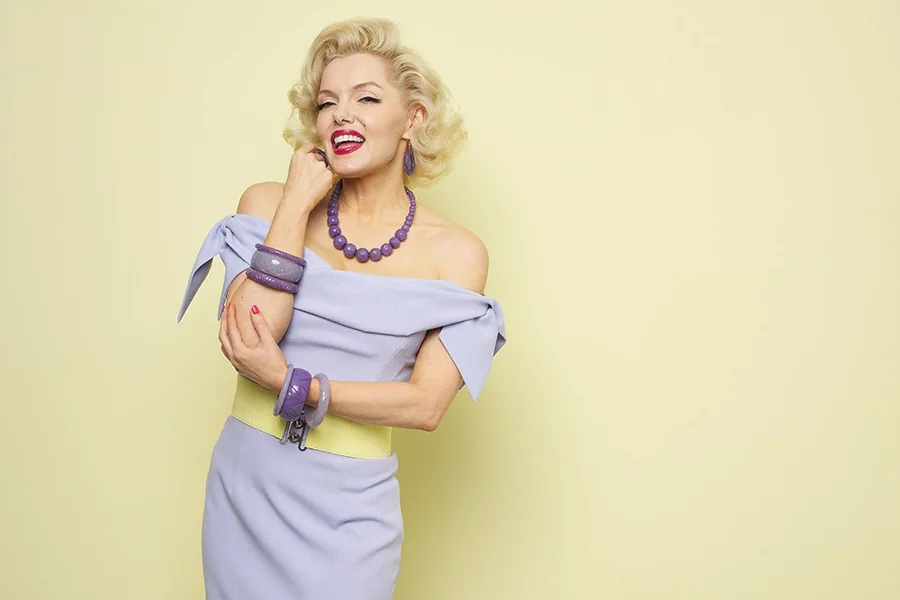
The 1950s are remembered as a decade of polish. After years of wartime rationing, clothes became fuller, more feminine and more carefully put together, and the idea of being properly dressed extended to shopping trips, travel and even housework. At the same time, teenagers began to develop their own style, setting up the youth fashions of the decades that followed.
The New Look sets the tone
The silhouette that defined the decade arrived slightly before it. In 1947 Christian Dior presented a collection with softly rounded shoulders, a tiny nipped-in waist and a long, full skirt, which the press called the “New Look.” After years of fabric restrictions it seemed luxurious, even extravagant, and it shaped women’s fashion well into the 1950s.
Achieving the look required structure. Women wore girdles, corselets and firmly shaped bras to define the waist and bust, and full skirts were held out by layers of stiffened petticoats.
Two silhouettes: full and slim
1950s womenswear moved between two main shapes, often in the same wardrobe.
The full skirt
Swing and circle skirts flared out from a fitted waist to a hem around mid-calf. The shirtwaist dress, with a buttoned bodice, collar, belt and full skirt, was an everyday classic for home and errands. In the United States, felt circle skirts decorated with appliqué, the best known being the poodle skirt, became a teenage favorite.
The pencil skirt and sheath
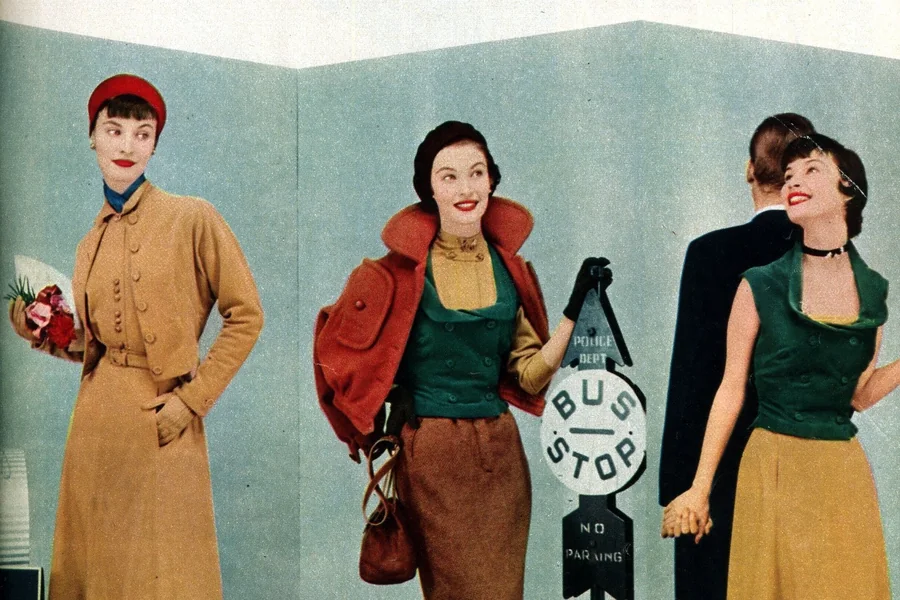
The alternative was the slim line: a pencil skirt or sheath dress that followed the hips and narrowed toward the knee. Often worn with a fitted jacket or a sweater, it read as more sophisticated and was popular for office and evening wear.
Later in the decade, Paris couturiers explored looser shapes, such as Balenciaga’s and Givenchy’s sack or chemise dresses, which dropped the defined waist and pointed toward the simpler styles of the 1960s.
Everyday wardrobe staples
- Twin sets: a matching short-sleeved sweater and cardigan, often worn with a string of pearls.
- Blouses with Peter Pan or rounded collars, tucked into skirts.
- Capri and cigarette pants, slim and cropped above the ankle, for casual and holiday wear.
- Tailored suits with fitted jackets and slim skirts for town.
- Swing coats with full backs that fitted over full skirts.
Accessories completed the outfit
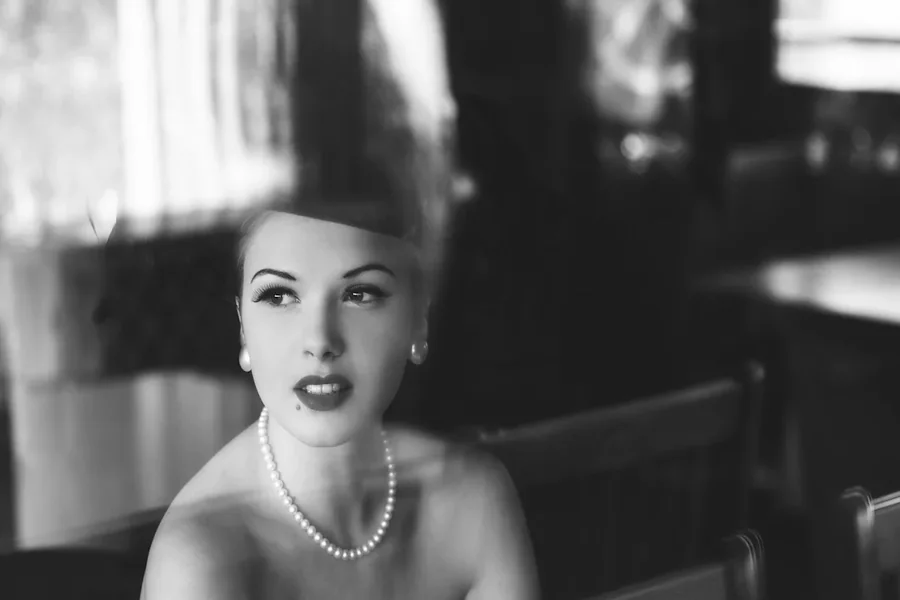
A 1950s outfit was rarely considered finished without accessories, and matching was prized. Common choices included gloves for going out, small hats such as pillboxes and close-fitting caps, structured handbags, pearl necklaces and earrings, silk scarves and cat-eye sunglasses or spectacles. Shoes ranged from ballet flats and loafers to court shoes (pumps); the slender stiletto heel became fashionable in the middle of the decade.
Menswear: the grey flannel suit and beyond
For men, the office uniform was conservative. Suits in grey, navy or brown wool, white shirts and fairly narrow ties were the norm, and a felt hat was still standard in the early part of the decade. The phrase “the man in the grey flannel suit,” from a popular novel and film, came to describe the conforming white-collar worker.
Leisure wear was more relaxed and colorful. Short-sleeved sports shirts, bowling shirts with contrast panels, Hawaiian shirts, knitted polo shirts, cardigans and chinos were weekend favorites.
The rise of teenage style
One of the most important developments of the decade was the emergence of the teenager as a distinct consumer. Rock and roll gave young people their own music, and they wanted their own clothes.
In America, film stars such as Marlon Brando and James Dean made jeans, white T-shirts and leather jackets symbols of youthful rebellion. Girls wore circle skirts, bobby socks and saddle shoes, or rolled-up jeans with a boyfriend’s shirt. In Britain, the Teddy Boys adapted Edwardian styles into long drape jackets with velvet collars, narrow trousers and thick crepe-soled shoes.
Hair and makeup
Women’s hair was generally short to medium in length and carefully set, using pin curls and rollers for soft waves and curls. The short, curled “poodle” cut and the high ponytail were both popular. Makeup emphasized a matte, even complexion, defined brows, winged eyeliner and red or pink lipstick. Men favored short, neat cuts, while rock and roll fans adopted the pompadour and the greased-back ducktail.
Style at home
The same optimism showed up in homes, particularly in the growing suburbs. Kitchens came in pastel colors such as mint, pink and pale yellow, mid-century modern furniture offered clean lines and tapered legs, and “atomic” patterns inspired by science appeared on fabrics and wallpaper. The home was part of the decade’s image of a well-ordered life, although that image did not reflect everyone’s reality.
How to wear 1950s style today
- Choose a fit-and-flare dress or a full skirt with a fitted top and a belt at the natural waist.
- Try a pencil skirt with a tucked-in knit or a fitted cardigan for a sharper, office-friendly version.
- Cropped cigarette trousers with ballet flats and a striped top give a casual, wearable nod to the era.
- Add one or two period details, such as a silk headscarf, cat-eye sunglasses or pearl studs, instead of a full costume.
- Look for crisp cotton, wool and structured fabrics that hold their shape, as 1950s clothes did.
Why the decade still appeals
1950s style continues to attract admirers because it celebrates care and craftsmanship: clothes that fit well, are pressed and are finished with thought. Its mix of elegant silhouettes and the first stirrings of youth culture makes it one of the richest decades to borrow from.