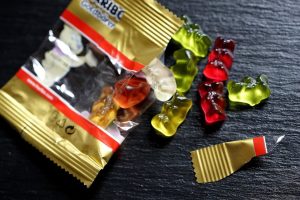
Ingestible Beauty: What Is Actually in the Gummies

You can probably name the actives in your serum. You know roughly what percentage of niacinamide is worth paying for, you check whether the vitamin C is stable, and you would never buy a moisturizer that refused to tell you what was in it. Then the same shopper picks up a beauty gummy, reads the front of the jar, and puts it in the basket without ever turning it around. That gap is worth closing, because ingestible beauty is now a serious category and the labels vary enormously. Some sell verification as the product: Joy Organics publishes a batch-specific lab report for its CBD gummies, which is the ingestible equivalent of a skincare brand printing its concentrations rather than hiding behind a blend name. Plenty of jars on the same shelf offer nothing of the kind. Here is what is actually inside the most common ones, and how to tell which is which.
Why everything became a gummy
Capsules have a compliance problem. People buy them, take them for eleven days, and then forget. A gummy removes almost every point of friction: no water, no aftertaste, no swallowing something the size of a fingernail, and a serving that is obvious by definition.
It also photographs beautifully, which is not a trivial factor in a category that lives on social. Pastel jars in a bathroom cabinet are part of the product. None of that makes gummies bad. It does mean the format was chosen for behavior and aesthetics first, and that choice comes with real limitations most brands would rather not discuss.
The limitation nobody puts on the front
A gummy is a small piece of candy, and there is only so much active ingredient you can physically fit into one before it tastes wrong or stops setting. Gelatin and pectin bases have processing constraints. Some actives are unstable in heat and do not survive manufacturing well. Others taste so unpleasant that masking them requires more sugar than anyone wants to admit.
This is why the dose gap between a gummy and the research behind an ingredient is often enormous, which becomes very obvious with the first item on the list.
Collagen
The most popular ingestible in beauty, and the one where the format problem is starkest. Studies on hydrolyzed collagen peptides that report improvements in skin hydration and elasticity typically use doses in the range of 2.5 to 10 grams per day. That is grams, not milligrams.
A gummy cannot hold anywhere near that. Many collagen gummies contain a few hundred milligrams per serving, which is a fraction of what was studied, and some contain no collagen at all, instead offering vitamin C and amino acids described as supporting your body’s natural collagen production. That phrasing is a signal, not a claim. If collagen is what you want, powder is the honest format, and the gummy version is mostly a nicer experience than an effective one.
Biotin
Biotin appears in nearly every hair, skin, and nail formula, usually at doses hundreds of times the daily requirement. Actual biotin deficiency is rare in people eating a normal diet, and supplementation reliably helps hair and nails in the context of deficiency. Outside that context, the evidence is thin.
There is one genuinely important detail here that has nothing to do with beauty. High dose biotin can interfere with certain laboratory blood tests, including some cardiac and thyroid assays, producing inaccurate results. The FDA has issued safety communications about this. If you take a biotin heavy supplement, tell anyone ordering blood work, and ask whether to stop it beforehand. It is the single most practical piece of information in this article.
Vitamins C, E and zinc
These are the least controversial ingredients in the category because they are established nutrients with genuine roles in skin function. Vitamin C is required for collagen synthesis, zinc plays a role in wound healing and skin regulation, and vitamin E is an antioxidant.
The caveat is that most people eating a varied diet already get enough of all three, and supplementing beyond sufficiency does not produce extra benefit. Zinc in particular is worth checking against anything else you take, since it is easy to double up across a multivitamin, a beauty gummy and a cold remedy, and high intakes over time interfere with copper absorption.
Adaptogens
Ashwagandha, rhodiola, reishi, and similar botanicals have moved from wellness into beauty formulas on a stress and skin narrative. Ashwagandha has the most human research of the group, generally around stress measures rather than skin.
Two cautions worth stating plainly. Botanical potency varies enormously between products because extract standardization differs, so two jars with the same ingredient listed are not necessarily comparable. And ashwagandha has been associated with case reports of liver injury, is not recommended in pregnancy, and can interact with thyroid medication. These are not reasons to avoid the category, but they are reasons to treat botanicals as active substances rather than decorative ingredients.
Hyaluronic acid, taken orally
Hyaluronic acid is excellent in a serum. Taken by mouth, the evidence is much thinner and largely built on small studies. It is not harmful, and it may be doing less than the price suggests. If you want hyaluronic acid, the topical version has the stronger case.
Read More: The Clean Beauty Movement Is Reaching the Nursery
CBD gummies
CBD has become one of the most common ingestibles in the evening version of these routines, and it is worth understanding on its own terms. Cannabidiol is a compound from the cannabis plant that is not intoxicating, sold in products derived from hemp, which under US law must contain less than 0.3 percent THC by dry weight.
You will see three descriptions. Full spectrum contains the range of plant compounds, including trace THC. Broad spectrum has the THC removed. Isolate is CBD alone. If you are drug tested for work, that distinction matters, and the label claim should be backed by a lab report showing a non-detectable result.
On evidence, the strongest consumer-relevant research concerns anxiety, from small controlled trials. Sleep findings are less consistent and often appear as secondary outcomes. It is also worth knowing that the most cited studies used doses far higher than a typical gummy contains, so the research does not map neatly onto a 25mg serving. The verification standard is the useful part here: the Joy Organics approach of publishing a report for every batch, covering contaminants as well as potency, is exactly what you should look for from any seller in this category, because hemp draws metals efficiently from soil and potency alone is half a report.
The sugar nobody counts
These are confections. Two or three grams of sugar per gummy sounds like nothing until you are taking two a day from three different jars, which is a candy habit with a wellness label on it. Sugar-free versions typically use sugar alcohols, which are fine for most people and unpleasant for some in quantity. Check the number, then decide whether it changes anything for you.
Reading the label like you read your skincare
Four checks, and none take long. Find the amount per serving rather than per container, since the large number on the front is usually the total. Be suspicious of proprietary blends, which list ingredients without amounts and exist mainly to avoid telling you how little is in there. Look for third-party testing tied to a specific batch. And treat certifications with real standards behind them, such as USDA Organic, differently from marketing words like clean, pure, and natural, which have no regulatory definition at all.
That is the same skepticism you already apply to a moisturizer that promises radiance without naming a single active. The habit transfers directly.
Reasonable expectations
Nothing in a jar competes with sunscreen, sleep, and not smoking, which remain the three interventions with the strongest evidence behind them in skin health. Ingestibles work best as a small addition to those things, not a substitute, and results in this category are slow and modest when they come at all.
Talk to a doctor before starting anything new if you are pregnant, breastfeeding, or taking prescription medication, since several ingredients discussed here interact with common drugs and one of them interferes with blood tests. Then buy the jar that tells you what is in it. In ingestibles, as in skincare, the brands willing to publish the numbers are the ones worth your money.