Wedding Hair Accessories: How to Choose the Right One
A hair accessory is often the last piece of a bridal look to be chosen and one of the first things people notice in photographs. The right one finishes a hairstyle and links it to the dress; the wrong one fights both, or slips out halfway through the reception. Here is how to choose wedding hair accessories that suit your hair, your dress and a very long day.
The main types of wedding hair accessories
Tiaras and crowns
The most formal option. A tiara sits best on a smooth, polished style, such as a sleek chignon or a sculpted updo, because detailed braiding or twists at the sides can make it look disconnected from the hair beneath. Consider the height carefully: a low, delicate band suits most faces and dresses, while a tall tiara needs a correspondingly grand gown.
Combs
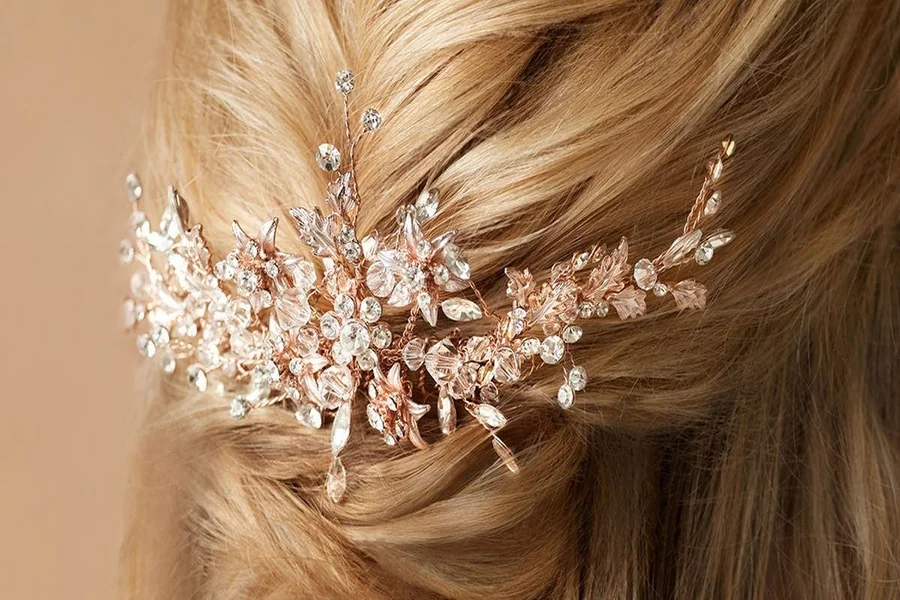
Decorative combs slide into an updo or a half-up style and are among the most secure options because the teeth grip the hair. They work well tucked beside a low bun or just above a veil, where they can also help anchor it.
Pins and clips
Individual jewelled or pearl pins can be scattered through a braid or an updo, or grouped at one side. They are flexible, easy to reposition and suit brides who want a little sparkle rather than one statement piece.
Headbands
Embellished or padded headbands suit soft waves, a low bun or half-up hair. They look best when the hair at the sides is kept fairly flat, without heavy twists competing for attention.
Vines and hairpieces
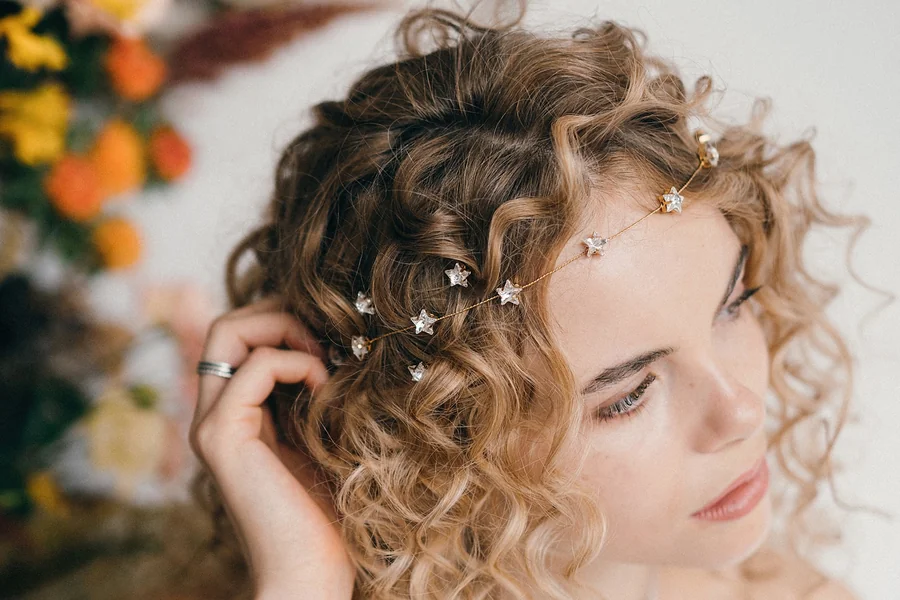
A vine is a flexible wire strand set with crystals, pearls or small flowers that can be wrapped around a bun or woven along a braid. It suits relaxed, romantic hairstyles and can be shaped to fit.
Bows
A satin or velvet bow at the back of a low ponytail or bun gives a pared-back, modern finish and is an easy way to change the look for the evening. A clip-on bow can be moved or removed without redoing the hair.
Flowers
Fresh flowers feel natural and seasonal, but they need planning. Light, airy stems such as gypsophila hold up better than heavy blooms, which can droop or pull. Dried, fabric or clay flowers give a similar effect without the risk of wilting.
Veils
A veil is an accessory in its own right and dictates what else you can wear. Decide on the veil first, then choose any other piece to sit with it rather than against it.
Choosing for your hair type
Hair texture affects what stays put. Thick hair can hold larger combs and heavier pieces; fine or silky hair usually needs lighter accessories and some grip, which a stylist can create with texturising spray or a backcombed base. Very short hair suits headbands, small clips or a birdcage veil, since there is little to anchor a comb into. Curly and coily hair offers natural hold for pins and combs and looks beautiful with pieces placed along the hairline or at the crown.
The hairstyle matters as much as the hair itself. Updos give the most options, from combs to vines. Loose, worn-down hair suits headbands, a single statement clip or a half-up style with a comb at the back.
Matching the accessory to the dress
A useful rule is that detail should appear in one place rather than everywhere. A plain crepe or satin dress can take a bolder hairpiece; a heavily beaded or lace gown usually looks better with something small. Echo something from the dress rather than matching it exactly: pearls in the hair to pick up pearl buttons, for example, or silver-toned crystals if the beading is silver.
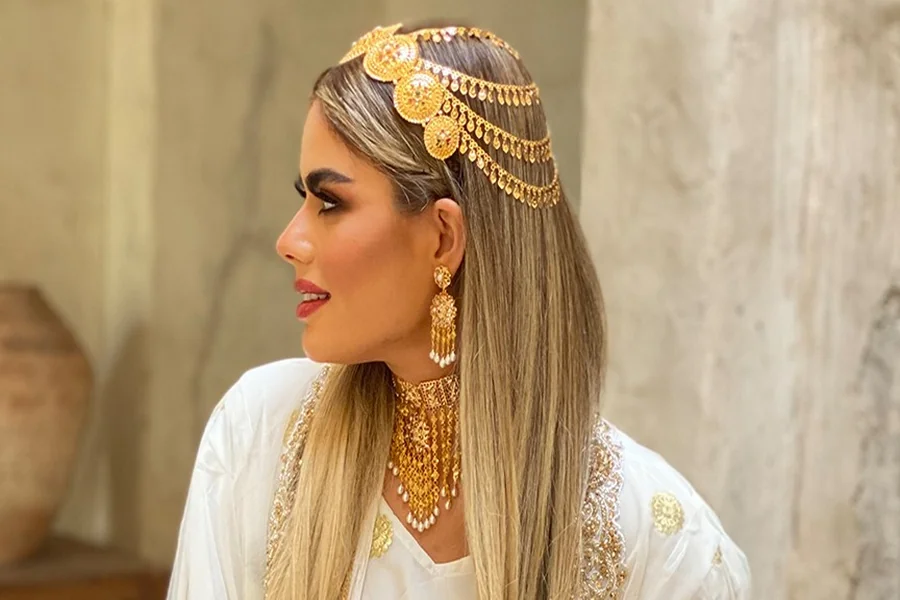
Metal tones deserve attention. Ivory and champagne fabrics tend to sit well with gold or rose gold, while bright white often suits silver. Check both the accessory and any jewellery together in daylight before the wedding.
Season and setting
The setting can guide the choice. A garden or summer wedding suits fresh or dried flowers, vines and softer textures. A winter ceremony can carry crystals, velvet bows or a little more shine. A civil ceremony in a city venue often calls for something clean and graphic, such as a single oversized clip or a sleek bow. Practicalities matter too: wind makes long veils and loose flowers harder to manage, and heat speeds up wilting.
Designer, vintage or handmade
Designer accessories tend to be better finished, with secure settings and well-made combs, which counts when a piece has to last all day. Vintage pieces, including a family comb or brooch reworked onto a clip, add personal meaning. Handmade or DIY accessories can suit a smaller budget and a specific vision, but test them carefully for weight and sharp edges. Whatever the source, it is the fastening that decides whether an accessory works on the day.
Keeping it in place
- Bring the accessory to the hair trial so the stylist can build the style around it rather than adding it at the end.
- Ask for pins crossed in an X beneath combs and heavier pieces for extra hold.
- Add fresh flowers late in the morning; the warmth of the scalp makes them droop faster.
- If you plan to remove the veil for the reception, agree in advance how it will come out without disturbing the rest of the style.
- Pack a few spare pins and a small hairspray for touch-ups.
Mistakes to avoid
The most common problems are an accessory that is too heavy for the hair, a piece that clashes with the dress’s embellishment, and choosing so late that there is no chance to test it. Wearing too many things at once, such as a tiara, a veil and scattered pins, can also crowd the look. Pick one focal point and let the rest support it.