Innovative Fashion Accessories to Redefine Your Style

Accessories have always been the quickest way to change an outfit, and they are also where new technology and new materials often reach fashion first. A bag, watch or pair of earrings is small enough to experiment with and easy to swap. Here are the innovations in accessories worth understanding, with practical advice on wearing them.

Smart wearables that look like jewellery
Smartwatches
The smartwatch is now the most familiar piece of wearable technology. Beyond telling time, most track steps, heart rate and sleep, show notifications and handle contactless payments. The fashion shift has been in the straps and cases: interchangeable bands in leather, metal mesh, woven fabric and silicone mean the same watch can look sporty by day and polished in the evening. For a more discreet look, choose a smaller case and a leather or metal band.
Smart rings
Smart rings pack sensors into a band that looks much like an ordinary ring. They typically focus on sleep, activity and heart-rate data, and have no screen, which makes them easier to wear with jewellery. Because sizing is critical for accurate readings, try a sizing kit before buying and remember that a smart ring will sit alongside rather than replace other rings.
Trackers built into everyday items
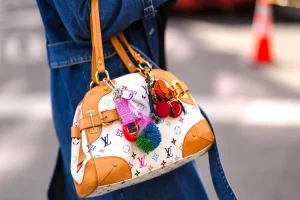
Small Bluetooth trackers now slip into wallets, clip onto keyrings or hang from bags as charms. Some designers make cases that turn them into decorative accessories in their own right, which fits neatly with the current enthusiasm for bag charms.
New materials
Plant-based and bio-based leather alternatives
Material developers have produced leather alternatives from mushroom mycelium, cactus, apple and grape waste, and pineapple-leaf fibre. They are used for bags, belts, watch straps and small leather goods. It is worth reading labels closely: many still contain a proportion of polyurethane or another synthetic binder, and durability varies between materials. Ask how a piece should be cleaned and how it is expected to age.
Recycled metals and plastics
Recycled gold and silver are increasingly used in jewellery. Chemically, recycled precious metal is the same as newly mined metal, so quality is unaffected. Sunglasses, bags and trainers made from recycled plastics, including fishing nets and bottles, are also widely available.
Lab-grown diamonds and gemstones
Laboratory-grown diamonds have the same chemical composition, crystal structure and hardness as mined diamonds; they are created in controlled conditions rather than extracted from the earth. They are generally less expensive, which makes larger stones and more playful designs accessible. As with any stone, look for independent grading and clear disclosure that it is lab-grown.
Accessories that adapt
Modular and convertible designs are a practical innovation. Bags with detachable straps can move from handheld to shoulder to crossbody. Some earrings come with removable drops so a simple stud becomes a statement piece at night. Belts with interchangeable buckles and watches with quick-release straps work on the same principle: fewer items, more ways to wear them.
Phone accessories have become fashion items too. Crossbody phone straps and chain lanyards keep the phone at hand and free up the hands, and they are available in everything from beaded cord to leather.

3D printing and customisation
3D printing allows jewellery and eyewear to be produced in complex shapes that would be difficult to cast or cut by hand, and it makes small runs and personalised sizing more practical. Some brands offer made-to-measure frames or rings, while engraving, monogramming and custom colourways have become common services for bags and small leather goods.
Protective and functional pieces
Some innovations are quieter. Wallets and card holders with RFID-blocking linings are designed to protect contactless cards. Hats and scarves made with UPF-rated fabrics offer measured sun protection. Lightweight, packable bags and water-resistant materials make accessories more useful for travel and commuting.
Easier, more inclusive design
Innovation also means making accessories easier to use. Magnetic clasps on necklaces and bracelets help anyone who finds tiny fastenings fiddly, including people with arthritis or limited dexterity. Adjustable ring bands, stretch bracelets and bags with wide, padded or adjustable straps make pieces more comfortable across different bodies. These details rarely make headlines, but they often decide whether an accessory is worn every day or left in a drawer.
How to wear new-generation accessories well
- Pick one focal point. A chunky smartwatch, a sculptural 3D-printed earring and a statement bag in one outfit can compete; let one lead.
- Match metals and tones. Choose watch cases, ring finishes and bag hardware in the same family, such as gold, silver or black, for a coherent look.
- Consider the charging routine. Wearables need regular charging, so think about whether you will actually keep up with it.
- Think about privacy. Health-tracking devices collect personal data; check the app’s settings and privacy policy.
- Buy for longevity. Replaceable straps and batteries, repair services and classic shapes make a piece last beyond the novelty.
The most useful innovations are the ones that solve a real problem, whether that is carrying less, wearing a lower-impact material or keeping track of a busy day, while still looking good with the clothes you already own.