1980s Fashion Trends: The Bold Styles Still Shaping Fashion

Few decades are as easy to recognize as the 1980s. Broad shoulders, bright color, big hair and plenty of attitude defined a period when clothing was used openly to signal success, identity and fun. Yet beneath the obvious excess, the decade also produced lasting ideas about workwear, sportswear and avant-garde design.
Here are the 1980s fashion trends that mattered most, and how their influence shows up today.

What Drove 1980s Fashion
Economic growth in many Western countries encouraged conspicuous consumption, and designer labels became status symbols. At the same time, more women were moving into professional and management roles, and needed a wardrobe that projected authority. Television and music shaped taste at a new speed: MTV launched in 1981, and music videos turned pop stars into instant trendsetters. Soap operas, blockbuster films and royal events added to the mix.
Power Dressing
The power suit is the defining garment of the decade. Jackets had wide, padded shoulders and often a nipped waist, creating a strong V-shaped silhouette. Women’s suits were typically worn with knee-length skirts, silk blouses (sometimes with a pussy-bow), and pumps.
Giorgio Armani’s softly structured men’s tailoring became famous after the film American Gigolo (1980), and his suits for women were equally influential. Donna Karan’s “Seven Easy Pieces” collection in 1985 proposed a flexible working wardrobe for women built around a bodysuit and interchangeable separates, an idea that anticipates today’s capsule wardrobe. Television dramas such as Dynasty pushed the look to its most glamorous extreme.
Fitness Wear and Sportswear
The aerobics boom brought gymwear onto the street. Leotards, leggings, leg warmers, sweatbands and off-the-shoulder sweatshirts became fashion items, helped by Jane Fonda’s Workout video (1982) and the film Flashdance (1983). Brightly colored nylon tracksuits followed.
Hip-hop gave sportswear a different edge. Tracksuits, gold chains, Kangol hats and unlaced sneakers were central to the look, and Run-DMC’s 1986 song “My Adidas” celebrated the brand so enthusiastically that it led to an endorsement deal, often described as one of the first between a sportswear company and musicians. The relationship between sneakers, music and street style that dominates fashion today has its roots here.
Pop Stars and Screen Style
Madonna’s early look, with lace tops, layered crucifixes, rubber bracelets, fingerless gloves and bows in teased hair, was copied by teenagers everywhere. Michael Jackson made the single sequined glove, military-style jackets and loafers with white socks instantly recognizable. Boy George, Duran Duran and the New Romantics brought ruffled shirts, dramatic makeup and androgyny into the mainstream.
Princess Diana’s wedding dress in 1981, designed by David and Elizabeth Emanuel, with its enormous puff sleeves and long train, influenced bridal fashion for years. On television, Miami Vice popularized pastel suits worn over T-shirts with sleeves pushed up and loafers without socks.

Designer Experiments and Avant-Garde
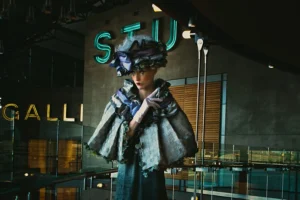
High fashion was not just about glamour. In the early 1980s Japanese designers Rei Kawakubo of Comme des Garçons and Yohji Yamamoto showed in Paris, presenting black, asymmetric, deliberately imperfect clothes that challenged Western ideas of beauty. Their influence on conceptual fashion is still felt.
In London, Vivienne Westwood mined history and subculture, while Parisian designers such as Thierry Mugler and Claude Montana sculpted exaggerated, theatrical silhouettes. Christian Lacroix’s puffball skirts brought playful volume to couture later in the decade.
Hair and Makeup
Beauty in the 1980s matched the clothes in scale. Volume was the goal: perms, crimping, backcombing and generous amounts of hairspray and mousse created big, textured hair, while side ponytails and scrunchies were everyday choices. Makeup favored strong color, with bright or frosted eyeshadow, heavily defined brows, sculpted blusher applied up toward the temples, and bold pink or red lips. Among punk and New Romantic crowds, dramatic eyeliner and deliberately theatrical looks were worn by men and women alike.
Today’s take is usually more restrained: a single bright eyeshadow, a strong blush placement, or a voluminous blow-dry nods to the decade without recreating it completely.
Signature 1980s Pieces
- Shoulder pads in jackets, dresses and even knitwear
- Acid-wash and high-waisted denim, often tapered at the ankle
- Batwing sleeves and oversized sweaters
- Neon and color-blocking
- Leggings and stirrup trousers
- Statement jewelry, especially large gold earrings and chunky bangles
- Wide belts cinching oversized tops
- Big, voluminous hair, often permed or crimped
How 1980s Influence Shows Up Today
Strong-shouldered blazers return regularly, usually with a longer, more relaxed body than the originals. High-waisted jeans, bold gold jewelry, color-blocking and bodysuits are all part of the contemporary wardrobe. Athleisure, the idea of wearing sportswear in everyday life, is arguably the decade’s biggest legacy.
Wearing 1980s Trends Now
- Choose one statement. A padded-shoulder blazer looks modern with a simple T-shirt, straight jeans and flat shoes.
- Soften the color. If neon feels too much, try one bright accessory or a single color-blocked piece.
- Update the fit. Look for relaxed rather than boxy proportions, and keep the rest of the outfit streamlined.
- Buy vintage carefully. Original 1980s tailoring can be well made; check linings, shoulder pads and seams, and remember that pads can often be removed or replaced by a tailor.
The 1980s are sometimes remembered only for excess, but the decade gave fashion the power suit, mainstream sportswear and a new language for avant-garde design. That mix of confidence and experiment is why its trends keep returning.