What Makes a Lawn Look Expensive? It’s Usually the Grass, Not the Landscaping
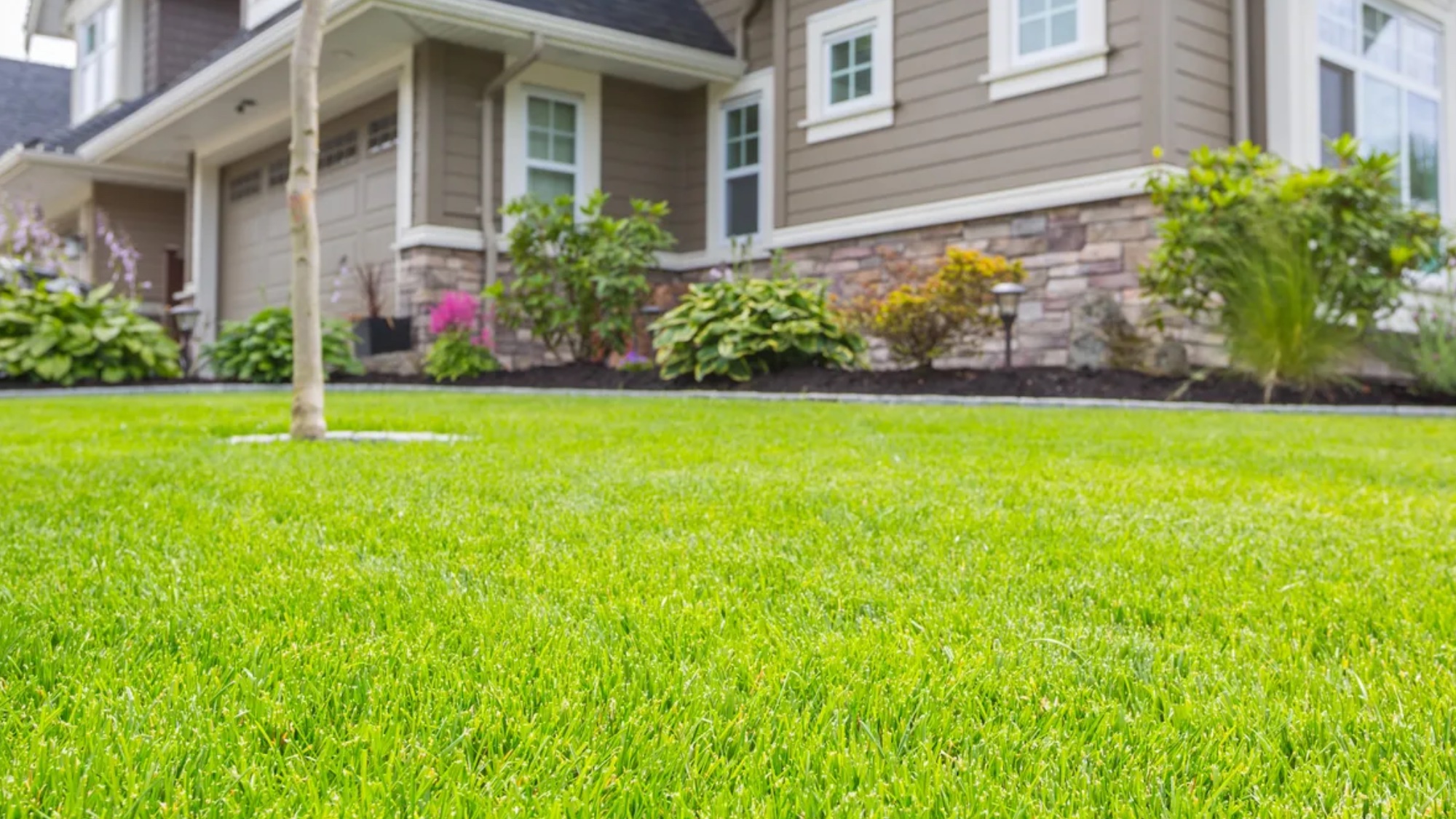
A perfectly edged flower bed and a freshly painted mailbox can only do so much. Walk past two neighboring homes where one has thick, uniform, deep-green turf and the other has patchy, faded grass, and the difference hits you immediately. The grass itself sets the tone for everything else.
First Impressions Start With Turf
Buyers, visitors, and neighbors register the lawn before they register anything else about a property. The turf is the largest visual surface on most front yards, and its condition shapes every other perception. A stone pathway surrounded by thin, straw-colored grass looks neglected regardless of how nice the stonework is. Dense, healthy turf makes even modest landscaping look deliberate.
Research published in The Journal of Real Estate Finance and Economics by a University of Texas at Arlington professor found that homes with strong curb appeal, including well-maintained exteriors and tidy landscaping, sell for an average of 7% more than comparable homes in the same neighborhood. That premium starts at the street, and the lawn is the first thing anyone sees from there.
The quality of the grass variety matters more than most homeowners realize. Two lawns maintained on identical schedules can look completely different if one is planted with a premium cultivar and the other with a commodity variety. Color depth, texture, and density are largely genetic traits. Not just maintenance outcomes.
Why Premium Turf Makes a Difference
Standard grass seed or low-grade sod often produces a lawn that looks acceptable in ideal conditions but struggles under heat, foot traffic, or dry spells. Premium cultivars are bred for performance under stress, and that breeding shows up visually in ways that are hard to fake with fertilizer alone.
Color and Texture
Fine-bladed grass varieties produce a noticeably denser, softer-looking surface. The color tends to be richer and more uniform because the leaf tissue stays healthier across a wider range of conditions. This is the visual quality that makes a lawn look like it belongs on a golf course or a well-maintained estate.
Recovery and Resilience
Premium turf bounces back faster after foot traffic, drought, or mowing stress. A lawn that recovers quickly stays consistent throughout the season rather than showing worn paths, thin spots, or dormancy patches. Consistency is what reads as expensive.
Seasonal Performance
Many standard Bermuda varieties go dormant and turn brown in late fall, then green up slowly in spring. Premium cultivars are bred for extended color into the cooler months and faster spring recovery, which means more weeks per year where the lawn looks its best.
Choosing TifTuf Bermuda Grass for High-End Lawns
For homeowners in warm climates who want a lawn that performs at a higher level, the grass variety is the most important decision in the process. TifTuf Bermuda has become the cultivar of choice for premium residential lawns, golf courses, and athletic fields for good reason.
Nearly 25 years of testing and development went into TifTuf before its release, rigorously developed and evaluated since 1992 by a team of researchers led by Dr. Wayne Hanna and Dr. Brian Schwartz at the University of Georgia. The goal was a grass that could hold its appearance under extreme stress, and the results show up clearly in independent university trials.
When you choose TifTuf Bermuda grass, you get a cultivar selected from more than 27,000 experimental genotypes for superior drought tolerance, wear resistance, and visual quality. The fine leaf texture creates a dense, uniform surface that reads as high-end without demanding extraordinary upkeep.
Texture and Density
TifTuf’s fine-bladed texture produces a carpet-like appearance that holds up under regular use. Its narrow leaf creates a dense, soft turf underfoot, with outstanding color retention that keeps it greener longer into fall.
Traffic Tolerance
TifTuf provides superior wear and traffic tolerance, even better than Celebration Bermuda, along with excellent cold tolerance. For a lawn that sees regular use from kids, pets, or backyard gatherings, that resilience prevents the thin, worn patches that make turf look cheap.
Color Retention
TifTuf delivers excellent late-season color retention and early spring green-up, extending the window during which the lawn looks its best and cutting down the brown dormancy period that makes many Bermuda lawns look neglected once temperatures drop.
Read more: How to Blend Men’s Hair Systems with Gray Side Hair
Water Savings and Heat Performance
Texas summers are hard on grass. Prolonged heat and periodic drought restrictions push standard Bermuda varieties into dormancy, which is when the lawn starts looking thin and brown regardless of how much effort went into the surrounding landscape.
TifTuf handles heat differently than conventional Bermuda. It closes its stomata (leaf pores) earlier than other grasses in response to heat, reducing water loss through transpiration without turning brown. That mechanism is what keeps TifTuf green when neighboring lawns are going dormant.
In 2011 drought study test, TifTuf used 38% less water and retained 95% more green leaf tissue during drought stress compared to Tifway. For homeowners dealing with water restrictions or looking to cut irrigation costs, that efficiency matters.
Researchers at the University of Georgia bred TifTuf with water efficiency as a primary design goal. That efficiency is a built-in genetic trait, not something that depends on a specific irrigation setup or soil amendment.
Installation Tips
Getting TifTuf established correctly sets the foundation for everything that follows. A few key practices make a meaningful difference in how quickly the lawn fills in and how well it performs over time.
- Soil preparation: Grade and till the area before laying sod. Remove debris, break up compaction, and add a starter fertilizer to give roots an immediate nutrient source.
- Timing: Warm-season grasses establish best when soil temperatures are consistently warm. Late spring through early summer is ideal in the Dallas-Fort Worth area.
- Watering schedule at establishment: Water daily for the first two weeks to keep the sod moist while roots are knitting into the soil. TifTuf’s rapidly establishing root system allows it to take root in less than 7 days, up to 75% faster than other varieties.
- Avoid heavy traffic: Keep foot traffic minimal for the first three to four weeks. Once roots are established, TifTuf handles traffic well.
- First mow: Mow when the grass reaches about three inches. This encourages lateral spread and helps the sod fill in evenly across the surface.
Long-Term Maintenance
One of TifTuf’s practical advantages is that it doesn’t demand a complicated maintenance regimen to stay looking good. The variety was bred for performance under real-world conditions, which means it tolerates the occasional missed watering or mowing without the visible consequences that lower-grade varieties show.
Mowing height should stay between half an inch and one and a half inches depending on the season and your preference. Tighter mowing produces a denser, more manicured appearance. Fertilize through the growing season with a balanced product, and pull back on nitrogen input in late summer to avoid pushing tender growth before cooler temperatures arrive.
Golf courses that transitioned from older Bermuda grass to TifTuf reported a 25 to 30 percent drop in irrigation needs, saving both water and operating costs. Residential lawns see similar benefits, particularly during dry summers when irrigation frequency shows up directly on the water bill.
Aeration once a year helps maintain the root density that gives TifTuf its characteristic look and resilience. Core aeration in late spring, as the grass is actively growing, lets roots expand and prevents compaction from undermining the dense surface texture that makes the lawn look premium. Worth doing. Easy to skip. Don’t.
The Takeaway
The difference between a lawn that looks expensive and one that just looks maintained usually comes down to the grass variety, not the number of ornamental plants surrounding it. Choosing a premium cultivar like TifTuf Bermuda is the single highest-leverage decision a homeowner can make for long-term turf quality. The color, texture, and resilience built into the genetics show up every day, through every season, without requiring extraordinary effort to maintain.