How Do Hearing Glasses Work? Everything You Need to Know
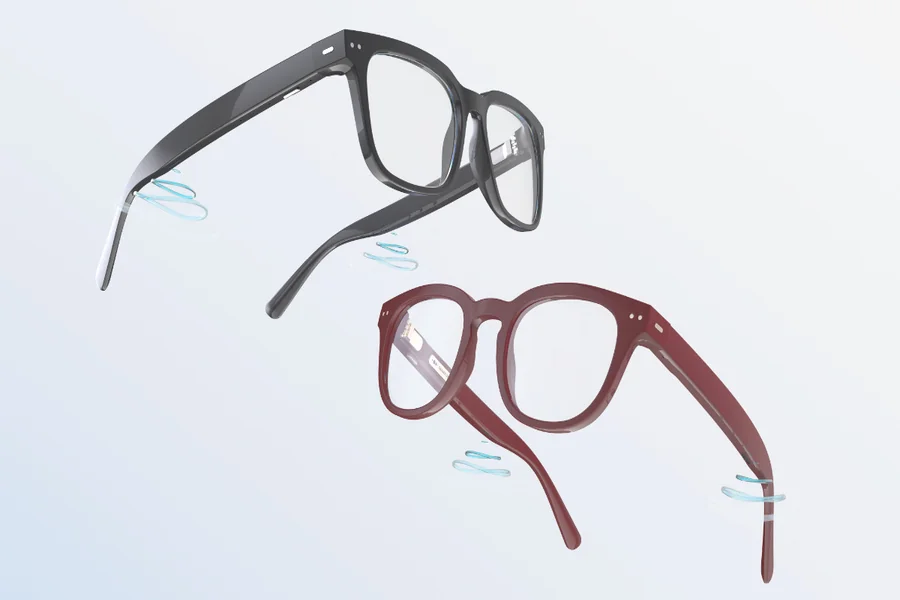
Hearing glasses are a modern solution that combines traditional eyeglasses with built-in hearing assistance. These devices help people who experience mild to moderate hearing loss and require vision correction. By placing microphones and audio transmitters within the glasses, wearers can both see and hear more clearly without needing separate hearing aids.
How Do Hearing Glasses Work?
Hearing glasses use a simple but effective mechanism:
- Microphones embedded in the arms of the glasses capture nearby sound.
- Amplifiers process and enhance the sound quality.
- Speakers near the ears deliver the sound using either bone conduction or open-ear audio delivery.
The goal is to improve hearing clarity in daily conversations, especially in quiet to moderately noisy settings.
What Is Bone Conduction, and How Does It Work in Hearing Glasses?
Bone conduction is a method of sound transmission that bypasses the eardrum. Instead, it delivers vibrations through the bones of the skull directly to the inner ear.
In bone conduction hearing glasses:
- Sound is converted into vibrations.
- These vibrations are transmitted through the cheekbones or temples.
- The inner ear processes the vibrations as sound.
This is useful for individuals with outer or middle ear issues but a functioning inner ear.
What Types of Hearing Glasses Are Available? There are two main categories:
1. Fully Integrated Hearing Glasses
-
- These look like regular glasses but have audio components built in.
- The arms may house microphones, processors, and speakers.
- These look like regular glasses but have audio components built in.
2. Hearing Aid Glasses Clips
-
- These are detachable audio modules that clip onto your existing glasses.
- They are ideal for users who want flexibility or prefer not to switch their frames.
- These are detachable audio modules that clip onto your existing glasses.
How Do Hearing Aid Glasses Clips Work?
These clips attach to the arms of your glasses. Each clip contains a small microphone and speaker.
- You place the clip near your ear or temple.
- It picks up sound and sends it via vibration or air conduction.
- Some clips connect wirelessly to a mobile app for sound adjustments.
They allow users to convert almost any pair of glasses into hearing support tools.
Who Can Benefit from Hearing Glasses?
Hearing glasses work best for:
- Adults with mild to moderate hearing loss
- Seniors seeking a discreet alternative to hearing aids
- People who dislike in-ear devices
- Those who wear glasses full-time and want to simplify their daily wear
What Are the Best Hearing Glasses to Buy Today?
When shopping for hearing glasses, consider the following:
- Sound quality: Look for adjustable volume and noise filtering.
- Fit and comfort: Lightweight frames are easier to wear all day.
- Battery life: Rechargeable batteries with all-day use are ideal.
- Discreet design: Choose a style that blends well with your face.
Where Can You Buy Hearing Glasses?
You can find hearing glasses:
- At specialized audiology clinics
- Through online medical device retailers
- From eyewear shops that offer assistive technology
Ensure you read product reviews, check compatibility with your vision prescription, and inquire about return policies.
What Are the Pros of Using Hearing Glasses?
- Convenience: Combines two devices into one.
- Comfort: Less bulk compared to separate glasses and hearing aids.
- Appearance: Often more subtle than traditional hearing aids.
- Usability: Most models are easy to charge and maintain.
Are There Any Drawbacks?
Yes. Consider these limitations:
- Sound strength: Not as powerful as advanced hearing aids.
- Battery: Some models require frequent charging.
- Cost: Prices may be higher than expected due to dual functions.
- Limited availability: Not all optometrists carry them.
How to Choose the Right Model for You
Before purchasing, ask yourself:
- What is my level of hearing loss?
- Do I need a permanent or flexible solution?
- How often do I need to wear them?
- Will they fit comfortably for long hours?
Get a hearing test and discuss your results with a licensed audiologist. Bring your current eyeglasses to see how well clip-on options fit.
How to Maintain Hearing Glasses Properly
To keep your device working well:
- Clean the frames and audio ports daily.
- Use a dry cloth—avoid liquids near the microphone.
- Store them in a protective case when not in use.
- Charge them fully overnight if they’re battery-operated.
Can You Use Hearing Glasses Without a Prescription?
Yes. Some models are available without a vision prescription. These are helpful for people who need hearing help but don’t require corrective lenses. You can also fit the audio module onto plain or reading glasses.
How Are Hearing Glasses Different from Hearing Aids?
| Feature | Hearing Glasses | Hearing Aids |
| Combines vision? | Yes | No |
| Visibility | More discreet | Often visible in ear |
| Custom fitting | Moderate | High |
| Cost | Moderate to high | Varies by model |
| Ideal for | Mild/moderate loss | Mild to severe loss |
Final Thoughts
Hearing glasses offer an effective and subtle way to improve daily life for people with dual hearing and vision needs. They’re easy to wear, blend in with standard eyewear, and suit many users. Whether you go for a fully integrated pair or a clip-on version, these tools can help you stay connected and engaged.
If you think hearing glasses might be right for you, start by getting a hearing evaluation. Then, explore different models with the help of a qualified professional.