Best Engagement Rings Under $2,500: A Jeweler’s Top 10 Picks
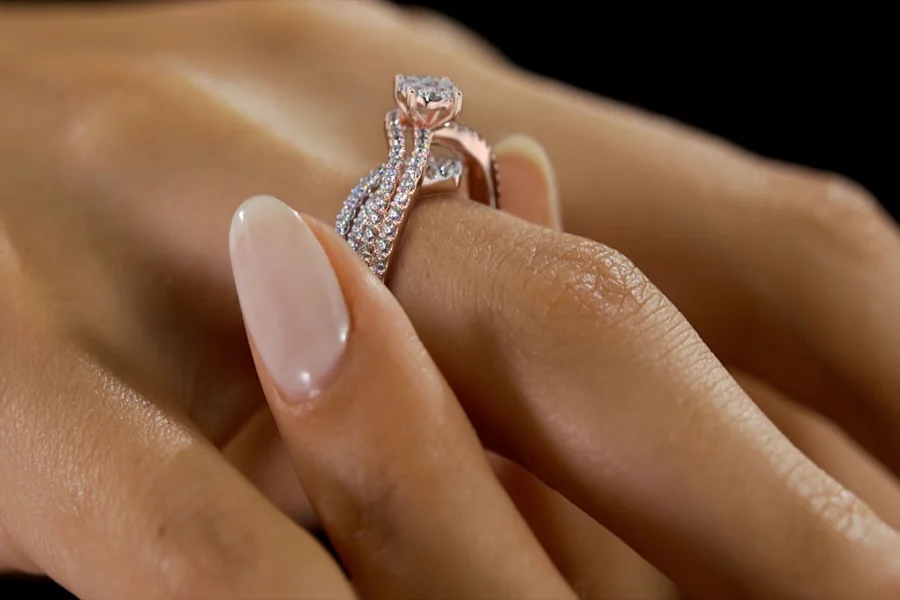
Introduction: Can You Really Find Quality Under $2.5k?
Finding affordable engagement rings under $2,500 doesn’t mean compromising on size, sparkle, or the “wow” factor anymore. In fact, I often see couples stunned by the sheer quality they can get for this price point today compared to just five years ago.
I promise you that with the right knowledge, your budget will go much further than you expect. In this guide, I will show you exactly how to maximize your money using lab-grown diamonds and gold, followed by my curated list of the top 10 styles available right now.
Why Engagement Rings Under $2,500 Are Better Than Ever
In my 30 years of manufacturing jewelry, the industry has shifted massively. The biggest change? The rise of the lab-grown diamond.
Previously, looking for rings under $2,500 would restrict you to a modest 0.50-carat mined stone. However, today is different. A lab-grown diamond is chemically, physically, and optically identical to a mined diamond. The only difference is its origin.
Because you are not paying for the heavy mining costs, your budget unlocks incredible value. Consequently, you can easily secure a stunning 1.50 to 2.00-carat center stone within this budget. It is the intelligent, modern choice.
The Golden Rule: Why I Choose Gold Over Platinum
You might hear that platinum is “the best.” In my experience, however, gold is the superior choice for an engagement ring, especially when maximizing a $2,500 budget.
Platinum is heavy and expensive. It eats up budget that should go toward your diamond. Furthermore, platinum scratches easily and develops a dull, gray patina over time.
Gold, on the other hand, is versatile:
- White Gold: It offers a brighter, whiter shine than platinum initially. It makes diamonds look crisp.
- Yellow Gold: It is currently the hottest trend. It provides a warm, rich contrast to the icy white stone.
- Rose Gold: It offers a soft, romantic, and vintage feel.
For these reasons, all my top picks below feature 14k or 18k gold.
1. The “New Classic” Round Solitaire
This is the ring you picture when you close your eyes. It is timeless, proving that sometimes the simplest designs are the most striking.
Getty Images
- The Look: A round brilliant cut diamond set on a simple, polished 14k Yellow Gold band.
- Why It Works: Yellow gold is back in style. It creates a beautiful separation between the metal and the diamond, making the stone pop.
- What You Get: With a simple setting costing less, you can pour money into the stone. You can easily find a stunning round solitaire engagement ring in the 1.50 – 1.75 carat range here.
- My Take: You cannot go wrong with this. It is elegant, traditional, and huge.
2. The Oval with Hidden Halo
Oval diamonds are currently the most requested shape in my showroom. They elongate the finger, making it look slender and elegant.
- The Look: A 1.50-carat Oval diamond on a whisper-thin 14k White Gold band.
- The Twist: A “Hidden Halo.” This is a tiny circle of diamonds underneath the center stone. You only see it from the side profile.
- Why It Works: It looks like a simple solitaire from the top, but our oval hidden halo engagement rings offer a surprise sparkle from the side.
- My Take: This is for the bride who wants something trendy but subtle.
3. The Modern Bezel Set
Prongs can catch on sweaters. If your partner is active, a doctor, or an artist, you might want to customize engagement rings to feature a bezel setting.
- The Look: A thin rim of gold surrounds the entire diamond, holding it securely.
- Why It Works: It is incredibly sleek and modern. It protects the diamond edges perfectly.
- What You Get: A 1.25 – 1.50 carat Round or Emerald cut looks fantastic in a yellow gold bezel.
- My Take: Bezel settings make diamonds look larger because the gold rim adds visual diameter.
4. The Vintage-Inspired Emerald Cut
The Emerald cut is sophisticated. It has “step cuts” that create a hall-of-mirrors effect rather than a disco-ball sparkle.
- The Look: A 1.25-carat Emerald cut set in White Gold with simple baguette side stones or milgrain (tiny beaded) detailing.
- Why It Works: It feels like an art deco engagement ring from the 1920s.
- My Take: Emerald cuts require high clarity. Since lab-grown diamonds are high quality by nature, you get a crystal-clear emerald cut solitaire engagement ring without the premium price.
5. The Romantic Rose Gold Pear
Pear shapes (teardrops) are unique. They represent tears of joy and offer a distinct silhouette.
Shutterstock
- The Look: A 1.50-carat Pear diamond set in 14k Rose Gold.
- Why It Works: Rose gold blends with skin tones, making the diamond appear to float. The pear shape is very flattering.
- My Take: Browse our pear solitaire engagement rings and remember to wear the point facing your fingernails. It creates a beautiful lengthening effect on the hand.
6. The “East-West” Setting
Do you want to break the rules? Flip the diamond.
- The Look: An Oval, Marquise, or Emerald cut stone set horizontally across the finger, rather than vertically.
- Why It Works: It covers the width of the finger, providing maximum coverage. It is a conversation starter.
- What You Get: A 1.50-carat stone looks massive in this orientation.
- My Take: This is a major trend for 2025. If you want to design your own engagement ring, this is a style that shows confidence and uniqueness.
7. The Three-Stone Trinity
This ring symbolizes your Past, Present, and Future.
- The Look: A 1.00-carat round center stone flanked by two smaller pear-shaped diamonds on the sides.
- Why It Works: It provides triple the sparkle. The side stones guide the eye to the center.
- My Take: Three stone engagement rings used to be very expensive. With lab-grown diamonds, fitting this design into engagement rings under $2,500 is now easy and looks luxurious. Specifically, a three stone round engagement ring offers incredible brilliance across the finger.
8. The Radiant Cut Statement
If sparkle is the priority, the Radiant cut is the answer. It combines the shape of an Emerald cut with the brilliance of a Round cut.
- The Look: A 1.50 – 1.75 carat Radiant cut solitaire in Yellow Gold.
- Why It Works: It hides inclusions well and reflects light like crazy.
- My Take: This shape is becoming a fierce competitor to the oval solitaire engagement ring. It is bold and edgy.
9. The Nature-Inspired Vine Band
For the person who loves the outdoors or floral patterns.
- The Look: A Round or Cushion cut diamond. The gold band is twisted like a vine, perhaps with small leaf details.
- Why It Works: It adds texture and character without needing extra diamonds on the band.
- What You Get: Because the band is gold-focused (not diamond-pave focused), you can still afford a 1.50-carat center stone.
- My Take: It feels organic and soft. A very romantic choice, similar to our vintage style engagement rings.
10. The Cushion Cut Pave Sparkler
“Pave” (pronounced pa-vay) means the band is paved with tiny diamonds.
- The Look: A 1.25-carat Cushion cut (soft square) diamond. The band glitters with small diamonds halfway down the shank.
- Why It Works: It is glamorous. Every angle catches the light.
- My Take: The Cushion cut has a pillow-like, vintage feel. Paired with a modern pave diamond engagement ring setting, it is the best of both worlds.
Pro-Tip: When buying a pave ring, consider looking at matching bridal sets to ensure your wedding band sits flush against the engagement ring.
Summary
To recap, here is what your $2,500 budget can achieve:
- Size: You can realistically target 1.50 to 2.00 carats with lab-grown diamonds.
- Style: Simple solitaire engagement rings allow for the biggest center stones.
- Metal: Gold (Yellow, White, or Rose) is the best metal for value and aesthetics.
- Trends: Ovals, Bezel sets, and East-West settings are defining the current market.
Frequently Asked Questions
- Is a $2,500 engagement ring considered cheap?
Not at all. With lab diamond engagement rings, $2,500 gets you a ring that looks like it cost $10,000+ in the mined diamond market. You are getting a significant, high-quality piece of jewelry.
- Why do you recommend 14k gold over 18k gold?
14k gold is harder and more durable than 18k gold. It scratches less and holds its shape better over decades of daily wear. It is also more affordable, saving you money for a bigger diamond.
- Will a lab-grown diamond fade or get cloudy?
No. A lab-grown diamond is a real diamond. It has the exact same durability and hardness as a mined diamond. It will stay bright and clear forever. You can learn more about diamond durability from the International Gem Society.
- Can I resize these rings later?
Yes. Gold rings are very easy for jewelers to resize. This is another reason I prefer gold over alternative metals like titanium or tungsten, which cannot be resized.
- What is the most durable setting?
The Bezel setting (Style #3) is the most durable. It surrounds the diamond completely with metal, protecting the edges from chipping if you hit your hand against a hard surface.
The Bottom Line
You have more power in this market than you realize. By choosing a lab-grown diamond and a classic gold setting, you can secure a breathtaking ring that rivals those with five-figure price tags. Engagement rings under $2,500 are no longer “budget” options; they are smart, stunning, and spectacular.