How Birthstones Became Popular in Jewellery
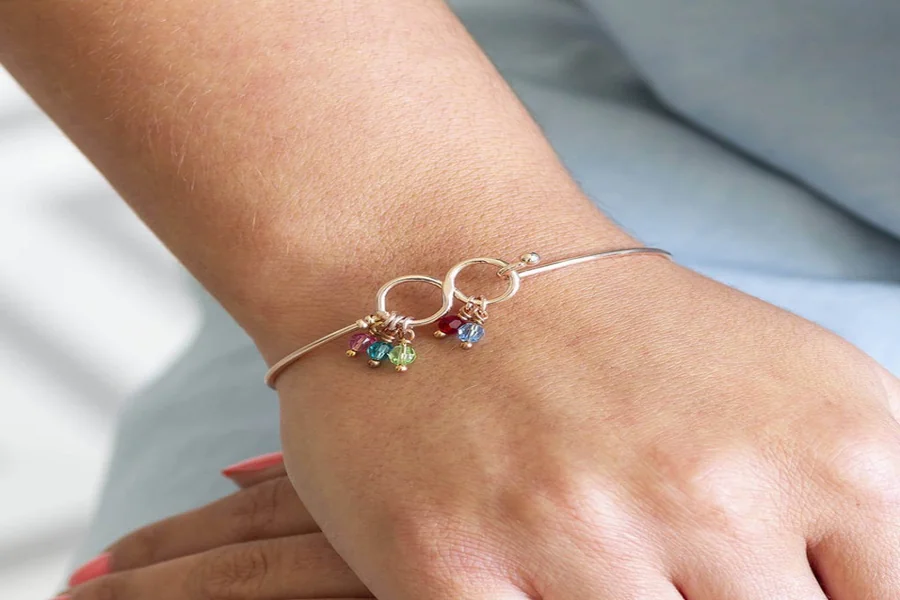
Birthstones have become a recognisable aspect of jewellery fashion, and thus, are a key factor in people’s purchasing decisions and personal style.
With the advent of birthstone jewellery, people now choose to wear birthstones for their inherent beauty, as well as their deep-rooted meanings. Birthstone jewellery in Australia is often chosen to celebrate birthday’s, special occasions and most importantly, as a meaningful present to give to loved ones.
The association of gemstones with the months of the year has developed over thousands of years and has been influenced by a variety of factors including ancient superstitions, religious beliefs, marketing of gemstones and finally contemporary social attitudes.
So you have probably found that people are curious as to where the tradition of birthstones came from, and why the birthstones are chosen for a piece of jewellery.This article will give you a little background on this ancient custom and why the birthstone has endured as a popular and enduring motif in the world of fine jewellery.
Ancient Beginnings of Birthstones
Magical powers of the stones have been known for thousands of years. Magical and spiritual significance has been attributed to a large number of gemstones by ancient civilizations, including Mesopotamia, Egypt and India. Magical stones were associated with particular times of the year, with planets and with mystic forces, and by wearing them people believed that they would be able to bring them good fortune, confidence, protection and success.
One of the earliest references to the stones in written history was in a religious context. In the Book of Exodus, there is a description of the Breastplate of Aaron which was a special cloak that was adorned with twelve precious gemstones. The gemstones represented each of the twelve tribes of Israel. The stones were not necessarily in direct connection to the months of the year, but were later attributed to the zodiac signs and thus to the twelve months of the years.
Influence of the Middle Ages and Renaissance
Many ancient beliefs about gemstones, which evolved during the Middle Ages and the Renaissance, were also carried over in Europe. Wear a gemstone corresponding to the month in which you want to exercise its powers. An interesting tradition advises to own all the twelve gems, and to wear successively the gemstone corresponding to the month in which we are.
It was also in this era that gemstones became linked to astrology and early medicine. Astrologers attempted to match stones to the motions of the planets and sometimes incorporated them into medical treatment. Thus jewelry functioned not only as an adornment but also as a protective item against illness, misfortune, evil spirits and forces.
Modern Standardisation
MODERN BIRTHSTONE LIST ( early 1900s ) The modern list of birthstones was established in the early 1900s. In 1912, the National Association of Jewellers ( now Jewellers of America ) ratified the modern birthstone list, assigning gemstones to each month of the year. What was a traditional and somewhat informal practice had now evolved into a commercial concept.
The list was later modified to accommodate changing fashion, concerns for durability, and the availability of gemstones. Some months had additional stones that could be used for jewelry, further evolving the list.
Marketing and Cultural Growth
In today’s world of jewellery marketing, it was marketing that brought the concept of birthstones into the jewellery foreground. Jewellers during the 20th century actively promoted birthstone jewellery as an appropriate and meaningful item of jewellery for a special occasion, namely a person’s birthday.
They argued that choosing a gemstone for its market value or aesthetic appeal would not yield the same effect as choosing one that had a deeper significance for the wearer. Rather than focusing on the gemstone’s physical attributes or monetary worth, marketers posited that the wearer would be able to form a meaningful emotional connection with a gemstone that signified their birth month.
Of particular interest to our customers was the message about birthstones, jewels associated with each month of the year. Thus they came to regard rings, necklaces and bracelets featuring birthstones as suitable birthday, anniversary or Mother’s Day presents. The novelty of being able to attach a precious gem to one’s own personal birthday encouraged many to buy birthstone jewellery.
This trend was mirrored right across Australia, with people also showing a growing love for individualised and sentimental items. With family and special occasion gifts becoming more of a focus, a growing interest in birthstones as a way to celebrate special occasions also occurred.
Why Birthstones Remain Popular Today
Birthstones are in the spotlight because of the blend of tradition and personalization they offer. With birthstones you can express yourself while at the same time wearing something fashionably stylish and of exceptional quality. With the birthstone, the customer can bring in a personal aspect to their piece of jewellery, which increases the appeal of the item.
Precious jewels are here to stay. As more people look to have jewelry that reflects events, people and experiences they have encountered in their lives, birthstones provide the perfect bridge between the diamond and the final piece of jewelry. Birthstones give meaning to what might have been considered just another piece of jewelry.
Conclusion
What started out as symbolic meaning in ancient times, birthstones have evolved into stylish fashion accessories. They have been the subject of much interpretation and promotion over the centuries and have become an internationally recognized tradition. It’s also a staple in the Australian jewellery market due to the personal connection birthstones offer, along with their beauty and classic design.
Fashion is always changing when it comes to jewellery, but the birthstones will always be relevant to that changing fashion, while retaining their spiritual meaning. The history of birthstones tells us just how important is for us to have meaningful, and sometimes traditional, items of jewellery that we wear every day.