Street Fashion in Spain: The Regional Looks Worth Copying

Spain does not have a single street style. The way people dress shifts noticeably from the capital to the coast and from the hot south to the rainy north, shaped by climate, local custom and a long tradition of tailoring and craft. What ties it together is a sense of care: outfits tend to look considered rather than thrown on, even when they are casual.
Here is how the main regions dress, and which ideas travel well to a wardrobe anywhere.

Madrid: Polished and Put Together
The capital leans neat and grown-up. Crisp shirts, well-cut chinos or pleated trousers, knitwear draped over the shoulders and clean leather shoes are a familiar daytime combination. Spaniards even have a nickname, pijo, for the preppy, well-groomed look associated with some of Madrid’s smarter neighbourhoods, and a more recent label, cayetano, for its young, conservative variant.
You do not need to buy into the stereotype to borrow the principles. Madrid style works because of fit and restraint: a navy, camel, white and grey palette, trousers hemmed to the right length, a trench or wool coat in winter, and trainers only when they are spotless. Evenings start late, so people often dress a notch up for dinner rather than going straight from the office in the same clothes.
What to borrow
- A tailored blazer worn with jeans and loafers
- A fine-knit jumper in a neutral shade, worn alone or over the shoulders
- Minimal white leather trainers, kept clean
- A structured leather bag rather than a canvas tote
Barcelona: Relaxed, Creative and Coastal
Barcelona feels looser. The city has strong design, art and music scenes and a beach on its doorstep, and its streets show it. Vintage finds, loose linen, printed shirts, cropped trousers, sandals and bold jewellery are all common, and people are more willing to mix colours and eras than in Madrid.
The neighbourhoods set the tone. Areas known for independent shops and galleries attract a more experimental crowd, with thrifted denim, oversized tailoring and statement eyewear. Along the seafront, clothing is simpler and practical: swim shorts under shirts, slip dresses, straw bags. Barcelona is also home to Mango, one of the country’s best-known high-street brands, though many locals prefer small independent labels and second-hand shops.
What to borrow
- A loose linen or cotton shirt worn open over a vest
- One vintage piece per outfit, balanced with plain basics
- Colourful or sculptural earrings to lift a simple look
Andalusia: Dressing for the Heat
In Seville, Córdoba and Málaga, summer temperatures dictate almost everything. Breathable natural fibres such as linen and cotton dominate, silhouettes are loose, and light colours reflect the sun. Long, airy midi dresses, wide trousers, and shirts with rolled sleeves are practical and elegant at the same time.
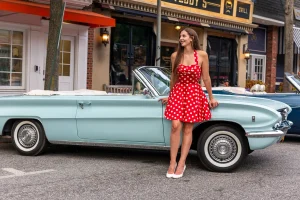
The south also has the strongest link to traditional dress. The flamenco costume, the traje de flamenca, is still worn at spring fairs, and its details regularly appear in everyday fashion: ruffled hems, polka dots, fitted bodices and flared skirts. The fringed, embroidered silk shawl known as the mantón de Manila is another heritage piece that turns up in both costume and modern styling.
A useful local habit is dressing modestly for churches and cathedrals, many of which ask visitors to cover their shoulders. A light scarf or overshirt in a bag solves that without compromising on comfort.
The North: Layers for Rain and Wind
The Basque Country, Asturias, Cantabria and Galicia have a greener, wetter climate, and the wardrobe reflects it. Knitwear, waxed or waterproof jackets, sturdy leather boots and scarves are staples for much of the year. The look is more practical and outdoorsy, with a fondness for good-quality basics that last.
The Basque beret, the txapela, remains a regional symbol, and the area has deep fashion roots: Cristóbal Balenciaga was born in the fishing town of Getaria, which now has a museum dedicated to his work. Galicia, meanwhile, is where Inditex, the group behind Zara, was founded, which makes Spain’s influence on global fast fashion easy to trace.
Spanish Staples That Work Anywhere
Espadrilles
The jute-soled canvas shoe known in Spanish as the alpargata has been made in Spain for centuries. Flat versions suit shorts and cotton trousers; wedge versions pair well with summer dresses. Keep them dry, as jute soles can lose their shape if soaked.
Quality leather
Spain has a long leather-working tradition, from Madrid’s Loewe, founded in the nineteenth century, to the shoemaking workshops of Mallorca and the Valencia region. A well-made leather belt, bag or pair of loafers is a sensible investment piece in the Spanish spirit: fewer items, better made.
The evening outfit
Spaniards typically eat dinner late and often take an evening stroll, the paseo, beforehand. That creates a habit of changing into something slightly smarter at the end of the day. A simple dress with sandals, or dark trousers with a clean shirt, is usually enough.
How to Get the Look Without a Costume
The easiest way to dress with a Spanish sensibility is to focus on a few habits rather than specific items:
- Prioritise fit. Well-hemmed trousers and shoulders that sit correctly matter more than labels.
- Choose fabrics for the climate. Linen and cotton for heat, wool and waxed cotton for damp weather.
- Keep the palette controlled. Neutrals with one strong colour or print read as deliberate.
- Look after shoes. Polished leather and clean trainers make a noticeable difference.
- Nod to heritage lightly. A polka-dot blouse, espadrilles or an embroidered shawl works better as one detail than as a full themed outfit.
Spanish street fashion rewards attention to detail more than trend-chasing. Whether the inspiration is Madrid’s tailoring or Barcelona’s easy mix of old and new, the common thread is clothing that suits the setting and is worn with care.