60s Men’s Fashion: The Decade That Rewrote the Rulebook
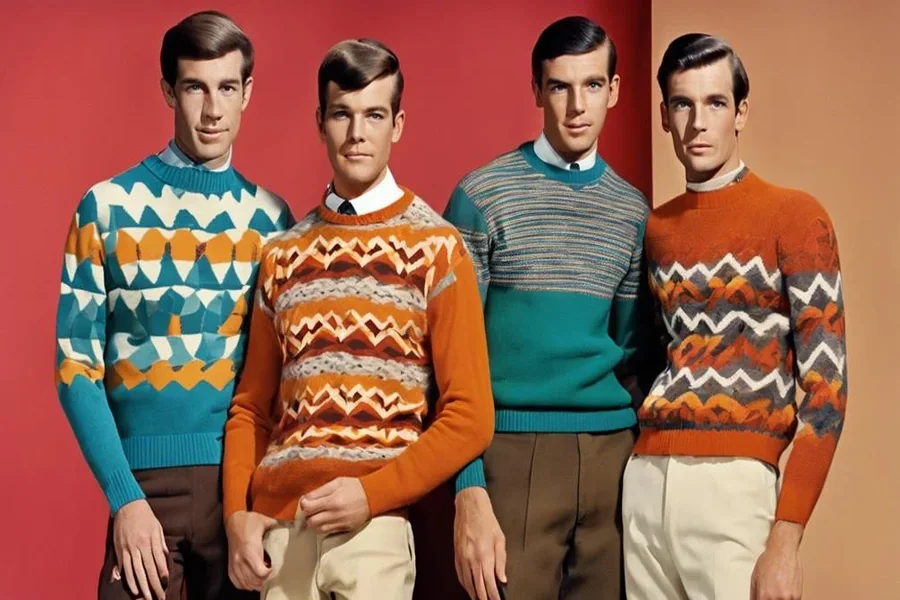
Men’s clothing changed more in the 1960s than in the several decades before it. At the start of the decade, most men still dressed much as their fathers had, in conservative suits, hats and ties. By the end, young men in London, New York and San Francisco were wearing velvet, floral shirts, wide ties, flares and long hair. The shift was driven by a large, affluent youth generation, pop music and a new wave of independent boutiques, and it set the stage for the far more relaxed menswear of today.
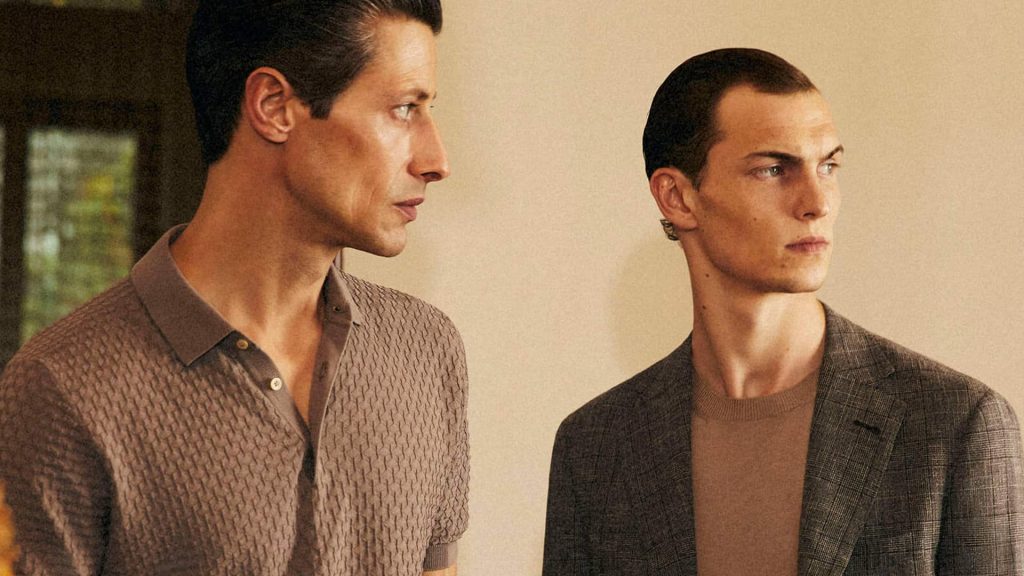
The early 1960s: sharp and slim
The decade began with a trim, tidy look. American Ivy League style, rooted in East Coast universities, was at its peak: natural-shouldered sack suits, oxford-cloth button-down shirts, narrow repp ties, chinos, penny loafers and Shetland sweaters. Businessmen wore slim, dark suits with narrow lapels and skinny ties, and a crisp white shirt was standard.
Italian tailoring was also influential. Shorter, closely fitted jackets, slim trousers without turn-ups and pointed shoes offered a sleeker alternative to heavier British and American suits. Hats, long considered essential, were worn less and less as the decade went on.
The Mods
In Britain, the Mod subculture took that slim Italian look and made it an obsession. Mods, many of them young working-class Londoners, spent their wages on made-to-measure suits with narrow lapels and short jackets, button-down shirts, knitted ties and polished shoes or desert boots. Fred Perry polo shirts, Harrington jackets and sta-press trousers were casual staples, and the fishtail parka, often an army-surplus M-51, was worn over everything to protect the clothes while riding scooters.
Mods cared about fine detail: the number of buttons on a jacket, the width of a lapel, the exact length of a vent. That attention to tailoring, combined with a love of modern jazz, soul and later bands such as The Who and Small Faces, made the movement one of the most influential youth styles of the century.
The Beatles effect
The Beatles helped carry the new look to a mass audience. Their early stage suits, collarless jackets inspired by Pierre Cardin designs and made by tailor Dougie Millings, were copied widely, as were their Cuban-heeled “Beatle boots,” a variation of the Chelsea boot. Their longer, mop-top hair also caused a stir at a time when short back and sides was the norm. As the band’s style changed later in the decade, toward military jackets and psychedelic colors, fans followed.
Carnaby Street and the King’s Road
By the mid-1960s, London’s Carnaby Street had become the center of “Swinging London” menswear. Boutiques there, led by pioneers such as John Stephen, sold affordable, fashion-forward clothing to young men: bright shirts, hipster trousers, colorful knitwear and patterned ties. Chelsea’s King’s Road developed its own scene, with shops such as Granny Takes a Trip selling vintage military jackets, velvet and bold prints.
These boutiques changed how men shopped. Instead of visiting a tailor for a conservative suit, young men could buy ready-to-wear clothes that changed with the latest music and trends.
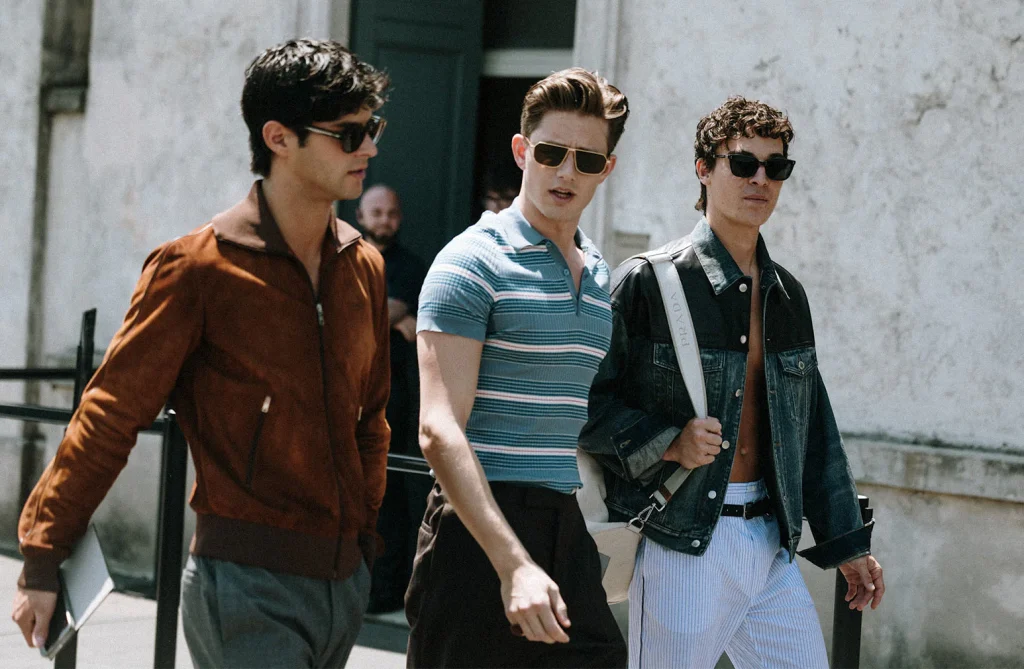
The Peacock Revolution
The late 1960s brought what the press called the “Peacock Revolution,” a period when men embraced color, pattern and decoration more than they had in generations. Frilled and ruffled shirts, velvet jackets, floral prints, paisley and brocade all appeared. Michael Fish, whose Mr Fish shop in London dressed rock stars and aristocrats alike, was known for extravagant shirts and the very wide “kipper” tie.
The Nehru jacket, a slim jacket with a mandarin collar inspired by Indian dress, had a brief but intense spell of popularity around 1967 and 1968. Turtlenecks, sometimes worn under a jacket instead of a shirt and tie, became a fashionable alternative for evening.
Casual cool
Alongside the flamboyance, a more understated casual style took hold, often associated with actors such as Steve McQueen. Harrington jackets, chinos, crewneck sweaters, shawl-collar cardigans, desert boots and tortoiseshell sunglasses made up a relaxed wardrobe that still looks modern. Denim, once considered workwear, became increasingly acceptable as leisure clothing among young people.
The hippies
By 1967, the counterculture centered on San Francisco’s Haight-Ashbury had produced a very different look. Hippie dress rejected tailoring altogether in favor of flared jeans, tie-dye, fringed suede jackets, embroidered and ethnic-inspired garments, beads, sandals and long hair and beards. Much of it was secondhand or handmade, and it borrowed freely from cultures around the world. The style became the defining image of the decade’s end.
What the decade changed
The 1960s left men with far more freedom than they had at the start. Color, pattern and personal expression became acceptable. Ready-to-wear boutiques challenged the traditional tailor. Youth culture, rather than established society, began to set trends. And the idea that a man’s clothes could reflect his music, politics and personality took hold.
How to wear 60s style today
- A slim, dark suit with narrower lapels and a slim tie gives a clean early-60s feel without looking like a costume.
- Button-down oxford shirts, worn with chinos and loafers, are the most wearable Ivy piece.
- A Harrington jacket is versatile and works with jeans or chinos.
- Chelsea boots or desert boots suit both smart and casual outfits.
- A fine-knit polo shirt or turtleneck under a blazer is a simple nod to the Mod and late-60s look.
- One bold item, such as a patterned shirt or velvet jacket, is enough to reference the Peacock era.
The lesson of the decade is that rules in menswear are more changeable than they look. What began as young people’s rebellion became, within a few years, the mainstream, and many of its pieces have never really left.