How to Blend Men’s Hair Systems with Gray Side Hair
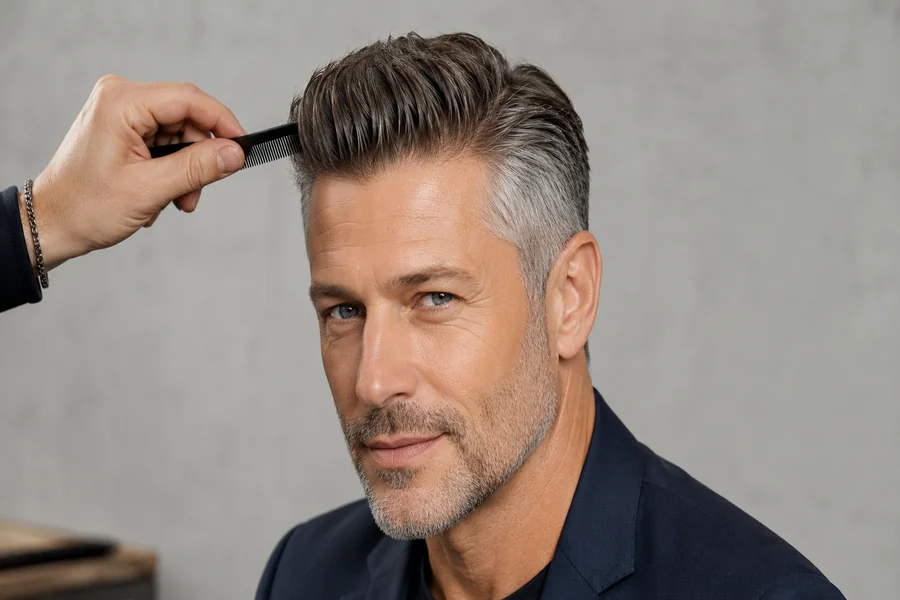
One of the biggest challenges for Men’s Hair systems is not always the hair on top. It is the transition between the system and the natural hair around it.
For men with gray sides, this challenge becomes even more important.
A hair system may have a realistic hairline and excellent quality hair, but if the color transition between the system and the natural side hair looks unnatural, the entire style can feel disconnected.
This is why experienced wearers understand that a natural result is not just about adding hair. It is about creating harmony between the hair system and the hair you already have.
The goal is not to hide gray hair.
The goal is to make the gray look intentional, natural, and consistent with the rest of your appearance.
The First Rule Match the Gray Percentage Instead of Fighting It
One of the biggest mistakes men make is trying to completely remove the appearance of gray.
As men age, gray hair often becomes part of their overall look. Instead of making everything dark again, the more natural approach is usually matching the existing gray percentage.
For example, if your side hair is around 30% gray, choosing a hair system with completely dark hair can create a noticeable contrast.
The top may look artificially youthful while the sides reveal your natural age.
A better approach is choosing a system that includes a similar gray percentage.
This creates a smoother transition because the eye sees the entire hairstyle as one consistent look.
Natural blending is usually about balance, not covering every difference.
Choosing the Right Color Is More Complicated Than Picking Black or Brown
Many men underestimate color matching.
They assume choosing “black,” “dark brown,” or “medium brown” is enough. However, natural hair usually contains multiple tones.
Gray hair especially changes how the overall color appears.
A man may have:
- Dark brown hair with silver strands
- Black hair with cool gray tones
- Brown hair with warmer highlights
- Uneven gray concentration around the temples
A hair system that matches only the base color may still look different from the side hair.
This is why professional color matching often considers:
- Base shade
- Gray percentage
- Warm or cool undertones
- Natural fading patterns
A realistic men’s hair system should complement your existing hair, not compete with it.
Why Density Matters When Blending Gray Sides
Density is another factor that affects realism.
A common mistake is choosing a system that is much denser than the natural side hair.
For example, if the sides are naturally thinner because of age but the top has extremely thick density, the contrast can make the system noticeable.
Natural aging usually affects the entire hairstyle, not only one area.
A balanced approach often works better.
The top should provide enough coverage and fullness, but it should still match the overall character of the wearer’s natural hair.
This is especially important for mature men who want to look refreshed rather than dramatically different.
Texture Matching Creates a More Seamless Transition
Color is only one part of blending.
Texture also matters.
If your side hair has a natural wave pattern but the hair system is completely straight, the difference may become obvious. The same applies if the side hair is coarse while the system hair is extremely silky.
A good blend considers:
Hair movement
Curl pattern
Thickness
Direction of growth
The best results happen when the hair system behaves similarly to the natural hair around it.
This is why customization is so valuable in men’s hair systems. A realistic appearance depends on matching multiple characteristics at the same time.
The Temple Area Is Where Most Blending Problems Appear
The temples are usually the most difficult area to blend.
This is where the hair system meets the natural side hair, making any mismatch easier to notice.
A few things can help:
A softer temple design
Appropriate density reduction near the edges
A haircut that blends the transition area
A realistic gray distribution around the sides
The goal is to avoid creating a visible “line” between the system and natural hair.
A professional cut-in can make a significant difference because the stylist can adjust the shape based on your facial structure and existing hair pattern.
Read More: What Conscious Beauty Brands Should Know Before Launching Hair Oil for Textured Hair
Should You Add Gray Hair to the Hair System?
For many men, the answer is yes.
Adding gray to the system can create a much more natural appearance, especially when the side hair already has noticeable gray.
However, the amount matters.
Too little gray can create a disconnected look.
Too much gray can make the system appear older than intended.
The ideal amount depends on:
- Your natural gray percentage
- Your age
- Your preferred style
- Your remaining hair color
The best result usually looks like your natural hair has gradually changed over time, not like gray was suddenly added.
How Modern Men’s Hair Systems Handle Gray Blending
Modern hair systems have become much more customizable compared with older hairpieces.
Today, men can choose different combinations of:
Hair color
Gray percentage
Density
Base material
Hair texture
Hair direction
This allows the system to be designed around the individual rather than forcing everyone into the same appearance.
For men with gray sides, this customization is especially important because natural aging patterns vary significantly from person to person.
Some men gray evenly. Others gray mostly around the temples. Some have salt-and-pepper patterns that create a unique appearance.
A good system should respect those differences.
Maintenance Tips for Gray Blended Hair Systems
Gray hair often requires slightly different care because lighter strands can appear drier or more noticeable when damaged.
To maintain a natural blend:
Use gentle shampoo designed for treated hair
Avoid excessive heat styling
Use lightweight conditioning products
Brush carefully to reduce shedding
Protect the hair during sleep
Regular maintenance helps preserve both texture and color consistency.
A well-maintained system will continue blending naturally for longer.
Where Quality Makes a Difference
When choosing a hair system, the construction quality directly affects how realistic the final result can be.
Factors such as hair quality, color options, density control, and customization availability all influence blending success.
Brands that focus on personalized men’s hair systems, such as TopUniqueHair, provide different options for men who need specific solutions rather than standard designs.
For someone with gray sides, having choices in color percentage and density can make the difference between a system that looks added and one that looks naturally integrated.
The Most Natural Look Is Not Always the Youngest Look
One of the biggest lessons in hair replacement is that natural does not mean looking 20 years younger.
Many men make the mistake of choosing a system based on how they looked decades ago.
But the most convincing results usually come from enhancing the current version of yourself.
A mature man with some gray can look confident, professional, and stylish. The goal is not to erase age completely. It is to create a balanced appearance.
Gray hair can actually add character when blended correctly.
Final Thoughts
Blending a men’s hair system with graying sides is about creating continuity.
The most important factors are:
Matching gray percentage
Choosing the right density
Balancing texture
Creating a natural temple transition
Maintaining realistic expectations
A great hair system should not make people wonder where your natural hair ends and the system begins.
It should simply look like your own hair, styled well.
When the color, texture, and density work together, gray sides stop being a challenge and become part of a natural, confident appearance.