A Road Still Calling: Bob Dylan’s Recent Wanderings
Introduction
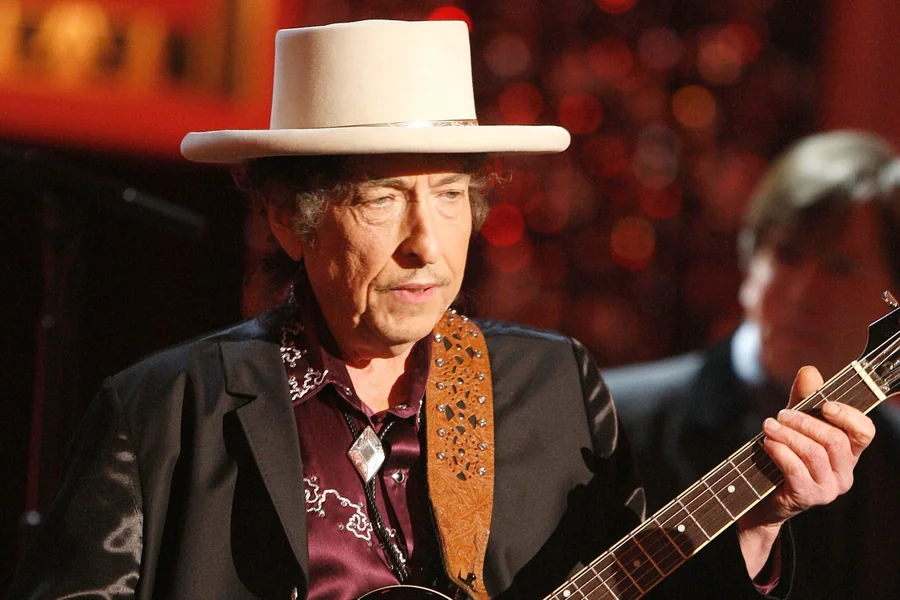
Bob Dylan never really stopped moving. Even as he entered his eighties, when most artists settle into retrospectives and comfortable chairs, he remained on the road—less as a performer chasing applause, more as a man who can’t quite stop following the hum of the highway. His travel in recent years has been quieter, less publicized, but still steady—an ongoing dialogue between a restless body and an unending map.
Since 2020, Dylan has been seen drifting between continents and moods. There was the hush of the pandemic, the stillness of his Malibu home, and then, slowly, the reemergence of a tour that refused to die. The “Rough and Rowdy Ways” tour—his first after years of absence—carried him through small theaters in the U.S., intimate venues in Europe, and down winding roads in Japan. People spoke of spotting him at roadside diners, quiet coffee shops, and train stations where no one expected a legend to appear. He blended in, almost like a traveler who’s seen too many versions of the same sunrise and is still curious about the next one.
To follow Dylan’s recent trail is to look for signs more than destinations. He has stayed in hotels that barely advertise their names, eaten in family-owned spots that might never know who they served, and walked through city corners without leaving proof he was there. But those who did see him—waiters, fans, musicians—tell small stories. He still travels with the same small appetite for comfort: black coffee, a plain breakfast, a quiet corner table. He doesn’t linger, but he doesn’t rush either.
The question lingers for anyone who watches this pattern: what does travel mean to a man who’s already traveled everywhere? For Dylan, the road isn’t a route anymore. It’s a rhythm, a kind of breathing. He moves not because he must, but because stillness would mean silence—and silence, for him, is the one country left unexplored.
Where the Road Bends (2020–2021)
The world stopped in 2020, but Bob Dylan didn’t completely vanish. While the pandemic locked most musicians indoors, Dylan retreated into something closer to meditation. Malibu became his stage—a cliffside home, a small studio, and perhaps the company of a few friends who knew better than to ask questions.
Those who worked with him in that time say he returned to old habits: morning walks through the garden, long phone calls late into the night, a guitar always nearby. He released Rough and Rowdy Ways in 2020, a record heavy with ghosts and reflections. It felt like a diary of American memory, written by someone both inside and outside of time. He didn’t tour, but he didn’t rest either. Rumors swirled that he wrote constantly, filling notebooks with half-sung ideas.
Los Angeles locals mentioned seeing him quietly appear near the Bob Dylan Center project in Tulsa, overseeing archives and rare recordings. Tulsa, for Dylan, was less a place than a mirror—his own history turned inside out. Archivists described brief visits, quick comments, handwritten notes slipped under folders. He wanted his story told, but on his terms.
Food was simple during those quiet years. He was said to favor steak and potatoes, scrambled eggs, toast, and the endless black coffee that has followed him since the 1960s. Malibu Kitchen staff claimed he’d stop by early in the morning, sometimes alone, sometimes with one companion. The orders never changed much, and neither did the mood.
He had traded the chaos of endless tours for something almost monastic. And yet, even in that isolation, he seemed to be preparing for another journey. “He looked like a man on pause,” one witness said, “not on stop.”
By the end of 2021, the tour wheels began to turn again. Musicians were quietly hired. Venues started reserving dates. The world was reopening, and so was the road. Dylan, true to his nature, was already a few miles ahead.
The Never-Ending Return (2022–2023)
In late 2022, Bob Dylan’s “Rough and Rowdy Ways” tour came alive again. It wasn’t the grand parade of arenas and light shows; instead, it was a pilgrimage of small theaters and historic halls. London’s Palladium, Milan’s Teatro degli Arcimboldi, Dublin’s 3Olympia—the venues read like a list of places that care about sound more than spectacle.
He traveled quietly: one bus, a few crew members, no media entourage. Fans who caught him described the scene as stripped down to the bone—just the band, the lights, and the songs. Each performance felt like a confessional whispered through an amplifier. He avoided the hits that built his legend, choosing instead the gravel-road ballads from his newer albums.
Between shows, he stayed in modest hotels or old city inns that might have hosted jazz players decades earlier. In Dublin, he was rumored to have stayed near Merrion Square, walking out in the early mornings to a café for a small breakfast—coffee, eggs, rye toast. In Rome, a trattoria owner claimed he came by twice, quiet but friendly, finishing his pasta with a small glass of Chianti and a half-smile.
Fans spotted him in Oslo bars after shows, his face mostly hidden under a hat, surrounded by the low murmur of locals who pretended not to recognize him. He wasn’t chasing anonymity; he was inhabiting it. The myth had turned into a traveler who no longer needed to prove anything.
Setlists changed nightly. Songs like “Key West” and “I Contain Multitudes” replaced his early protest anthems. The travel, the meals, the movement—they all echoed the same theme: the return is never the same as the departure.
There were fleeting encounters. A train conductor in Norway recalled him nodding politely, eyes fixed on the horizon. A young musician in Italy said Dylan offered a brief compliment on his guitar, then drifted off into the crowd. Each meeting carried the same energy—a man present but ungraspable, as if part of him was already on the next road.
The mundane around him—hotel lobbies, breakfast counters, creaking restaurant chairs—became part of his mythology. Every moment felt half-ordinary, half-sacred, like he’d managed to turn travel itself into a kind of ongoing verse.
The Pilgrim and the Archive (2023–2024)
Tulsa reappeared in Dylan’s orbit during 2023 and 2024. The Bob Dylan Center opened its doors to the public, housing manuscripts, unreleased songs, and decades of ephemera. But Dylan’s involvement wasn’t ceremonial. He made several quiet visits, often at night or early morning, moving through the aisles with archivists as though walking through his own past.
He stayed nearby, often choosing small Route 66 motels over luxury hotels. Locals said he preferred anonymity and routine—checking in with minimal luggage, a few books, and a small guitar case. His meals were as unassuming as his lodgings. One diner in the area mentioned he liked corned beef hash and black coffee, no sugar.
Tulsa became his still point—a spiritual waypoint on a journey that had stretched over sixty years. Instead of writing songs about America, he was now curating the physical proof of it. There, among the yellowed lyric sheets and reel-to-reel tapes, Dylan’s role shifted from creator to custodian.
He spent time reading, too—obscure history books, old blues biographies, collections of poetry. Friends said he had developed a fascination with forgotten recipes and Southern cookbooks, collecting them like relics of another age. These small acts mirrored his songwriting—always searching for hidden verses in the everyday.
What struck those around him was how present he seemed. At an age when nostalgia tempts most artists to settle into their legends, Dylan kept reshaping his. He saw his archive not as an ending, but as a crossroad. A place to pause, not to stop.
Tulsa wasn’t where the road ended; it was where it deepened. The highways outside the city became the arteries of an older America—gas stations, diners, faded signs—and Dylan, still restless, walked among them as if the ghosts of Lead Belly and Woody Guthrie were waiting just around the bend.
The New Crossroads (2024–2025)
By 2024, new rumors began to swirl. Studio insiders whispered that Dylan had recorded fresh material, though no official announcements followed. What did emerge, however, was his continued touring—select cities, small venues, a format he seemed to favor more with age.
He returned to Tokyo, where fans have long treated him with reverence bordering on devotion. Reports placed him at a small jazz bar in Shibuya, sipping green tea and chatting briefly with the owner about Louis Armstrong. From there, he drifted to Melbourne, playing two quiet nights in theaters better known for spoken word than for rock.
In Kansas City, he stayed at a historic downtown hotel, occupying the same suite once used by Duke Ellington. Hotel staff noted how simple his routine was: a morning walk, tea instead of whiskey, an early dinner, then a night of reading or quiet rehearsal. Aging hasn’t made him slower—it’s just tuned his rhythm differently.
On this leg, he seemed to treat every meal, every stop, as part of the setlist. Friends described him as “living inside the song,” making choices guided by intuition rather than schedule. Collaborations happened quietly—session musicians dropping in unannounced, songs tested live before ever reaching a studio.
He’s less the wandering troubadour of old and more the pilgrim chronicling the last stretch of an endless path. Each show feels like a handwritten letter mailed from another town. Each meal, another verse in a life that refuses to end on a chorus.
His diet lightened—grilled fish, steamed vegetables, herbal tea. “He’s treating himself like an instrument,” one road companion said. There’s a grace to it, a self-awareness that feels earned. Dylan now travels not to conquer the map, but to stay in tune with it.
The Miles We Never See
Bob Dylan’s travel in these last five years isn’t a farewell. It’s the quiet continuation of a long ritual. He’s not chasing stages, nor hiding from them. His road has become more inward, but it’s still a road—a thread connecting diners, rehearsal rooms, hotel windows, and bus rides through anonymous towns.
There’s poetry in his persistence. Where others might chase immortality, Dylan seems content with motion itself. Every trip, every song, feels like another line in the same long poem he’s been writing since the early sixties.
When people speak of him now, they rarely describe grand gestures. They mention small details: a nod to a fan, a conversation about blues history, a habit of leaving generous tips. The myth has become human again. The highways of his youth have narrowed into quieter lanes, but the purpose remains.
Somewhere, perhaps right now, he’s sitting in a corner booth at dawn. The diner smells of coffee and grease. He folds the newspaper, pays in cash, and steps back into the morning. The world doesn’t notice, but the road does.
Bob Dylan keeps moving, not because he has to—but because he still can. And maybe that’s all the music ever asked of him: to keep walking, keep eating, keep looking, and keep singing long after the lights fade.