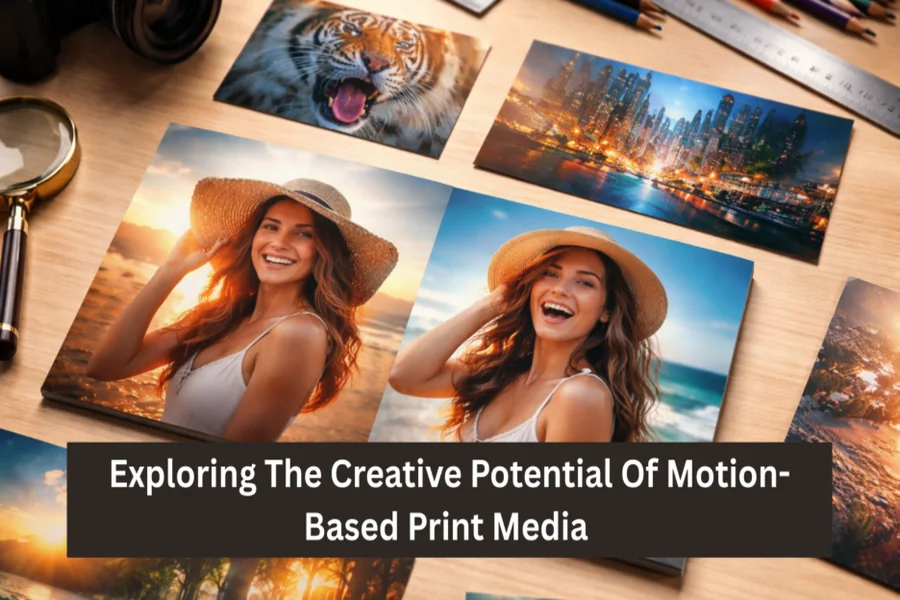
Exploring The Creative Potential Of Motion-Based Print Media
Traditional print can often have trouble capturing attention in a world dominated by movement, screens, and non-stop visual stimulation. You can spend all the time picking the right picture and perfecting the layout and using high-quality materials, but the end result can come across as static.
As a result, viewers look briefly at them and move on, losing what you were trying to say. This disconnect causes frustration, particularly when the end goal is to leave a lasting impression.
Motion-based print media responds to this challenge by introducing visual change into the physical formats. Instead of freezing a moment, it adds a controlled movement that reacts to the viewer’s angle.
This article examines the ways in which motion-based print media extends creative possibilities, engagement, and transforms how images communicate meaning.
1. Redefine Static Images Through Visual Movement

Motion-based print media rejuvenates the way you think about photographs. Rather than displaying one fixed and unique image, it integrates a series of frames onto one surface as if it is moving when the angle of view is varied.
In this shifting arena, platforms like pikmoto.com represent how dynamic visuals are becoming accessible within physical media through motion printing methods.
This approach modifies the creative starting point. Instead of asking yourself which is the best image to convey your message, you start thinking about how images can interact with each other. A subtle expression on the face, the shift in lighting, or a moment before and after an event can now co-exist in one print.
As a result, there is a depth to your work. The image is alive and invites the viewer to stop and explore instead of glance and go.
2. Encourage Active Viewer Engagement
One of the biggest creative strengths of motion-based print media is its interactivity. Unlike the conventional prints, these visuals demand movement from the viewer to achieve their full effect.
As people tilt or walk past the print, the image reacts. This simple act changes the viewer from a passive observer and turns them into an active participant. As a result, the attention spans improve naturally.
From a creative standpoint, this kind of interaction gives you the opportunity to address the way an image is experienced. You can unfold contrasts, transitions, or emotional changes slowly. Each angle provides new information, thus keeping curiosity alive and strengthening the engagement.
Ultimately, this interaction makes the experience more memorable than static visuals alone.
3. Enhance Storytelling Through Sequential Imagery

Storytelling is more powerful when motion enters the frame. Motion-based print media makes it possible for you to create visual sequences without having to rely on digital screens or the use of animation.
By combining two or more images, you can show progression. This could be before-and-after transformations, changes in emotions, or small narrative details that occur as the viewer moves along.
Since the story is told through physical interaction, it makes the story feel personal and intentional. The viewer controls the pace, which makes the experience more immersive.
As a creative tool, this creates new storytelling opportunities. You are no longer constrained to one decisive moment. Instead, you can tell a fuller story within one printed piece.
4. Elevate Perceived Craftsmanship and Value
Creative work is often not only judged on the concept but also on execution. Motion-based print media indicates a greater degree of craftsmanship because of its technical precision and conscientious design.
When viewers identify a print that changes, visually, depending on movement, they automatically equate the print to innovation and effort. This perception raises the overall value of the work.
From a creative standpoint, this means that your ideas gain more respect. The medium supports the message by demonstrating an attention to detail and a deliberate choice of design.
As a result, motion-based prints are distinct from the standard formats and are therefore particularly suitable for projects for which quality and originality are important.
5. Expand Creative Freedom Across Use Cases
Motion-based print media is receptive to a wide range of creative activities. Whether you are working with your personal photography, pieces of art, or visual pieces of communication, the format is flexible.
You can try experimenting with expressions, perspective, or the environment without shocking the viewer. The motion effect makes the presentation clean with complexity underneath the surface.
Additionally, the medium supports both soft and dramatic effects. A soft movement can serve to express emotion, and a drastic movement can serve to highlight contrast. This versatility means you are able to fit the technique to your creative intent and not to a predefined style.
Therefore, motion-based print media becomes a tool that doesn’t restrict creativity but enhances it.
6. Bridge Physical Print With Modern Visual Expectations
Audiences today are accustomed to movement. Screens, scrolling, and animations shape how people consume visual content. Static print, while valuable, can feel disconnected from these expectations.
Motion-based print media bridges this gap. It preserves the tactile quality of physical prints while introducing visual dynamics associated with digital experiences.
This balance allows you to meet modern expectations without sacrificing the authenticity of print. The result feels familiar yet innovative, which resonates strongly with contemporary viewers.
By blending physical presence with visual motion, this medium positions print as a relevant and evolving creative platform.
Final Thoughts
Motion-based print media reimagines what printed visuals can achieve. By introducing movement, interaction, and layered storytelling, it transforms static images into engaging experiences.
For creatives seeking deeper engagement, stronger narratives, and elevated presentation, this approach offers meaningful possibilities. Rather than replacing traditional print, it expands its creative potential and redefines how stories are shared through physical media.