When the Show Goes Wrong: How Festivals Handle PR Disasters in Real Time
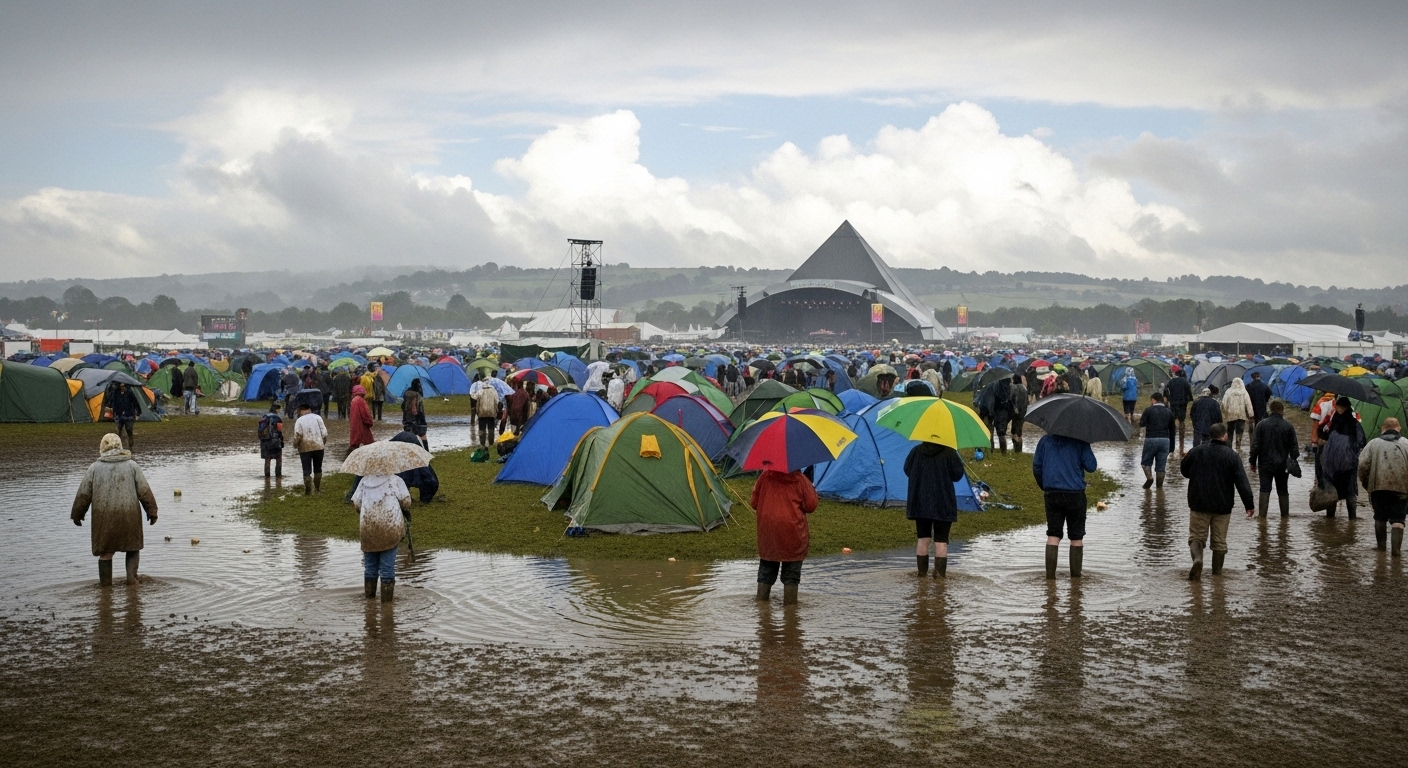
For festivals, the show must go on, and so must the crisis communications. But the nature of Festivals is such that the operational issues experienced by other live events are magnified by the nature of the Festival environment.
A single venue crisis can rapidly become a Festival-wide issue as information spreads quickly via social media and via the Festival-goers who are present on site. A festival therefore presents a challenging and rapidly changing environment in which to try and manage a crisis.
1. Why Festival Crises Escalate Faster Than Any Other Live Event
Managing a crisis at a single venue is complicated enough. But at a festival, where there are multiple stages, thousands of attendees, and acres of space, it’s almost impossible to get your head around the situation.
Typically, the people who know what’s going on are on the ground, dealing with the crisis as it happens. They are also often the attendees. So, the first to know what’s going on are likely to be the festival-goers themselves.
First, information at a festival travels in a very different way than it does in any other live event. Information at a festival travels in a very different way than it does in any other live event.
Due to the number of stages and venues, and the large number of people spread out over a big site, there are rarely people in close proximity to view a situation unfold from start to finish. And the teams that are on site to manage the various situations that can occur are the Site Production team, Security, the festival’s Security team, and Artist Liaisons.
These are the first people to learn about an issue. And, as previously said, whenever an issue develops at a festival, word spreads rapidly, with film of an event typically appearing on social media within minutes.
In such social media posts, individuals will remark on what has happened. And such comments, which are posted before an official version of events is established, are frequently made by people who rely on barely 15 seconds of film.
Again, this is not a story of how festivals fail in a crisis. Most festivals deal with crises in a highly professional manner. It is a story of format.
Most organizations are used to having a few hours or even days before a crisis hits the media. A product recall is a good example of this. But a festival is a 24/7 live event, which, by definition, has no lead time.
Behind the Scenes: The First 30 Minutes of a Festival Crisis
Site production and security are typically the first individuals to find out about an issue. Artist liaisons and publicists are often notified next, especially when the incident is related to the artist(s) performing. Each person in the chain of communication can typically add a minute or two to the time it takes for the crisis to be confirmed by someone with the ability to officially communicate with the public.
The team dealing with the physical crisis (i.e., weather, a structure collapse, crowd control, medical issue, etc.) will work to resolve the problem at hand. In the meantime, the communications team must work to come up with a statement to release before attendees and viewers begin to fill the void of silence with rumors.
Often enough, the information will then make its way to the artist’s liaison and, from there, to other people involved in the artist’s team. They will then look into the matter and usually deal with the problem in the best possible way.
Sometimes, however, things don’t go as smoothly as this when it comes to the way in which the information is communicated to the public. In such cases, a number of factors can play a role.
First of all, the communications staff will be concerned that their statement could be incorrect by the time it is read. Therefore, they may prefer to wait until all the facts have been established. This approach can be wise from a legal point of view as well, since one never knows what kind of problems a hasty statement could cause.
In addition, there is always the fear of being the first to say something that turns out to be incorrect later on. It is for this reason that the first thirty minutes are so very important in situations such as these. Ideally, the initial communication should be a short statement in which the current situation is explained to the public as accurately as possible.
In the meantime, those involved will work to establish the facts of the matter and, once they have done so, the public can be informed of any changes to the initial statement. For festivals without a full-time communications team in place, this is often exactly the role a PR agency is brought in to fill, especially in the pressure of those first thirty minutes.
A Guide to a Functioning First 30 Minutes of a Festival Crisis
Crisis communication for festivals can be applied using many of the same steps for other kinds of crisis communication. As outlined by the Public Relations Society of America, these steps are: confirm what information is known, designate a single point of contact, issue a holding statement, and monitor social media to stop the spread of misinformation.
- Confirm what is actually known, and be explicit internally about what is still assumption rather than fact
- Designate one person as the single point of public communication, so the audience isn’t getting conflicting versions from different accounts or staff members.
- Release a holding statement. This first message serves as a ‘bridge’ between the stage where the crisis is unfolding and that of confidence. It conveys that a team is dealing with the issue at hand.
- Real-time monitoring of social platforms to keep track of the spread of information and counteract any misinformation before it spreads too far.
Teams that do not issue holding statements to festivals and live events often lose control of the story as it is filled by attendee footage, speculation, and the fastest-traveling theory of what occurred. A corrected version of events is far more difficult to disseminate to the public after the fact than a holding statement issued at the onset of a crisis.
2. Why Silence Is The Most Common Festival Crisis Mistake
While many event producers would maintain that they handle any festival crises well, they would be wrong. Typically, behind the scenes of every festival there is a production team and/or site producers and/or security, who are usually the first people to be informed of any problems.
The artist liaisons are often next in line to find out about any crises, particularly if the artist concerned is directly involved. But the people who really count are the communications people. If they don’t issue the correct information in the correct amount of time, then festivals can suffer greatly.
This is a pretty standard reaction within an organization but causes huge problems at a festival where the entire audience has already formed a view as to what has occurred hours before a statement is released. A holding statement in the first few hours is absolutely fine and does much to mitigate the worst effects of a festival crisis – silence does not.
The worst thing to do when there is a crisis at a festival is to maintain silence. It is human nature to fill silence with rumor and speculation. It is much better to provide a short and honest acknowledgment of what has occurred, and then to update as more information is gained. Such a statement will do far more good for the festival’s reputation than a well-worded but delayed statement of events.
The First 30 Minutes Is Part of the Crisis, Not the Calm Before It
You see a lot of festival crises blamed on the communication team, but the reality is that festivals rarely have a news cycle to gently unfold their response to a crisis. How a festival treats the first half an hour of a crisis will largely determine their outcome.
And it’s not about having the best communications team. Rather, it’s about treating that first half hour as part of the actual crisis and not as a holding period before they go into calm crisis mode and craft the perfect statement about what happened.