How Small Fashion Labels Get Embroidery in Houston Without Owning a Single Machine
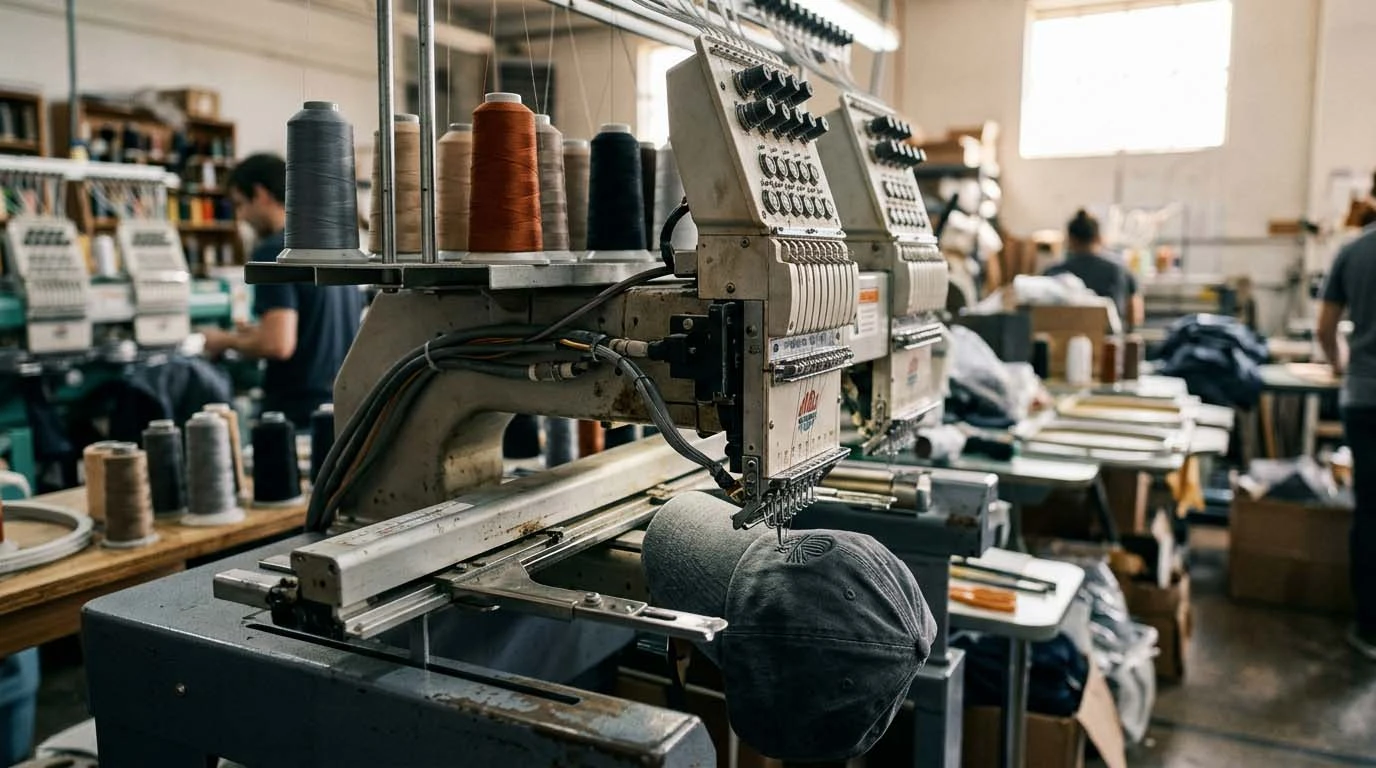
Small fashion labels rarely need to own embroidery machines. Many rely on specialists handling embroidery in Houston for production while keeping design in-house.
Comparing local stitching services can help brands find the right partner, while others source custom embroidered pieces for sale across Houston, Texas.
Knowing how outsourcing works, what it costs, and what to ask are most important.
Why Embroidery Keeps Showing Up on Independent Label Pieces
For a small label, embroidery is often a design decision before it is a branding decision. Thread gives a garment texture and physical weight.
Unlike a surface print, it becomes part of the piece and will not crack or peel in the same way.
That difference changes how the finished garment reads. A large DTG or screen-printed graphic can feel intentionally merch-like.
A small stitched chest mark, neck detail, or sleeve emblem can feel more integrated into the garment itself.
This is why independent labels use embroidery in places that do not need to dominate the design: cap fronts, chest logos, neck labels, sleeve details, and limited capsule pieces.
It works particularly well for small runs because the same digitized design can be reproduced consistently without the brand having to invest in industrial equipment.
The commercial reasoning behind that choice Is well documented, and it extends past the aesthetics of a single garment.
According to Grand View Research, custom embroidery captured over 40% of the decorated apparel market by 2023. As Gary Vaynerchuk says, “Caring is the best way to build a positive image among consumers. Once they start trusting the brand, the job is done.” This is exactly what research suggests: according to PPAI’s 2017 Consumer Study, 83% of consumers are more likely to do business with brands they’ve received promotional products from. Your embroidered logo generates lasting returns, something digital ads can’t achieve.
For an independent label, that argument doesn’t work the same way as it does for a corporate logo program, but the point behind both is the same. A stitched mark outlasts the season it was made for, which is why so many small labels treat it as part of the product rather than as decoration applied to it.
The Outsourcing Model: How Labels Actually Get It Made
Small brands generally have two routes.
The first is to buy finished blank garments and send them for decoration. The second is cut-and-sew production, where embroidery is added during the manufacturing process.
Most new labels begin with blanks.
The reason is practical. You can test 20 or 30 pieces without financing an entire garment production run, dealing with larger minimums, or waiting for custom fabric and construction.
But sending a logo file is not enough.
Before an embroidery machine can read the design, the artwork has to be digitized. An AI, EPS, or other artwork file is converted into a stitch file, usually a DST.
The digitizer decides how the thread will travel through the artwork, where stitches start and stop, and how dense different areas should be.
This is also where fine details may change. Tiny lettering that looks perfect on a laptop can close up in thread. Very thin lines may need to become heavier. Designers should know that before treating the screen version of a logo as untouchable.
Digitizing is normally a one-time setup cost.
Ask whether you receive or own the finished stitch file. If you change suppliers later, having that file can save you from paying to rebuild the same design.
Then comes the sew-out. A proper sample should be stitched on the real garment, or at least a comparable fabric, before the full run begins.
A digital mockup cannot show exactly how thread will sit on soft knit, twill, fleece, or a structured cap front.
What to Ask an Embroidery Partner Before You Send Artwork
When comparing embroidery services in Houston, do not stop at “What is your minimum?” A shop willing to make one piece may still be expensive at ten pieces, while another with a 12- or 24-piece minimum may offer a much better production rate.
Before sending artwork, get clear answers to these points:
- What are the price breaks at 12, 24, 50, and 100 pieces?
- Is digitizing included, or charged separately?
- Will you receive the final .DST file?
- Is a physical sew-out included before production?
- Does turnaround begin when you place the order or when artwork is approved?
- Can thread be matched to a Pantone reference?
A typical production window may be around seven to ten business days after artwork approval, though workload and order complexity can change that.
Rush production may also carry an additional charge.
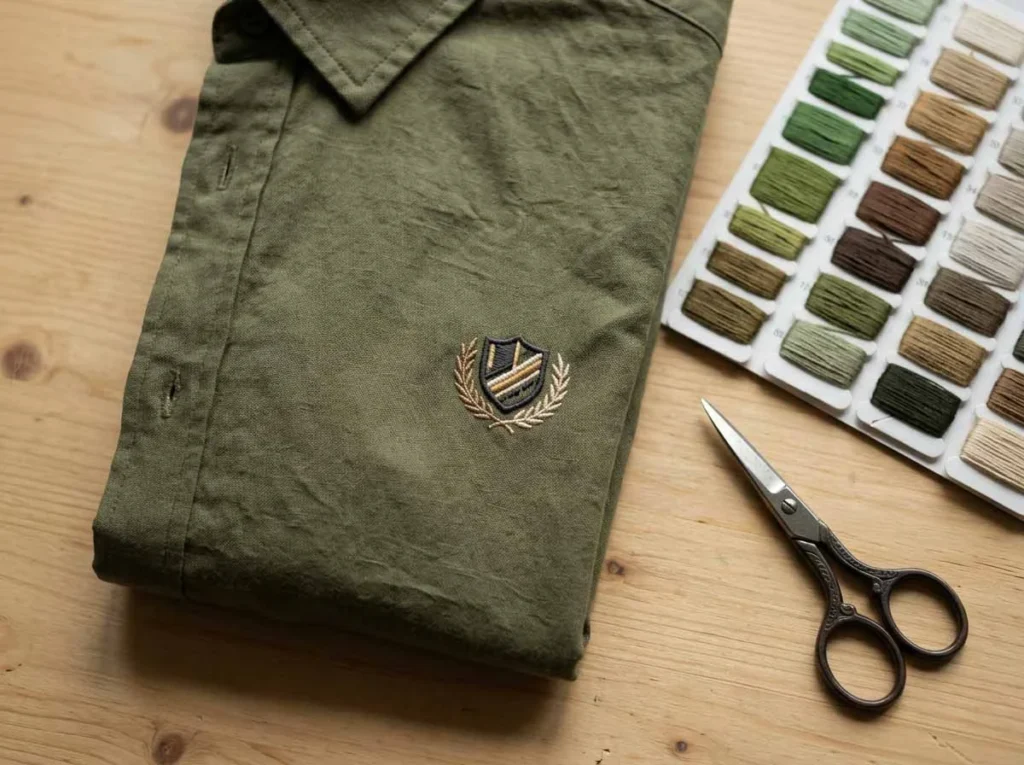
Color deserves more attention than many first-time founders expect. Embroidery thread is selected from physical charts, such as those from Madeira or Isacord.
Your monitor is not the final reference. If a brand color needs to stay consistent across collections, request a physical thread match before approving the run.
Why Houston Works as a Production Base for Small Runs
There is a practical reason a small label might consider embroidery in Houston rather than shipping garments to a distant decorator.
Houston already supports a large amount of corporate apparel, uniforms, workwear, event merchandise, and promotional production.
That kind of demand supports commercial embroidery capacity that smaller fashion labels can also use.
The interesting part is scale. A shop equipped to handle large uniform programs can still be useful to a label testing a 20-piece capsule, provided its minimums and pricing structure fit the project.
Being close to production also shortens the feedback loop.
A founder can potentially inspect a sew-out in person, compare thread against a physical swatch, or catch a placement issue before dozens of pieces are stitched.
Blanks do not need to make two long trips across the country just for approval and decoration.
For anyone researching custom embroidery for sale in Houston Texas, that production ecosystem matters more than the city name itself.
The real advantage is access to decorators already accustomed to repeatable commercial work.
What a First Embroidery Run Actually Costs
For typical logo embroidery, a rough market range is around $5 to $10 per piece before the garment itself. A one-time digitizing charge is usually added to the first run.
Why can ten pieces feel expensive? Because the setup cost is spread over only ten garments.
At 50 or 100 pieces, that same fixed fee becomes a much smaller part of the unit cost.
The embroidery price itself changes with stitch count.
A small chest mark may use relatively few stitches, while a large back design takes considerably more machine time.
Multiple placements also matter. A chest logo plus a sleeve detail is effectively two embroidery operations.
Garment construction can change the setup too, particularly with caps, pockets, heavy jackets, or difficult-to-hoop locations.
FAQs
What is the minimum order for custom embroidery?
It depends on the shop. Minimums can range from a single piece to 12, 24, or 50 units, so compare pricing tiers rather than looking only at the lowest quantity allowed.
Can I supply my own garments?
Often, yes. However, very thin, stretchy, delicate, or difficult-to-hoop garments may be restricted, so show the decorator the exact piece first.
How long does embroidery take?
A common planning range is 7 to 10 business days after artwork approval. Rush options may be available for an added fee.
What is the difference between embroidery and screen printing?
Embroidery offers texture and durability. Screen printing can make more financial sense for larger graphics, high-volume runs or artwork requiring broader color and detail options.
What file format does embroiderers need?
Vector files such as AI or EPS give the digitizer a clean source to work from. If the design has already been converted into an embroidery-ready file, a DST file may be used for production.
Conclusion
For a small label, owning embroidery equipment matters less than understanding the production process. An experienced partner who does the embroidery in Houston can simplify repeat runs once the stitch file is finalized.
Comparing local embroidery services also helps brands find reliable support, while sourcing custom embroidered pieces for sale in Houston, Texas, can make future collections easier to reproduce.
Industry insight from: https://alphaimprint.net