How To Care For Your Safety Footwear To Ensure Their Long Life
Safety shoes as essential personal protective equipment in industrial production and construction, not only serve the critical function of protecting feet from impacts and punctures, but their service life also directly affects both operational costs and the stability of protective effectiveness.
Why are MK Safety boots hailed as practical and durable? As a safety shoes manufacturer specializing in fashion and safety, MK Safety has provided foot protection for tens of thousands of workers. The shoes feature breathable and wear-resistant leather, along with waterproof and breathable canvas. Every material and craftsmanship detail ensures worker safety. For a pair of durable safety shoes, both the quality of the shoes and their maintenance are equally crucial.
Here’s a complete guide to maintaining your safety shoes properly to ensure their longevity.
1. Why is it more important to maintain safety shoes than you think?
Most people think that shoe maintenance is simply daily cleaning, but in fact, cleaning is far from the effect of prolonging the life of safety shoes.
Wearing safety shoes can help us
1. Keep protection
2. Improve comfort
3. Prevent safety hazards
4. Reduce replacement costs
What are the effects of poor maintenance or damaged safety shoes on our feet?
- Makes the foot lose protection against crushing and piercing
- The sole is worn or deformed, resulting in insufficient support and affecting walking stability
- The wear of the anti-slip pattern on the sole may cause anti-slip failure or electric shock danger
- The inside of the shoe is wet or bacteria grow, which affects the health of the foot.
- Accelerate shoe aging
- How to maintain safety shoes
2. Daily use: lay the foundation for the life of the shoe
-
Adhere to “dedicated personnel for dedicated use, matching scenarios”
Safety shoes are designed for specific scenarios: puncture-resistant ones for construction sites, insulated ones for electrical work, and acid/alkali-resistant ones for chemical environments. To prevent premature aging, avoid sharing shoes – doing so may cause deformation of the upper, uneven wear of the insole, and accelerated deterioration.
-
Avoid overloading
Safety shoes have defined service cycles and load-bearing limits, so they shouldn’t be treated as a “one-size-fits-all solution”. For example: avoid kicking hard objects with safety shoes, as repeated impacts may cause deformation of the steel toe cap and cracking of the upper. Refrain from prolonged exposure to high-temperature environments. Steer clear of extended walks in standing water. If working in such conditions becomes unavoidable, clean the shoes promptly after use to prevent moisture and dirt from seeping into the interior.
-
Pay attention to the shoe’s rest cycle
Wearing the same pair of safety shoes for a long time will keep the upper material and cushioning layer of the shoe under constant stress, and cannot recover the elasticity. It is recommended to prepare two pairs of safety shoes to wear alternately, so that the idle shoes have a recovery period, which can effectively prolong the service life of the shoe sole and upper.
3. Clean and dry after
After cleaning, the key step is to dry the safety shoes. A damp environment can cause mold on the upper, glue peeling on the sole, and rust on metal parts. Place the shoes in a ventilated, dry, and cool place to dry naturally. You can also put newspaper or shoe supports in the shoes to absorb moisture and keep the shape of the upper to prevent deformation.
4. Storage and preservation: Create a suitable “dormant environment”
The core of storage is “dry, ventilated, light-proof, and shaped.”
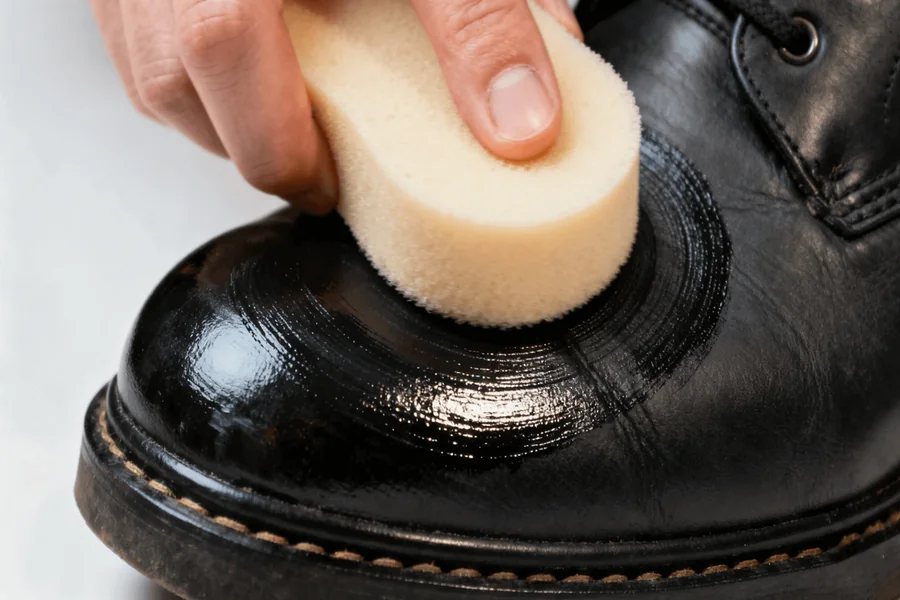
First, clean and dry the shoes before storage. Ensure the surface is free of stains and the interior is dry. For leather safety shoes, apply a layer of maintenance oil before storage. Canvas safety shoes can be gently ironed after drying to restore a smooth surface.
Second, choose the right storage environment. Keep safety shoes in a dry, well-ventilated, and cool place, avoiding damp conditions and high temperatures. Keep them away from direct sunlight to prevent material aging. When storing, avoid stacking shoes to prevent deformation of the upper or collapse of the sole. Place desiccant in shoe boxes to absorb moisture from the air and maintain dryness.
Finally, regular checks are required during storage. Every 1-2 months, remove the safety shoes to check whether the upper is moldy, the sole is hardened, and the protective parts are intact. At the same time, replace the desiccant inside the shoes to ensure that the storage environment is always dry and suitable.
5. Regular inspection and damage repair: timely “repair and prolong life”
The service life of safety shoes depends not only on maintenance, but also on the frequency of use and the intensity of the working environment
Common injury treatment methods
- Minor damage to the upper: For leather shoes, fill the damage with leather repair paste and then apply shoe polish.
- Shoe sole delamination: Repair with specialized shoe adhesive. Store in a dry, well-ventilated area for at least 24 hours to ensure complete curing before wearing, preventing re-adhesion.
- Shoe surface mold: wipe the mold spot with a soft cloth, then wipe with a special antifungal agent, and wipe it clean with clean water to prevent the mold from growing again.
- Deformation of the toe: If the steel toe of the shoe is slightly deformed, you can insert a shoe brace into the shoe, wrap the toe with a towel, press gently to adjust the shape, and then place it in a ventilated place to set the shape.
The lifespan of safety shoes is determined by both quality and maintenance. A well-crafted pair of safety shoes can not only extend their service life and reduce costs through meticulous daily care, proper storage, and prompt damage repair, but also maintain consistent protection. This ensures reliable foot safety for users while keeping their footwear in top condition.