Galapagos Luxury Itinerary: The Ultimate 7-Day Island Guide

The Galapagos Islands offer travelers an experience that exceeds regular vacation activities. The experience allows visitors to explore one of the world’s most exceptional wildlife destinations through a refined, planned experience. The volcanic archipelago, which exists 1000 kilometers away from Ecuadorian shores, has created new research prospects while enabling conservation studies and developing new travel experiences.
First-time visitors who want to experience both comfort and deep exploration should choose the seven-day luxury itinerary that provides ideal viewing options. The service enables island visitors to explore all main attractions because it provides seamless transportation and organized trips, and offers premium boutique or onboard accommodations.
Freepik/ Woman posing next to her private boat
Luxury in the Galapagos Context
The Galapagos Islands offer expensive experiences that do not permit visitors to indulge themselves. The focus of luxury exists to provide people with expert knowledge and comfortable experiences that follow environmental rules.
The majority of luxury yachts accommodate only a small number of passengers, which creates a more secluded atmosphere. The journey receives elevation through air-conditioned suites, panoramic lounges, and curated dining experiences while the journey itself maintains its original purpose.
Private Galapagos islands excursions provide travelers with two experiences: the chance to see rare wildlife and the opportunity to enjoy luxurious yacht-style accommodations.
Wildlife Highlights of the Week
Travelers will have seven days to experience encounters with
- Giant tortoises in the highlands
- Blue-footed boobies and waved albatrosses
- Marine and land iguanas
- Galapagos penguins are the only penguin species north of the equator
- Sea lions and fur seals
- Reef sharks, rays, and sea turtles
The defining characteristic is not simply species diversity, but proximity. Animals in the Galapagos developed their ability to observe humans because they evolved with little fear of people, which enables scientists to study them under strict park rules.
Day 1: Arrival in Ecuador and Flight to the Galapagos
The journey starts in mainland Ecuador which travelers usually begin from Quito or Guayaquil. The travelers must complete transit documentation and national park entry procedures before they can leave for the islands.
The flights arrive at two airports, which are Baltra Island and San Cristóbal. Visitors must first pay the Galapagos National Park entrance fee before they can move through the environmental controls that safeguard the delicate ecosystem.
Travelers need to take a brief transfer from Baltra to reach Santa Cruz Island, which serves as the main hub of the archipelago. Luxury itineraries start with guests either boarding their private yacht or checking into a high-end lodge located close to Puerto Ayora.
Day 2: Santa Cruz – Giant Tortoises and Conservation Insights
The Galapagos ecosystem receives its basic introduction through the Santa Cruz Island. Giant tortoises roam in the humid forest areas of the highlands, which morning excursions usually investigate. The Spanish name for tortoise, which the archipelago derives from, provides context for observing these ancient reptiles in their natural habitat.
The Fausto Llerena Breeding Center in Puerto Ayora appears on many luxury itineraries. The conservation facility operates as a vital establishment that safeguards endangered tortoise subspecies while working to restore their natural populations.
Day 3: Española – Iconic Seabirds and Dramatic Cliffs
The most photographed wildlife of the archipelago can be found on Española Island. Punta Suárez serves as a nesting site for waved albatrosses that visit during specific seasons and for Nazca boobies and blue-footed boobies, nesting on the cliff edges. The albatross displays its wingspan, which extends to eight feet, through its complex courtship rituals that require dedicated watchers to observe.
Day 4: Floreana – History and Hidden Lagoons
Floreana presents a unique aspect of the Galapagos Islands through its human historical background. The island combines its ecological beauty with storytelling elements that describe its past as a settlement and the mysterious events of its inhabitants. The traditional postal system of Post Office Bay has existed for hundreds of years because travelers use a wooden barrel to send postcards, which later visitors will deliver to their intended recipients.
Day 5: Isabela – Volcanic Landscapes and Marine Encounters
Isabela, the largest island in the Galapagos, offers expansive geological drama. A guided hike along the Sierra Negra caldera reveals one of the largest volcanic craters in the world. The islands display their geological evolution through their transition from lava fields to lush highlands.
Coastal excursions introduce flightless cormorants, one of the species that influenced Charles Darwin’s early thinking. These birds, which live in regions without predators, use their smaller wings to swim underwater instead of flying. Snorkeling near Isabela often includes sightings of penguins, marine iguanas feeding underwater, and reef sharks resting on sandy bottoms. The luxury vessels can anchor in the remote coves, which offer customers sunset views of the volcanic silhouettes that stand out against the sky.
Day 6: San Cristóbal – Kicker Rock and Aquatic Life
The town of San Cristóbal offers residents easy access to its urban features while providing them with access to exceptional marine life. The tuff rock formation at Kicker Rock (León Dormido) serves as the main attraction because it presents a striking natural feature that emerges from the ocean waters. The channel between its towering walls creates one of the best snorkeling and diving sites in the archipelago.
Day 7: Final Wildlife Walk and Departure
The final morning typically includes a short coastal hike or beach landing near the departure airport. Even at this stage, wildlife remains abundant, frigatebirds overhead, iguanas crossing footpaths, and herons stalking tidal pools.
Flights return to mainland Ecuador, concluding the seven-day circuit.
Practical Considerations
Travelers should account for:
- INGALA transit card before departure
- Galapagos National Park entry fee (cash payment on arrival)
- Weight limits on smaller aircraft
- Strict environmental regulations regarding waste and wildlife interaction
While Ecuador uses the US dollar, costs in the Galapagos are typically higher than in mainland South America due to logistical complexities and conservation controls.
Why Seven Days Works
The itinerary lasts seven days because it enables travelers to experience two different travel styles. The schedule provides time to explore multiple islands at a comfortable pace while allowing visitors to experience both land and sea environments and take breaks between their sightseeing activities.
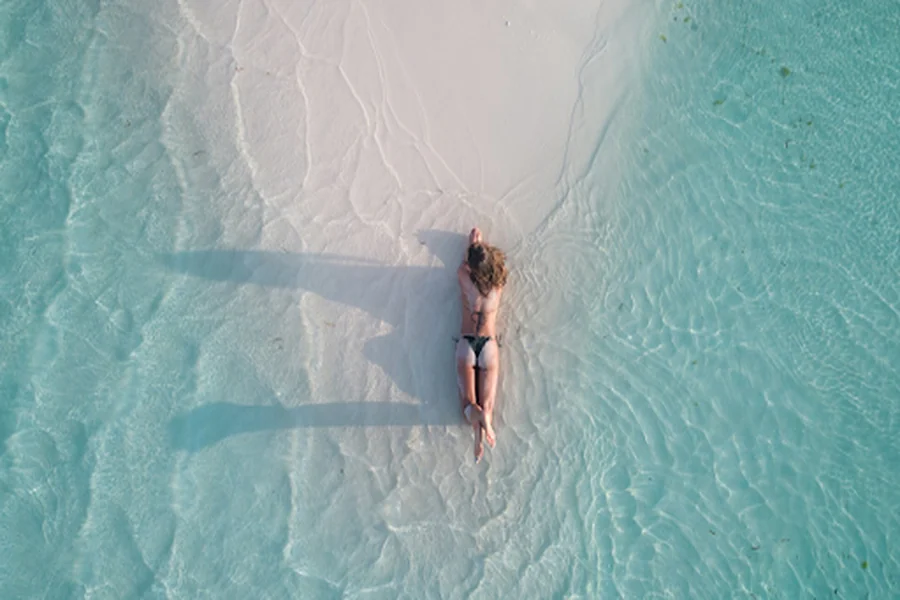
Freepik / Aerial shot of a girl tanning at the beach
Final Words
The Galapagos Islands rank as one of the best wildlife destinations because they share top-tier status with the Serengeti and Amazon ecosystems. The location possesses evolutionary uniqueness, which differentiates it from all other sites. The area contains volcanic isolation and endemic species together with its scientific heritage in an unmatched density.