9-Step Guide: How to Plan a Destination Wedding in Mexico Step by Step
When making plans for a destination wedding in Mexico, you will have to be on the ball with budgetary and guest considerations and also be familiar with the needs of the area. This step-by-step guide takes you through each of the key decisions that you’ll need to make when planning your celebration, so you can plan something that’s within your vision and budget.
1. Set your wedding budget
The Knot’s Real Weddings Study, 2025 Edition puts the price of a destination wedding in Mexico at $10,000 to $15,000 for 30-40 guests. That’s less than half the average in the United States, which is currently $35,000, so you’ll have hard proof to present when your family asks you why you’re going south!
First, jot down the most you can afford for all of the following: resort package, travel to and from, décor, photos, entertainment and a 10% buffer for the unexpected. Then spread that out into a simple spreadsheet to be able to keep track of:
- Choose between Venue or All-inclusive package.
- Fortunately, you and your partner will receive a flight and a room!
- Priority upgrades (photography, live music, custom décor)
- Hidden costs such as outside-vendor fees, checked-bag fees and currency-conversion spreads.
Two budget-stretchers to know now:
- Comparable U.S. pricing is 10–15 percent lower when you take advantage of favorable exchange rates with USD/MXN.
- All-inclusive resort packages ensure that the variable costs are kept under control, since all food, drinks and basic decoration are included in the package.
Check the sheet once a month – flight prices and exchange rates change often, and so do the buckets. It is a discipline that makes all future decisions “yes” or “no” and not “maybe.”
e.”
2. Draft your guest list
According to booking data from Destination Weddings Travel Group, approximately 60% of the guests invited to the wedding are expected to travel to Mexico. That same indicator will impact all contracts that you sign.
Start by making a list of all the people who make you happy, then separate into “must have” and “nice to have.” Because there are less people attending the wedding there are two benefits that you can enjoy as a destination wedding:
- Lower costs. Fewer chairs, meals, and décor pieces mean you can channel more budget into experiences like a private cenote swim.
- A smoother schedule. Smaller groups move easily between events and reduce your environmental footprint.
On average, there are approximately 117 attendees at American weddings, with micro-weddings (20-50 people) continuing to rise in popularity. Check the numbers with those benchmarks.
Consider logistics of the event when planning it. Are grandparents able to walk on beach sand? Have lover’s that are on tight budgets? To choose accessible resorts and wallet-friendly room blocks, you should have frequent check-ins.
Lastly, keep in mind that travel, budget, and vacations are actual challenges. If they say no, thank them for considering it and cheer for the person closest to you by the Mexican sun.
3. Hire a destination wedding planner or travel specialist
The Knot’s 2025 Destination Weddings Study reports that 84 percent of couples hired a planner, and most paid zero out-of-pocket fees because planners earn commission from hotels and tour partners. One agency that follows this free-to-couples model is Paradise Weddings; its certified specialists skip planning fees and unlock unpublished room-rate discounts that can fund splashier décor or a cocktail-hour upgrade. You gain expert leverage without adding a new budget line in Step 1.
An agency dedicated entirely to Mexico weddings, for instance, Paradise Weddings keeps an eye on each resort’s curfews and outside vendor charges, plus any live group rates incentives, in an open dashboard that couples can travel at any time.
If you have a plan with other people, that is fine.Planning with others is okay.
One can coordinate a foreign wedding, but it’s not easy to do it alone and it takes time and energy. A destination-wedding planner or travel specialist can serve as your 24/7 problem solver, and help you narrow down your goals to vetted items and answer all your late-night “what if?” questions.
They are pros that work Mexico’s resort scene every day. They monitor when which venues turn off the music for the beaches, which don’t charge vendors, and which which ones have free cocktail hours for the bargainers. Resorts may offer upgrades to a contract that an agency won’t be able to get, so the money saved goes into your pocket.
According to the 2025 Destination Weddings Study by The Knot, 84 percent of couples hired a planner, with most paying absolutely nothing in advance as planners get a commission from the hotel and tour partners. In Step 1, you leverage, but without any additional budget line.
Let the planner be responsible for organising the event, and then you can concentrate on the fun options – tacos or tamales, mariachi or DJ, etc.
4. Choose your location and date in Mexico
Start with the vision
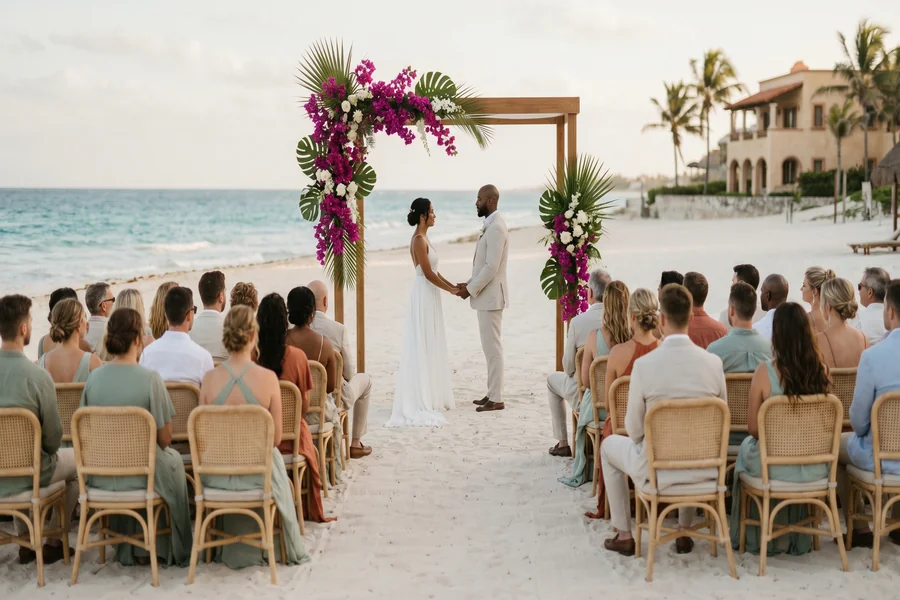
Imagine your ceremony, close your eyes. Walking on white sand, or taking a step on the courtyard lit by candles, surrounded by bougainvillea? That’s the best compass for choosing a region. Filter-in: Vibe First; then by flight length, typical weather and target spend.
See how the main regions stack up
| Region | Signature feel | Best months | Flight access (from US) | Key notes |
| Cancún & Riviera Maya | Caribbean beaches, vibrant nightlife, many all-inclusive resorts | November–April | About 4 h from NYC, 5 h from LAX | Crystal water, but sargassum peaks May–August; widest price range |
| Los Cabos | Desert cliffs, luxury golf resorts, fiery sunsets | November–June | 2.5 h from LAX, 5 h from Chicago | Higher prices; many beaches are unswimmable, but views impress |
| Puerto Vallarta & Riviera Nayarit | Lush mountains meet a calm Pacific bay | November–May | 3 h from LAX, 4 h from Houston | Mid-tier pricing, famous sunsets, summer humidity is heavy |
| Colonial interior (San Miguel, Oaxaca) | Cobblestone streets, baroque churches, food culture | October–April | Fly into BJX, QRO, or OAX, then 1–2 h drive | No beach; cooler nights due to altitude, unrivaled architecture |
Skim the table with your non-negotiables. If morning swims matter, Los Cabos may disappoint. If you crave historic plazas and mole, the colonial highlands win. For couples seeking a blend of white-sand beaches, turquoise Caribbean waters, and a relaxed bohemian atmosphere, a Tulum wedding offers one of Mexico’s most picturesque settings for an unforgettable destination celebration.
Lock in a date that loves you back
Mexico’s charm is year-round, yet its weather follows clear patterns.
- Caribbean coast: November–April offers sunny skies and lower humidity. Late spring and summer bring higher hurricane odds and sargassum buildup, so clear-water photos are not guaranteed.
- Los Cabos: Hurricanes are rare, but midday heat climbs past 90 °F in July and August. Couples chasing sunset breezes pick November–early June.
- Pacific coast: Puerto Vallarta’s dry season runs November–May; rain and humidity spike June–September.
- Colonial cities: Altitude keeps nights cool, but afternoon showers arrive June–September. Plan October–April for clear parades and fireworks.
Weekday weddings often cost less and give guests an easy excuse for a long weekend. Once your date is set, you can move on to paperwork with confidence.
5. Understand Mexico’s marriage requirements
Legal or symbolic: decide early
Begin by choosing whether the ceremony in Mexico will be the legal marriage or a heartfelt celebration that follows a courthouse signing at home. A fully legal wedding counts in the United States but involves extra steps, while a symbolic event allows you to skip paperwork and focus on the experience.
What a fully legal Mexican wedding requires
Gather these documents well in advance:
- Passports valid through travel dates, with cloud backups
- Certified birth certificates, apostilled and professionally translated into Spanish
- Tourist cards (filled out on your flight)
- Four witnesses age 18 or older, each with a passport
Plan to arrive at least three business days before the ceremony. Mexican law calls for local blood tests taken within that window, and a civil judge performs the service on site. Typical fees run about $30 for the license and $200–$300 for the judge; resorts often add a coordination charge. After the vows, your coordinator files paperwork, secures a Spanish certificate, and requests an apostille so it is recognized in the United States. Processing can take a few weeks, so book any post-wedding flights under your current surname.
Why a symbolic ceremony keeps planning simple
Many couples sign the marriage license at their local courthouse, then treat the beach ceremony as the “real” celebration. Skipping foreign paperwork saves on translation, blood tests, and judge fees. Any friend ordained online can officiate, or you can hire a bilingual celebrant who weaves local traditions such as the lasso ritual into the script. Guests feel the same emotion, and you return home with the legal certificate already in hand.
6. Send save-the-dates early
Give guests the runway they need
Destination weddings succeed when guests have time to plan. Aim to email or mail save-the-dates nine to twelve months before departure; Zola’s 2026 Destination Wedding Guide lists that range as the sweet spot for affordable flights and PTO requests.
Keep the message brief. Lead with the date, city, and a warm “we hope you can join us,” then direct everyone to your wedding website for evolving details. One link cuts down on one-off questions and keeps your phone quiet at midnight.
Digital delivery is ideal. It arrives instantly, avoids international postage, and feels eco-smart. If you love paper, follow up with a printed invitation later, but let the early e-notice secure calendars first.
Add a friendly reminder: while Mexico only requires passports to cover the trip dates, airlines may refuse boarding if a passport expires within six months. Mention that buffer now to prevent gate-area stress later.
Press “send” and watch the excitement grow. You have just turned guests into travel partners and momentum into early RSVPs.
7. Book key vendors and services early
Lock the venue, photo, and music before anyone else can
Popular Mexican resorts and in-demand photographers fill 12 to 18 months ahead, reports WeddingWire’s 2026 Global Planner Survey. Act quickly:
- Sign the venue contract first. Confirm capacity, rain plan, outside-vendor fees, and whether the resort hosts more than one wedding per day.
- Secure photography next. Review full galleries, not highlight reels. If a style speaks to you, invite the photographer as a guest to avoid a resort vendor fee.
- Book music soon after. A seasoned DJ or live band shapes the reception’s energy, and top talent disappears early.
Decode packages, upgrades, and hidden fees
All-inclusive wedding bundles look simple, yet fine print can inflate costs. Watch these items:
- Guest limits. Base packages often include 20–30 guests; each extra chair can add $80–$150 to food and bar totals.
- Outside-vendor fees. Most resorts charge about $500 per professional. Register the vendor as an overnight guest when possible to bypass the fee and keep liability covered.
- Tempting upgrades. Premium liquor, custom linens, or fireworks sound fun; decide early which wow factors matter. Bundling upgrades in the original contract usually costs less than adding them later.
Ask each question by email and save the replies. Clear documentation protects the budget you set in Step 1 and lets you enjoy planning without surprises.
8. Plan guest travel and wedding-week events
Secure a room block that works hard for you
A room block is more than a courtesy; it is leverage. Booking about 20 rooms for three nights often unlocks a lower nightly rate and perks such as a free cocktail hour or suite upgrade, according to Palace Resorts’ 2025 Group Benefits Chart.
Reserve the block as soon as the venue contract is signed. Most resorts set a pick-up deadline 60 days before check-in. Send gentle reminders at 90, 60, and 30 days so late bookers catch the rate and you keep every perk.
Ask the hotel to extend the group rate three days before and after the core dates. Many guests add extra beach time, and the wider window prevents awkward lobby conversations about price jumps.
Track reservations through your planner or the resort portal. Watching the counter climb toward your perk tier turns budgeting into a small victory.
Build a weekend itinerary guests will rave about
Think of the celebration as a shared vacation. Publish a light itinerary so everyone knows when to pack sunscreen and when to change for dinner, then leave open blocks for spontaneous tacos and naps.
- Arrival day: Host a casual meet-up at the lobby bar with no speeches, just hugs and a cold margarita.
- Day before the wedding: Plan one optional group activity, such as a catamaran cruise or street-food tour, ending by mid-afternoon so rehearsals stay on schedule.
- Wedding day: Your planner handles vendors while you focus on vows. If music stops at 11 pm, move to an on-site club or villa for an after-party so night owls can keep dancing.
- Farewell brunch: A simple beachside buffet the next morning lets guests swap photos before departures scatter the group.
Post the timeline on your website and tuck a printed copy into each welcome bag. Clear expectations help guests glide through the week relaxed and ready for every moment.
Conclusion
With a clear budget, the right professionals, and proactive communication, you can transform the dream of a Mexican destination wedding into an unforgettable celebration for you and your guests.