Step-by-Step Guide to AI Integration in Supply Chain Management
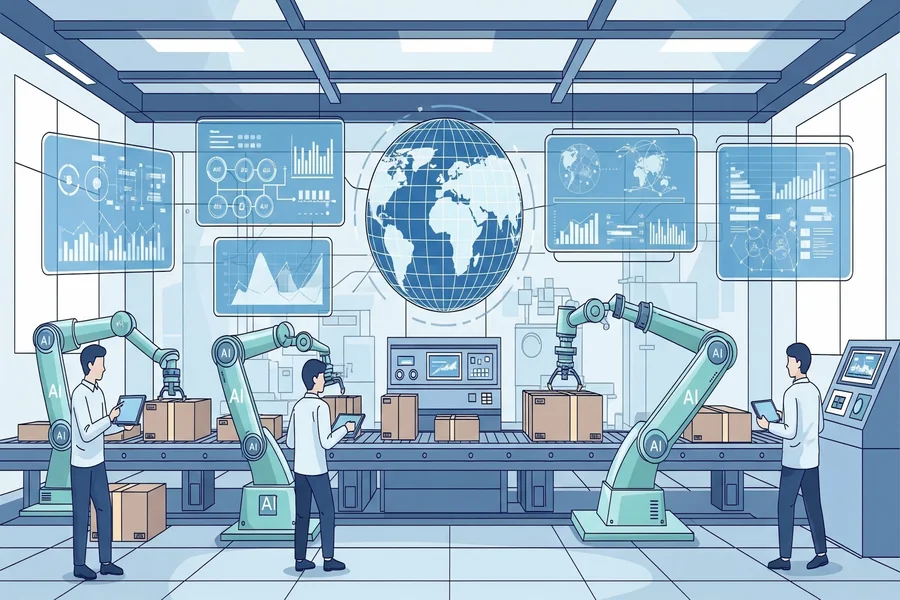
The artificial intelligence is transforming supply chain management: demand forecasting and optimization of inventory, as well as logistics and collaboration with suppliers. However, to most organizations, the implementation of AI in the supply chain is still an issue. Resistance to change, data silos, and lack of clear goals tend to become the obstacles on the path of success.
This step-steps guide presents a realistic roadmap to the adoption of AI in supply chain management that organizations can use to relocate their strategies to actions, take minimal risks, and get maximum returns.
Step 1: Define Clear Business Objectives
Successful AI integration starts with clarity. Before selecting tools or technologies, organizations must define what they want to improve in their supply chain.
Common objectives include:
- Improving demand forecast accuracy
- Reducing inventory holding costs
- Increasing on-time delivery performance
- Enhancing supply chain visibility and resilience
AI initiatives should be tightly aligned with overall supply chain and business strategy. Securing leadership sponsorship and cross-functional ownership at this stage ensures alignment and long-term commitment.
Step 2: Assess Data Readiness and Build a Solid Foundation
The artificial intelligence of the systems is relying on quality data and accessibility. The majority of supply chains operate on disjointed systems (ERP, WMS, TMS and supplier platforms) and are typically inconsistent in data standards.
Key actions at this stage include:
- Mapping existing data sources and flows
- Identifying gaps, inconsistencies, and data silos
- Establishing data governance, quality standards, and integration processes
Without a strong data foundation, even the most advanced AI models will fail to deliver reliable insights.
Before AI tools can produce reliable insights, organizations need connected systems that capture accurate operational data. This is why reviewing the ERP implementation process can be useful before moving deeper into AI adoption. A well-planned ERP setup helps align data, workflows, reporting, and user roles, which gives AI models a stronger foundation to support forecasting, inventory planning, and supply chain visibility.
Step 3: Identify High-Impact AI Use Cases
Not every supply chain process needs AI from day one. The most effective approach is to start with high-impact, well-defined use cases that offer measurable benefits.
Popular AI use cases in supply chain management include:
- Demand forecasting and sales prediction with AI
- Inventory optimization and replenishment planning
- Route optimization and logistics planning
- Predictive maintenance for assets and equipment
Prioritize use cases with available data, clear KPIs, and tangible business impact. Early successes help build trust and momentum across the organization.
Step 4: Select, Develop, and Pilot AI Solutions
Once the use cases are obtained, the companies can decide which AI systems they can create or use the current technologies. The choice will be made by complexities, scope and internal strengths.
At this stage:
- Develop or configure AI models tailored to selected use cases
- Run pilot projects in controlled environments
- Define clear success criteria (e.g. forecast accuracy improvement, cost reduction)
Pilots allow teams to validate assumptions, fine-tune models, and understand how AI outputs integrate into daily decision-making.
Step 5: Integrate AI into Operational Workflows
AI creates value only when it is embedded into real operational processes. This step focuses on connecting AI insights with execution.
Key integration actions include:
- Connecting AI tools with ERP, WMS, and TMS systems
- Automating decision support where appropriate
- Redesigning workflows to include AI-driven insights
It’s critical to ensure that AI enhances, rather than disrupts, existing processes. Clear ownership and process redesign help teams adopt AI smoothly.
Step 6: Prepare the Workforce and Manage Change
AI integration is as much about people as it is about technology. Resistance to change and lack of understanding can limit adoption.
To support workforce readiness:
- Provide training on AI tools and data interpretation
- Communicate how AI supports, not replaces, human expertise
- Encourage collaboration between supply chain experts and data teams
Building internal champions who understand both operations and AI significantly improves adoption and long-term success.
Read More: How Everyday Sound Quality Shapes Focus, Mood, and Relationships
Step 7: Monitor Performance and Continuously Improve
The implementation of AI is not a single project. The supply chain is dynamic and AI models should keep up with demand trend, market conditions, and business priorities.
Ongoing activities include:
- Monitoring KPIs and model performance
- Refining algorithms as new data becomes available
- Expanding AI solutions to additional use cases or regions
Continuous improvement ensures AI systems remain accurate, relevant, and aligned with business goals.
Conclusion
The implementation of AI in the supply chain management is a process that should come in a well-planned manner. Initiating with strategy and data preparedness, moving on to focused use cases, pilots, and scalable deployment. Companies that view AI as a long-term potential and not a project are the ones that are best placed to create a resilient, efficient and data-driven supply chain.
Through the appropriate roadmap, AI makes an efficient enabler of smarter choices, reduced costs, and enhanced chain supply.