How Boutiques Get Trending Pieces on the Rails Weeks Before Big Retailers
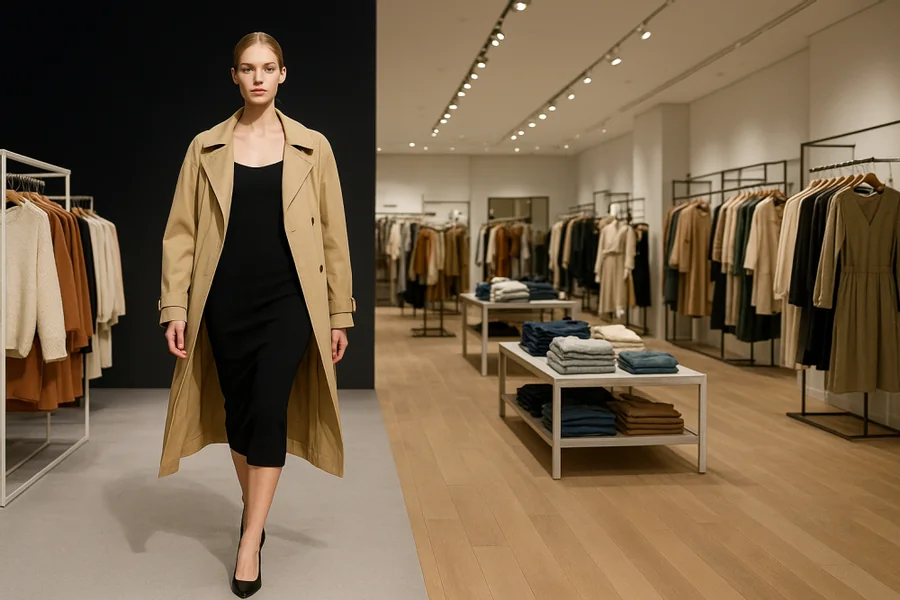
Social media has changed how boutiques operate. Before, people looked to big fashion events for inspiration. Boutiques placed large orders, hoping to capitalize on trends still breaking out. Now, all it takes is a viral TikTok to lift an indie label from obscurity to global demand in seventy-two hours. Days later, shoppers can hit “add to cart” on that viral piece.
That urgency isn’t just social-media hype. In a BoF–McKinsey Executive Survey of 345 fashion leaders, 39 percent predicted that overall market conditions will worsen in 2025, reflecting freight volatility, tariff swings and cautious consumers. Given that backdrop, agility wins over scale.
Boutiques that can re-stock viral pieces days, not months, after they pop have an edge. This is made possible because of new supply-chain mindset built on micro-batches, data pings and stateside warehousing.
The Old Calendar vs. Today’s Micro-Drop Reality
For decades, the wholesale calendar looked a lot like academic semesters: Spring/Summer lines were shown in September, Fall/Winter lines in February.
Retailers took massive risks, investing capital in forward orders while praying for accurate trend forecasts. Believe it or not, predictions didn’t predict, and retailers had to take the losses.
That rhythm is cracking. According to JOOR’s “Top 5 Trends in Wholesale for 2026” report, retailers are favoring brands with shorter order lead times and leaning into in-season buying.
In practice, that means buyers place smaller, rolling orders every few weeks, topping up on proven winners while injecting fresh silhouettes that keep Instagram feeds buzzing. Capsule “micro-drops” slot between traditional seasons, letting stores ride pop-culture spikes (think Barbie-core pink or Wednesday-Addams goth) before the wave expires.
Shorter cycles shift risk upstream: suppliers must own ready-to-ship stock or at least rapid production slots.
But for boutiques, the advantages are clear. Cash remains liquid; assortments stay hyper-relevant; and visual merchandising gets a steady trickle of “newness” that lures foot traffic.
Customers no longer ask, “When will the new collection arrive?”—they expect something new every week.
Meet the New Power Brokers: Indie Boutiques
Once dismissed for being quirky and niche, Indie boutiques are now significant commercial players. The data now tell a different story. The same JOOR report notes that specialty stores and independent boutiques have gained notable market share worldwide and that their allure “looks set to continue into 2026.”
Why is small suddenly mighty? Partly because algorithms flattened discovery: a Reels clip filmed inside a 30-square-metre shop in Bath can rack up a million views, launching that shop’s edit into the global conversation.
Partly because customers crave curation amid overwhelming e-commerce choice. A boutique that mixes vintage Chanel with under-the-radar Chinese labels offers a narrative Amazon can’t code.
Readers of Ford La Femme know this first-hand. Scroll back through “My Favourite Spring Looks Over the Last 8 Years,” and you’ll see a through-line: personalised styling notes, not generic catalog flats.
That intimacy mirrors what happens in-store when a buyer hands a client the exact lilac dress that will light up her feed. Powered by agile supply, boutiques can refresh rails at the pace content creators refresh grids—cementing their role as local trend authorities.
How Micro-Batch Wholesalers Shrink Lead Times
So how do small stores source big-trend product faster than chains that own their own factories? One word: micro-batch wholesale. Instead of forcing retailers to buy full carton ratios (six small, six medium, six large of the same colour), forward-thinking suppliers let buyers mix-and-match pieces and sizes—an “open-pack” model.
Minimum order quantities drop from dozens of units to mere handfuls, freeing boutiques to test more styles without inventory paralysis.
Dear-Lover—one of the world’s largest women’s-fashion suppliers—operates a textbook version of this model. The platform uploads 300 plus new SKUs every single day and holds much of that stock in a US warehouse, meaning American boutiques can receive goods within 48 hours.
For a retailer chasing a TikTok-driven crochet trend, that window matters more than any early-order discount.
Open-pack flexibility pairs with algorithmic trend-scanning: wholesalers track search spikes and social hashtags, then send “hot list” digests to buyers before a trend peaks.
The net result is a shorter, data-backed bet that feels closer to drop-shipping than to traditional bulk wholesale—but with showroom-grade quality control.
Anatomy of a Two-Week Trend Turnaround
Idea Spotting
A London creator’s reel of metallic cargo pants hits 500 000 views by Monday. By Tuesday morning, boutique buyers comb TikTok’s API and Google Trends for proof the spike isn’t a fluke.
Buying Small
Armed with data, the buyer logs into an open-pack portal and orders 12 units across three waist sizes—no need to commit to full cartons.
Local Warehousing & Pre-Ticketing
Because stock already sits in Dear-Lover’s Georgia warehouse, pick-and-pack starts same day. Pre-printed price tags and size stickers speed back-of-house work once boxes arrive.
Launch & Social Reveal
Within 14 days of that viral video, the metallic cargos hang front and centre. The boutique posts a try-on reel, loops in the original creator and offers in-store pickup. A once-ephemeral trend becomes tangible retail theatre.
Byron Chen, Dear-Lover’s marketing manager, notes that “feeding fresh product into Smart Shopping feeds within hours of arrival doubles click-through and slashes ad waste—we let the algorithm target the micro-trend while it’s still hot.”
That convergence of SEO feeds, warehouse proximity and open-pack units turns the TikTok hype cycle into measurable revenue.
Financial Upside: The Margin Math of Fast Wholesale
Speed sounds expensive until you crunch the markdown math. According to JOOR’s latest market survey, wholesale is now the largest and most profitable channel for many brands.
Profitability stems from tighter, faster assortments that leave fewer leftovers to discount at season’s end.
For boutiques, micro-drops shift cash flow from a giant bi-annual outlay to a rolling “pay-as-you-sell” model. Small buys landed quickly at full price beat deep racks landed late at 40-percent off.
Even freight premiums fade against the saved markdown dollars. Factor in the social-buzz halo that drives ancillary sales (jewellery, shoes, styling sessions) and the margin gap widens.
Risk Checks: Quality & Sustainability
Rapid wholesalers aren’t sacrificing standards for speed. Most invest in inline QC labs and batch testing. Boutiques run spot checks on arrival, especially for fabrics with potential seam failures, like novelty fabrics.
Fast cycles also reduce over-production by matching supply to real-time demand. Fewer unsold units means fewer garments ending up in landfills, and as a result, less waste.
Looking to 2026: AI & Even Shorter Lead Times
Everything fast today will look slow tomorrow. JOOR’s trend forecast flags AI-driven acceleration as the next wholesale frontier. Algorithms will predict SKU success by reading creator engagement velocity, auto-generate buy sheets and even trigger factory runs for micro-capsules.
Simultaneously, independent retail’s growth means more localized fulfillment hubs, which will shrink down a three-day USA-wide delivery to same-day local drops, thanks to urban micro-warehouses and gig-driver networks. As a result, boutiques will eventually transform into curated, localized media brands with inventory.
Conclusion
Exclusive no longer means a twelve-month wait-list. It now means owning a piece days after it goes viral on social media. Only the boutiques that embrace micro-batching can satisfy immediacy that today’s shoppers demand.
Next time you try on a piece that went viral two weeks earlier, remember: somewhere, a nimble buyer, a data-fueled wholesaler and a 48-hour warehouse sprinted so your Instagram OOTD could shine.