Everything You Need to Know About Lease End

Is the end of your lease nearing? Are you unsure about the best way to move forward?
This stage tends to come up fast, and many drivers reach it without a clear plan. You’re asked to think about mileage, wear, fees, timing, and whether your current car still fits your life. Every choice has a different impact, so a little clarity goes a long way.
We’re here to give you that clarity — lease end steps, options, and more.
What a Lease End Involves
As you reach the end of your lease, you’ll move through a few simple steps that help you wrap up the agreement and decide what comes next.
You’ll start by reviewing the terms in your contract: mileage limits, condition standards, any fees that apply at the end. Many drivers also reach out to companies like Lease End Department for support, especially if they’re thinking about buying their current car.
Your lender will schedule an inspection, which checks for wear, tires, interior condition, and any missing equipment. This report gives you an idea of what to expect before turning the car in or choosing another option.
You’ll also receive return instructions, including the date, location, and what you need to bring with you. A bit of preparation here helps you avoid last-minute issues.
Once these steps are complete, you’re ready to decide whether you’re returning the car, buying it, or moving into something new.
Your Main Lease-End Options
You have three paths to choose from, and each one affects your budget, timing, and long-term plans differently.
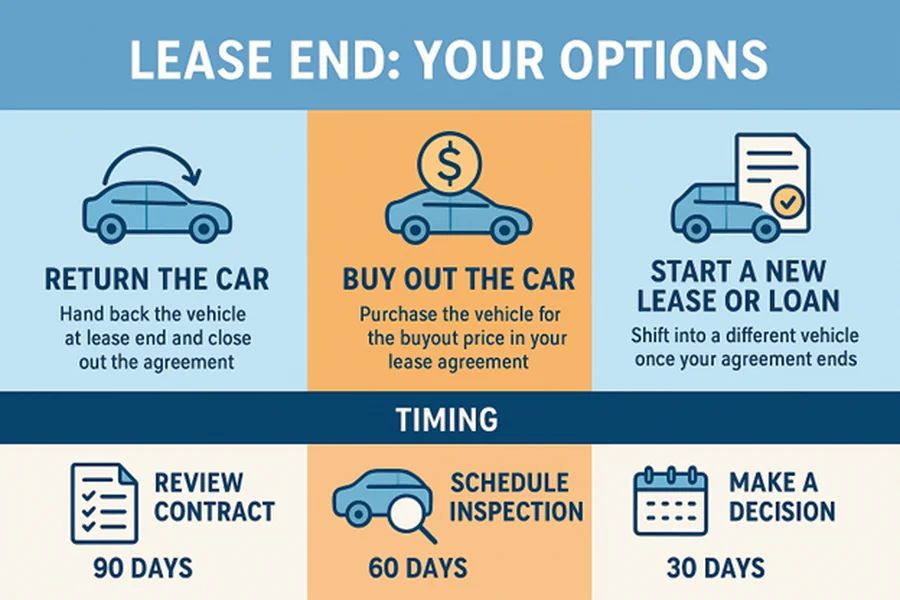
Return the Car
If you’re ready to move on, returning the car is the simplest approach. You’ll hand the vehicle back, close out the agreement, and take care of any charges tied to excess mileage or wear.
This route works well when your car no longer fits your daily routine or when you want a clean transition into something new.
When this option fits:
- Your lifestyle has changed
- You don’t want to deal with repairs or long-term maintenance
- You want to shift to a different type of vehicle
Buy Out the Car
You can purchase the vehicle for the buyout price listed in your contract. Many drivers choose this because they like the car, know its history, and prefer to avoid starting another long-term agreement.
A Federal Reserve report noted that about 80% of new and 38% of used vehicle sales in 2023 were financed with a loan or a lease, which shows how common this step is.
When this option fits:
- The buyout price is lower than similar cars on the market
- Your vehicle has low mileage and stays in great shape
- You’re comfortable owning a car you already know
Start a New Lease or Loan
You can shift into a different vehicle once your agreement ends. This works well if you want newer features, updated safety tech, or a different size.
The U.S. Bureau of Labor Statistics reports around 70,000 leasing transactions each month, showing how steady this option remains.
This is also the point where you think about the right car for your current routine. Your daily drive, budget, and long-term plans help you decide whether you should lease again or switch to a loan.
When this option fits:
- You want updated technology or better fuel costs
- Your needs changed since your last agreement
- You prefer predictable payments and limited long-term commitment
Timing Tips to Keep in Mind
The last few months of your lease follow a simple timeline. If you don’t want to face rushed decisions or surprise fees, it’s best to stay aware of it.
Most drivers start preparing about 60 to 90 days before the agreement ends. Such a window gives you enough time to review your options, compare costs, and think about your next move.
90-day mark: take a fresh look at your contract. Confirm your mileage allowance, check for any upcoming fees, and review the buyout price.
60 days out: schedule your inspection if your lender hasn’t already done it. This visit checks the condition of the car and gives you a written report.
30 days: time to narrow down your choice.
If you’re returning the car, confirm the date, location, and required documents.
If you’re buying it, contact your lender about payment steps or financing options.
If you’re moving into another vehicle, this is a good time to compare models and confirm that the next option meets your needs.
Conclusion
Reaching the end of your lease gives you a chance to have a fresh start, one that suits your current needs, not the ones you had years ago.
A brief review of your budget, your car’s condition, and your daily routine can point you toward the option that fits best.
Look ahead, weigh what matters most right now, and move forward with your plan.