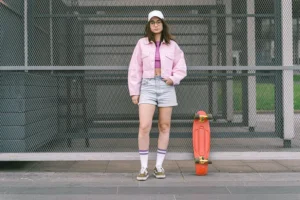
90s Skater Fashion: How Skate Style Shaped Streetwear

In the 1990s, skateboarding moved from empty pools and ramps onto city streets, and its clothing moved with it. Skaters wore what survived hard falls and long days on concrete, and they wore it big. That practical, slightly scruffy look spread from skate shops into music videos, films and eventually luxury fashion.

Where the look came from
Skate style had deep roots in Southern California surf culture, where skateboarding developed in the 1960s and 1970s. By the late 1980s and early 1990s, street skating, using stairs, handrails, ledges and benches, had become the dominant form. That shift changed the clothes. Street skaters needed durable fabric, freedom of movement and shoes that could survive constant contact with grip tape.
Skaters also mixed in influences from the music they listened to. Punk and hardcore had long been tied to skateboarding, and hip-hop became increasingly important in the 1990s. The overlap helps explain why skaters and hip-hop fans ended up wearing similarly baggy clothes.
The key pieces
Very baggy jeans and work pants
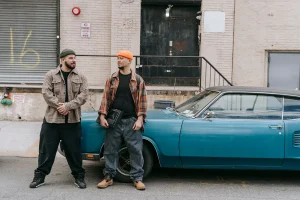
The defining item of early 90s skater fashion was the oversized trouser. Jeans were worn extremely wide and low, often with heavily frayed hems that dragged on the ground. Workwear trousers, especially sturdy twill work pants and canvas carpenter pants, were popular because they were cheap, tough and roomy. Cargo pants and cut-off shorts that ended below the knee were equally common.
Oversized T-shirts and hoodies
Tees were loose and long, usually printed with skateboard company logos, board graphics or band names. Hooded sweatshirts, often plain or with a brand logo, were an all-season layer. Plaid flannel shirts, worn open over a T-shirt, bridged skate style and grunge.
Skate shoes
Footwear evolved fast. Early in the decade, simple canvas and suede shoes with flat, grippy soles were standard. As the decade went on, dedicated skate shoe companies expanded, and by the late 1990s the fashion was for bulky, heavily padded shoes with thick tongues and wide soles. Durable suede, reinforced toe areas and cushioning were selling points, and the shape became one of the most recognizable symbols of the era.
Headwear and accessories
Beanies, baseball caps worn backwards and, occasionally, bucket hats completed the look. Chain wallets that clipped to a belt loop kept money secure during falls. Small backpacks with straps for carrying a board, sweatbands and a belt with an oversized buckle were other practical touches.

Brands, magazines and videos
Unlike most fashion, 90s skate style was spread mainly by skaters themselves. Skateboard companies, many founded or run by professional skaters, sold clothing alongside boards, and their logos became badges of belonging. Magazines such as Thrasher and Transworld Skateboarding showed readers what the best skaters were wearing.
Skate videos mattered just as much. Filmed by the skaters and companies themselves and passed around on VHS tapes, they showed tricks, music and clothing together, so style traveled with the skating. Filmmakers who came up through skate videos, including Spike Jonze, later took that sensibility into music videos and feature films.
New York’s skate scene added its own flavor. The shop Supreme opened in Manhattan in 1994 and became one of the best-known names to emerge from skate culture. The 1995 film Kids, set among young New York skaters, brought the look to a wider audience.
From the street to the mainstream
By the late 1990s, skateboarding had a much larger public profile. Televised action-sports competitions such as the X Games, launched in the mid-1990s, and the hugely popular Tony Hawk’s Pro Skater video game, released in 1999, introduced skate culture to young people who had never stood on a board. Many adopted the clothes without the skating.
Since then, skate style has fed directly into streetwear. Logo tees, hoodies, workwear trousers, chunky shoes and beanies are now standard casual wear, and luxury houses have borrowed skate graphics and silhouettes and collaborated with skate-born labels.
How to wear 90s skater fashion today
The current version of the look keeps the relaxed proportions but usually tones down the extremes:
- Trousers: choose loose, straight or wide-leg jeans, work pants or carpenter pants that sit comfortably at the waist.
- Tops: pair a boxy graphic tee or plain heavyweight T-shirt with a hoodie or open flannel shirt.
- Shoes: suede skate shoes with a padded collar, or simple canvas low-tops for a cleaner feel.
- Accessories: a beanie or cap, and perhaps a chain wallet if you want the full period note.
- Balance: if the trousers are very wide, keep the top slightly less oversized so the outfit does not swamp you.
Secondhand shops are a good source of authentic workwear and vintage skate tees, and heavy fabrics such as cotton twill and thick jersey give the right slouchy drape.
Why it lasted
90s skater style endured because it was never designed to impress anyone outside the scene. It grew from real needs, durability, comfort and room to move, and from a community that valued doing things its own way. That authenticity is exactly what later designers and brands have tried to capture.