How Long Does It Take to Pump Breast Milk in Real Life

The time that it can be pumped to extract breast milk depends on the pump, your body, and the type of day that you are attempting to squeeze it into. A low session may not be an issue but abrupt change may indicate a letdown, flange fit, stress or deteriorating pump elements. This rulebook includes the typical time range, information about each day that may extend it, how wearable pumps can vary the routine and when slower pumping traffic is appropriate to professional inspection.
Table of Contents
- How Long Does It Take to Pump Breast Milk in One Session
- Letdown Comfort and Fit Shape How Long Pumping Takes
- Daily Conditions Can Stretch or Shorten a Session
- Wearable Pumps Change Where Pumping Fits Into the Day
- Slow Pumping Needs Attention When the Pattern Changes
- Conclusion
How Long Does It Take to Pump Breast Milk in One Session
Most parents hear 15 to 20 minutes and start measuring every session against it. That range is helpful, but it is not a stopwatch rule. A normal breast pumping session length is often described as the minutes the pump is running, and many hospital lactation resources use that range for routine electric pumping.
Your day counts the time differently. Before milk starts flowing, you may be washing hands, checking whether the valves are dry, lining up a flange, fixing your bra, opening an app, or just sitting still long enough for your body to catch up. Afterward comes the part that rarely makes it into the neat estimate, such as pouring, labeling, rinsing, washing, drying, and packing everything for next time. The CDC’s breast pump hygiene guidance includes cleaning and air-drying pump parts as part of safe use, so those minutes belong in the real schedule.
A 20-minute session can quietly take half an hour. Sometimes more. That is the gap between pump time and the routine around it.
Letdown Comfort and Fit Shape How Long Pumping Takes
When the bottles are filling slowly, it is easy to reach for a higher suction setting. Sometimes that helps a little. Sometimes it backfires. If the pull feels sharp, or if you notice yourself holding your breath, your body may take longer to release milk. Letdown depends partly on oxytocin, and pain or stress can get in the way of that response.
Fit can be just as frustrating because the problem is not always obvious. A flange that is too small may pinch. One that is too large can pull in extra areolar tissue. The pump may sound normal either way, while milk moves less freely than it should.
When a session starts dragging, look for the small things first.
- Flange fit affects comfort and how freely milk can move
- Suction level should feel strong but not painful
- Valve and membrane wear can weaken suction without looking obvious
- Body position can change seal quality and milk flow
- Mental pressure can delay the first letdown
That is why how long pumping should take is only part of the question. Your own pattern tells you more. Sixteen minutes one day and 22 the next is usually ordinary. Eighteen minutes last week and 40 minutes this week for the same output are different. If fit or worn parts keep showing up as the likely issue, checking compatible eufy breast pump accessories is worth doing before changing suction again.
Daily Conditions Can Stretch or Shorten a Session
Pumping rarely happens in a quiet room with nothing else waiting. It happens while the baby is starting to fuss, a meeting reminder is blinking, dishes are still in the sink, or the rest of the house is asleep. Those details can change both logistics and letdown.
Early weeks bring uneven timing
During the first month of the postpartum period, timing can be untidy despite things being progressing in the right direction. The pattern of removing milk is still in use by your body, your baby can feed and change day-to-day and the pump’s settings can still seem like a trial-and-error game. A single slow session does not tell you a great deal; and it is best to observe the results of several days together.
Work sessions lose time around the edges
Before the pump is even started, one can experience rushed work pumping. You go into the lactation room unpack, you see one part of it wet, you readjust your shirt, you attempt to get a seal and you are aware that you have another appointment that is shortly coming. According to the U.S. Department of Labor, reasonable break time and a non-bathroom personal space are rights entitled to many of the nursing staff, yet the specifications of the arrangement still result in either a relaxing or a claustrophobic session.
If the hard part is finding a place to pump rather than getting milk to flow, comparing the eufy wearable breast pumps can help you think through which setup fits a workday, commute, or shared home.
Night sessions depend on friction
A middle-of-the-night session may produce milk quickly if your breasts are full. It can still feel long if you have to turn on bright lights, search for clean parts, walk to the kitchen, or wake yourself fully just to label milk. Set out what you can before bed. Sleep disappears faster than it comes back.
Wearable Pumps Change Where Pumping Fits Into the Day
Wearable pump session time is not automatically shorter than time with a wall pump. For many parents, the biggest change is where those minutes go. If you are not tied to an outlet or holding flanges in place, pumping can fit into parts of the day that used to be off limits.
That matters when the problem is not only milk flow. It is the lost pocket of time. Answering a few emails, prepping breakfast, sitting beside an older child, or moving around the house may be possible while the session runs. The active session may still last around 15 to 20 minutes, but the day does not have to stop for all of it.
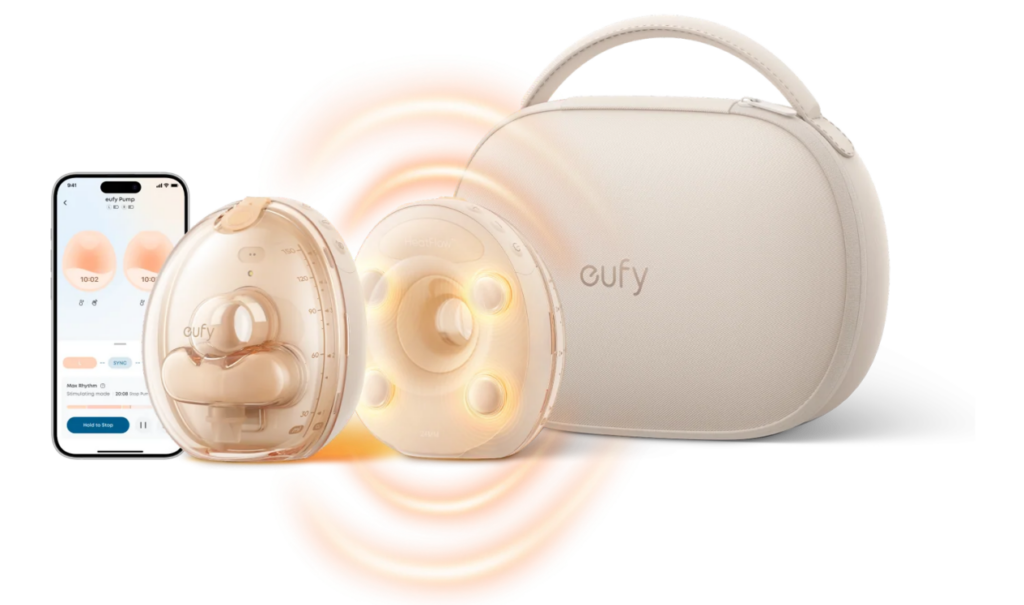
For parents whose main delay is setup or being tied to one spot, the eufy Wearable Breast Pump S2 Pro addresses a few practical friction points. HeatFlow 2.0 offers 360 degree warmth, heats in 15 seconds and has 7 settings, and it might help in case warmth will assist in supporting your letdown. VibraPump has a 12 mm massage head, app control, 46 dB operation, and suction up to 300 mmHg are all designed to provide you with a little more space to repeat a comfortable rhythm during work breaks, early mornings or night shifts. Up to 7 days of charge with three sessions of 20 minutes a day without heat and massage allows the charging case to eliminate one more item on the list of things to remember before coming to work or one or two trips to the store without worrying about charging the case.
Note: eufy bases these performance claims on internal lab testing, so daily results can vary. Battery life also changes with pumping habits, selected settings, and the surrounding environment.
The basics still matter. You need the right fit, clean parts, safe storage, and enough time for milk removal. If warmth helps your letdown or fewer cords make you less tense, a session may be easier to start and finish.
Slow Pumping Needs Attention When the Pattern Changes
Some variation belongs in the routine. Morning pumping may move faster than evening pumping. A stressful work call can delay letdown. A short top-up session before leaving home will not look like a full session after a longer stretch of sleep.
The pattern matters. So does how your body feels.
- Longer sessions with the same output can point to worn parts, poor seal, or a flange size issue
- Longer sessions with pain can suggest rubbing, pinching, swelling, or a clogged duct risk
- Sudden output drops can relate to illness, stress, cycle changes, feeding changes, hydration, or pump wear
- Repeated engorgement may mean the schedule or milk removal plan needs adjustment
Less often, when you usually work at least 30-40 minutes at a time, or you begin to feel pain when pumping, enlist assistance, instead of trying to endure it. An International Board Certified Lactation Consultant is able to size the flanges, observe a pumping session, review settings and assist in isolating problems with the pump and body response. Get in touch with a clinician immediately in case of fever, severe pains in the breast, redness, flu-like symptoms, baby weight problems, and dehydration.
Conclusion
Active pumping is usually about 15 to 20 minutes on a double electric pump, although most parents take more time to get the pump digitally ready, to allow time to letdown, store, clean and whatever may be occurring around the session. Some amount of variation is natural. A sudden slowing or new pain, or an entirely extended session of the same rate is worth looking into early. A new valve or a more appropriate flange fit begets the fix sometimes. It sometimes is receiving lactation instruction even before the routine is difficult than it should be.
Personalized breastfeeding and pumping guidance should be sought with a healthcare expert or International Board Certified Lactation Consultant.