How Smart Buyers Avoid Scams When Using Online Car Auctions
Trust is the exception, not the rule
Bidding on a car without ever seeing it in person feels like a gamble. Is the engine intact or photoshopped? Is the seller real or a digital ghost? Online auction listings promise “great condition” yet ship out flood-damaged cars. The truth is simple. The auction environment rewards sharp instincts and research. Not everyone is ready. But you will be.
One of the most trusted auction platforms in the U.S., https://abetter.bid/locations/usa/ny, helps buyers bid on used vehicles with clear rules and full transparency. Still, even on legitimate platforms, not all listings are created equal.
This article is your guide to buying cars at auction without getting scammed. Learn how to inspect, verify, and outsmart shady sellers before placing a bid.
What is an Auction Scam?
An auction scam involves any deceptive practice within an online car auction designed to lure buyers, distort the vehicle’s condition, or steal money. It can come from both fake auction sites and seemingly real sellers on trusted platforms. Scammers thrive on urgency and ignorance.
Bidding on the Unknown
Think before you place that winning bid. Many inexperienced buyers rush into the auction process without checking the seller’s identity or understanding the conditions of the auction. This is where fraud wins.
Red Flags Before You Bid
- Low-quality photos or only one angle
- A VIN that doesn’t match the title
- Overuse of the words “runs great” without mechanical details
- Wire transfers only as payment method
- Seller refuses to answer detailed questions
How to Avoid Scams in a Car Auction
The online auction world is brutal for the careless. Here’s how smart buyers stay safe:
1. Always Verify the VIN
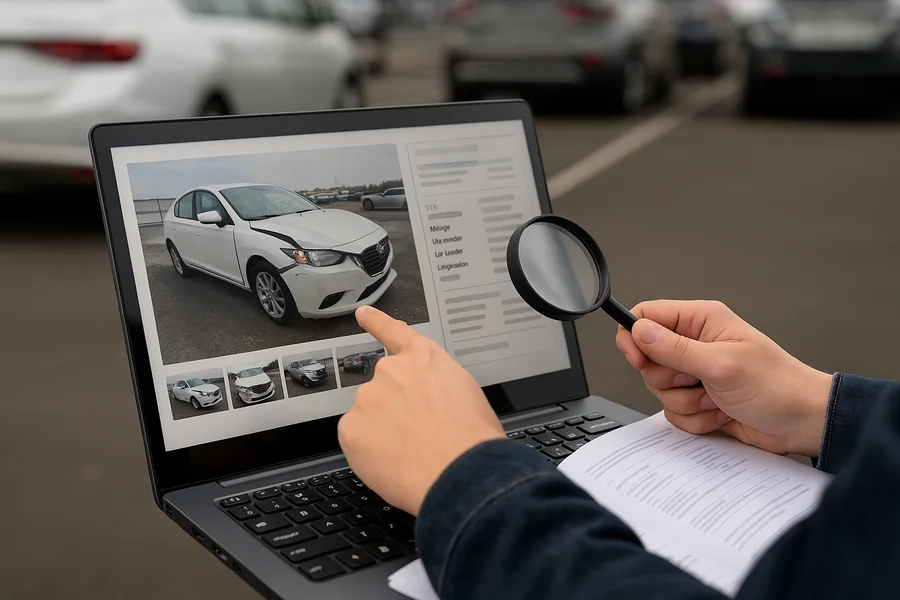
Use the vehicle identification number to run a complete vehicle history report. Services like AutoCheck reveal hidden issues like previous accidents or if it’s a stolen or salvaged vehicle. Even legitimate sellers can misrepresent damage. Get a vehicle history report before bidding.
2. Check the Seller’s Reputation
Legitimate car sellers typically have:
- Transaction history on the auction platform
- Verifiable business info
- Real responses to questions
- Reasonable shipping and secure payment options
If it’s too good to be true, it usually is.
Online Auction vs Auto Auction
| Feature | Online Auction | Physical Auto Auction |
| Access | Nationwide via internet | Limited to local buyers |
| Verification Level | Needs more diligence by the buyer | Often done by the auction house |
| Scams Risk | Higher due to anonymity | Lower but still exists |
| Auction Type Variety | Salvage, rebuilt, dealer trade-ins | Usually dealer vehicles only |
Types of Auction Scams You Must Know
- VIN Spoofing: Real car image but fake vehicle details
- Non-existent Car Listings: Photos of a car already sold elsewhere
- Fake Auction Websites: Imitation of known auction houses
- Hijacked Seller Accounts: Scammer gains access to legit seller credentials
How to Stay Safe When Buying a Vehicle Online
The auction process can be safe if you take the right steps. Use this checklist before placing a bid:
Safety Checklist
- Run the VIN through trustful services
- Review seller ratings on the auction platform
- Avoid listings with vague or missing info
- Never rely on wire transfers
- Confirm vehicle location
- Screenshot the auction rules and terms and conditions
Common Auction Listing Tricks
Some listings aim to mislead with sneaky phrasing. Watch for these tricks:
- “Minor damage” on a totaled salvage car
- “Runs and drives” but no vehicle history report
- “Clean title” used incorrectly on rebuilds
- “No keys” which may hide theft recovery
Each listing deserves a double take.
Buying at Auctions: The Smart Way
Buying cars at auction isn’t risky when you treat every listing as suspect. Start by understanding auction type (salvage, clean title, repo). Know your market value range. Don’t rely on the listing’s condition alone.
Bidding is strategy. It’s not just about clicking at the last second. It’s about knowing the car, knowing the auction platform, and knowing how scammers operate.
Ensure a Smooth Transaction
Use only secure payment methods. Avoid off-platform communication. Download all documentation immediately after your winning bid. Follow up with a trusted shipper, and confirm delivery terms in writing.
Auction houses are not liable for every mistake you make. That’s the buyer’s burden.
Purchasing a Car: Be Skeptical, Be Smart
Purchasing a car through an online car auction should feel like a strategic move, not a gamble. If the auction site allows access to real-time data, high-resolution images, full car history, and independent inspection reports, you’re in better hands. Still, nothing replaces your own thorough research.
The safest way to buy a car at auction is to treat each listing as if it hides something. Then prove yourself wrong with facts. That mindset helps you avoid scams.
Secure Payment Methods That Help You Avoid Scams
When dealing with auction platforms, payment methods often reveal the seller’s intent. Some forms of payment protect buyers and sellers. Others favor the scammer.
Payment Methods Ranked by Security
| Payment Method | Risk Level | Recommendation |
| Credit Card | Low | Use if platform allows |
| Escrow Service | Low | Best for high-value used cars |
| Bank Transfer | Medium | Only to trusted auction houses |
| Wire Transfer | High | Avoid unless fully verified |
| Cash App / Zelle | Very High | Do not use for auction vehicles |
Never send funds to anyone outside the auction environment. Avoid “urgent deal” messages and unverified online listings.
Scams and Secure Transactions: A Double-Edged Auction World
Every auction is a trade-off between speed and safety. There’s no time for hesitation once bidding starts, yet hesitation is what saves you from auction scams.
Sellers and buyers need a shared understanding of auction rules. Legitimate platforms enforce them. Shady ones blur the lines.
To stay safe, treat every used car listing like a puzzle. Ask:
- Does the story make sense?
- Does the damage match the title?
- Does the VIN check out?
- Are there third-party reports?
- Is the communication normal?
You’re not paranoid. You’re prepared.
Buying at Auctions Without Getting Scammed
The golden rule: Never let the thrill of the auction override your logic. Scammers know how to exploit emotion. The best deals exist, but they sit between traps. Study the auction type, compare condition reports, and use vehicle history reports to inspect the vehicle’s history.
Avoid scams by acting like a detective, not a gambler. You’re not just buying a vehicle. You’re navigating a sea of auction listings, where only the smart bidders win.