Why Your Beautiful Minimalist Apartment Sounds So Empty — And How to Fix It
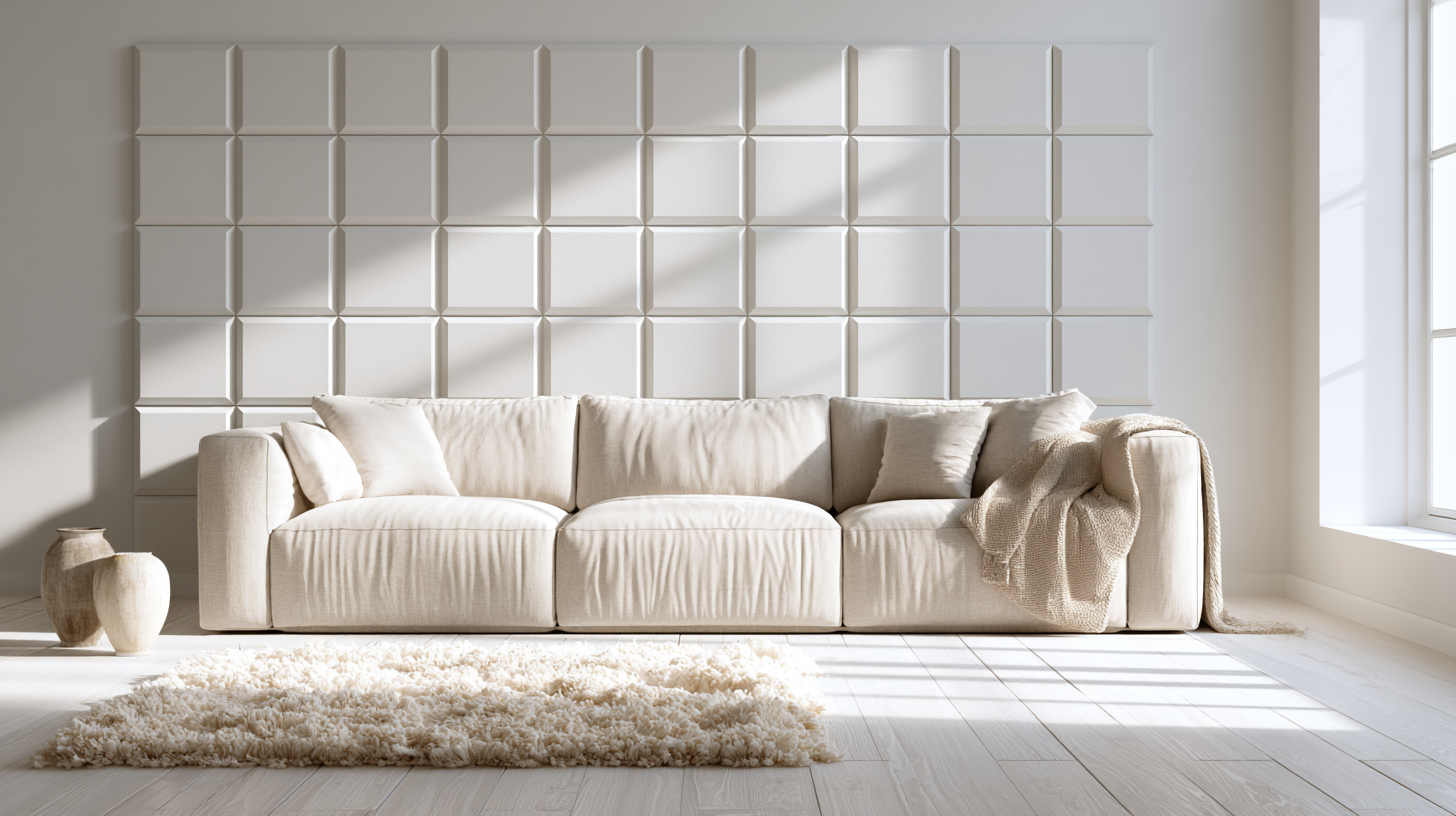
You did everything right. White walls, clean lines, a few carefully chosen pieces, nothing extra. The apartment looks like it walked out of a Pinterest board — calm, airy, intentional. And yet something is off, and it’s nothing a photo would ever show: the place sounds empty. Footsteps echo down the hallway, your voice rings against the walls, and even a quiet evening feels strangely cold in a space that looks so serene.
Here’s the diagnosis: minimalism calms the eye but strips the room acoustically. Every bare wall, every hard floor, every glass surface reflects sound instead of absorbing it, so the room repeats every noise back at you. The good news is that the fix doesn’t require cluttering your space — white acoustic panels blend into a minimalist wall while quietly absorbing the echo.
This is a story about the one layer of interior design most of us forget: how a home sounds.
The Sound of Empty: What Echo Does to a Home’s Atmosphere
We think of coziness as something visual — warm light, soft textures, gentle colors. But your sense of a space is built just as much by your ears. A room with a soft, quiet sound signature feels intimate and lived-in. A room with echo feels the opposite: public, unoccupied, cold.
There’s a reason for that. Echoing spaces are the ones we associate with transition and absence — empty lobbies, stairwells, apartments before the furniture arrives. When your living room carries that same ring, your brain quietly files it under “not home yet,” no matter how beautiful the styling is.
Compare that to the spaces that instantly feel expensive and calm: a luxury hotel suite, a boutique, a spa. They’re visually minimal too — but they sound soft. Voices stay close, footsteps disappear, silence feels thick rather than hollow. That sound is designed, and it’s the missing layer in most minimalist homes.
Why Minimalism Amplifies the Problem
The irony is that everything that makes minimalism beautiful also makes it loud. Bare walls are elegant — and they’re acoustic mirrors. Hardwood and polished concrete floors are timeless — and they bounce every step. Large windows fill the room with light — and glass is one of the most reflective surfaces you can live with.
Meanwhile, the things that traditionally absorb sound in a home are exactly what minimalism edits out: heavy rugs, layered curtains, overstuffed sofas, shelves full of books, walls covered in frames. Older, fuller interiors were never designed for acoustics, but they muffled sound by accident. A pared-down apartment loses that accidental softness and keeps all the hard surfaces.
Which leaves minimalists with an apparent dilemma: add things back and lose the aesthetic, or keep the clean look and live inside an echo. Fortunately, it’s a false choice.
White Acoustic Panels: Function Disguised as Design
Acoustic panels are soft, fabric-wrapped elements that mount on a wall and absorb the reflections that create echo — particularly the frequencies of speech and everyday movement. They’ve lived in recording studios for decades; what’s changed is that they now look like something you’d actually want in your living room.
White panels are the minimalist’s answer because they resolve the dilemma entirely. Matched to a white wall, they read as subtle texture — a quiet relief pattern that catches side light beautifully. Arranged deliberately, they become wall art: a geometric grid above the sofa, an asymmetric composition in the bedroom, a clean rectangle behind a desk. Either way, they don’t add visual noise. They remove the audible kind.
Placement follows how you live. The living room wall facing the sofa and TV is usually the highest-impact spot, since that’s where conversation and media reflect most. The bedroom rewards a panel arrangement above or behind the headboard — softer sound makes the room feel instantly more enveloping. And a home office corner benefits doubly: calls sound clearer on both ends, and the space feels more focused.
You don’t need many. A modest composition on one or two walls changes the character of a room’s sound — the goal is softening, not soundproofing a studio.
Read more: Gold Romper Style Guide for Fashion and Confidence
Styling It Right: Making Panels Part of the Interior
The trick to making panels feel like decor rather than equipment is layering them with the materials minimalism already loves. White panels sit naturally next to linen curtains, a wool throw, pale wood, and ceramics — they become another texture in a quiet palette rather than a foreign object.
Light does half the work. Because panels have depth, a side-placed lamp or a wash of afternoon sun turns them into a subtle play of shadow and relief — the kind of detail that makes a white-on-white room feel rich instead of flat.
A few mistakes to avoid. Don’t scatter panels randomly across a wall; a deliberate grid or a balanced asymmetric cluster reads as intentional, while random placement reads as an afterthought. Don’t cover an entire wall — a composition needs breathing room, just like everything else in a minimalist space. And don’t hide them behind furniture; they work best on open wall, where they can do both of their jobs.
Small Additions, Softer Home: Completing the Acoustic Picture
Panels carry most of the load, but a few minimalist-friendly companions finish the effect. One generous high-pile rug in the seating area does more than several small ones. Curtains in the same tone as the walls add absorption without adding visual weight. An upholstered headboard softens a bedroom both to the eye and the ear.
The principle is precision, not accumulation: a few soft surfaces in the right places, chosen with the same care as everything else you own. Minimalism stays intact — it just stops echoing.
The Last Layer of Calm
A home should not only look serene; it should sound serene. Silence with a soft edge is the final layer of a minimalist interior — the difference between a space that photographs well and a space that feels like home the moment you close the door.
If you’re ready to add that layer, specialty suppliers like Sound Pro Solutions carry white acoustic panels designed for living spaces, which makes it easy to find a format that fits your walls and your aesthetic. Your apartment already looks calm. Now it can sound that way too.