How Community Is Being Redefined Across Oregon
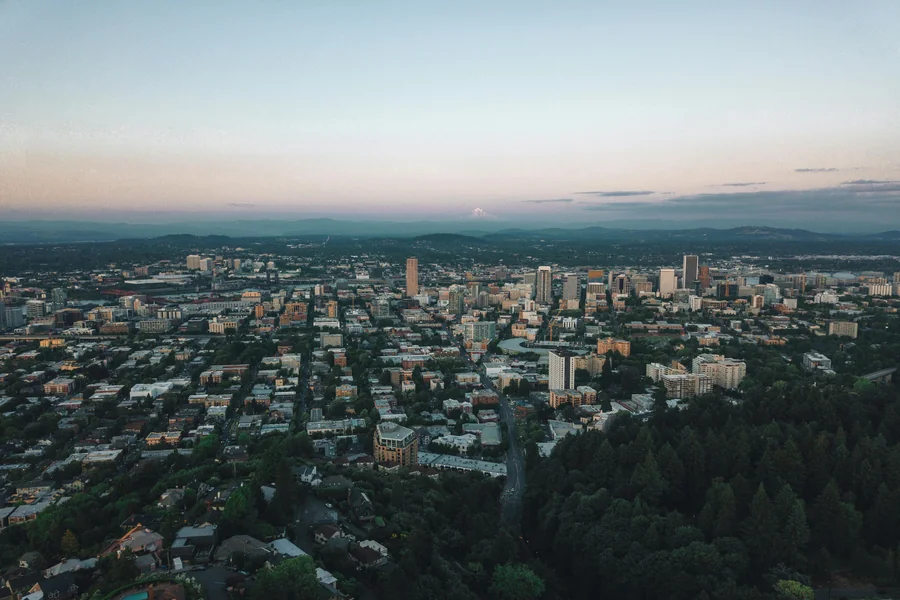
Areas like Portland, Willamette Valley, the coast, and inland cities, act as separate units. However, they are indeed tied together by roads, supply chains, and their shared infrastructure. The result is not fragmentation. It is distribution with continuity.
The idea of community here is tied to function. It is built into how places operate day to day, not layered on top as an abstract concept. To understand it, the structure behind each region needs to be examined in practical terms.
Portland: Multiple Systems Running in Parallel
Portland gets treated as the entry point into Oregon. That assumption misses how the city actually works. It does not pull everything toward a central core. It spreads activity across distinct neighborhoods, each with its own patterns of use.
Neighborhood Economies That Replace Centralization
Alberta Arts District, Sellwood-Moreland, and the Pearl District are the areas that do not rely just on downtown spillover. Each one of them supports its own commercial strip which is usually built around independent retail, small food operators, and service-based businesses.
Foot traffic on Alberta Street is driven by spaces like galleries, cafes, and on its rotating street activity rather than by office workers commuting in. Sellwood runs on local repeat usage with its antique shops and hardware stores, and there are also local cafes that depend on residents within a short radius. The Pearl District mixes residential density with design firms, restaurants, and converted warehouse spaces.
These are not satellite zones feeding a larger center. Instead, they turned into real self-sustaining pockets.
Infrastructure That Repels Bottlenecks
The city’s layout reinforces that distribution. The bike lanes form an almost perfect network that allows movement between neighborhoods without a need to rely on major roads. Public transit (MAX light rail and buses) connects these districts directly instead of funneling everything downtown.
This changes movement patterns. People travel laterally across the city. Daily routines stay local unless there is a specific reason to move further.
The outcome is simple. Activity spreads instead of stacking in one place.
Structured Social Spaces
Portland’s social clubs operate with a defined purpose. They are not occasional gathering spots. They function as consistent-use environments.
People use places like Soho House Portland and The Hoxton throughout the day as well as at night. They combine workspace, food service, and event programming, altogether. And their membership models ensure repeat attendance which builds familiarity without anything feeling forced in.
At a smaller scale, design studios, writing groups, and maker spaces are embedded inside neighborhoods. They feel freely integrated into daily life and sit usually next to grocery stores or coffee shops.
The key factor is repetition. People return to the same spaces, at similar times, with predictable use. That consistency replaces the need for large, centralized events.
The Willamette Valley: Agriculture as Daily Interaction
South of Portland, there’s abovementioned Willamette Valley which operates as a production system that people interact with, directly. It’s one of the most productive agricultural regions in the US. Willamette Valley is widely known for Pinot Noir but its role extends far beyond only wine.
The structure here is visible. Fields, processing facilities, and points of sale are not hidden behind layers of distribution.
Direct Access to Production
Farm stands line secondary roads across the valley. It is common to see produce sold within meters of where it was grown in areas around McMinnville, Dundee, and Salem. There’s no complex logistics chain that separates the producer from the buyer.
Seasonal crops define what is available at the moment. Berries grow during summer, squash during fall, and most of the greens can be found in early spring. The supply is tied to the land, not to inventory systems trying to maintain consistency year-round.
That creates a different type of interaction. People adjust to production cycles instead of expecting constant availability.
Wineries as Functional Spaces
Wineries operate as both production sites and gathering points. They are designed for use, not just for output.
Wine-tasting rooms in Newberg and Yamhill are open throughout the week and visitors and local residents normally use them for casual meetings or small events. The setting is not exclusive at all but is integrated into this region’s routine.
Harvest season adds another layer. Work, tourism, and local activity overlap without needing separation. The same space supports all three.
Local Economies That Stay Grounded
Money circulates within the region. Small farms supply local restaurants. Wineries collaborate with nearby producers. Markets operate on predictable schedules, not occasional events.
This reduces dependence on external systems. The valley functions on what it produces, with external distribution acting as an extension rather than a requirement.
Coastal Towns: Year-Round Systems, Not Seasonal Shells
Oregon’s coastline includes towns that handle tourism without becoming dependent on it. Astoria, Newport, and Cannon Beach maintain active systems beyond peak seasons.
Working Waterfronts
Newport’s port operates year-round. There’s Dungeness crab, salmon, and more species that move into regional markets with ease and this is not staged for visitors but is a working system that continues regardless of tourist cycles.
Astoria combines shipping, fishing, and small-scale manufacturing. Its location at the mouth of the Columbia River supports consistent activity tied to logistics and trade.
These towns do not shut down when visitor numbers drop. The baseline activity remains.
Tourism Without Overbuild
Cannon Beach draws consistent attention, mainly due to Haystack Rock. Despite that, large-scale development has been limited. Hotels remain small to mid-sized. Local businesses dominate the commercial strip.
This controls volume. The town absorbs visitors without restructuring itself around them.
Adaptation Instead of Shutdown
Off-season operations shift rather than stop. Restaurants adjust hours. Shops scale inventory. Local events replace tourist-heavy programming.
The system stays active. It does not depend on a single peak period to function.
Forest Systems and Public Access
Large portions of Oregon are designated as public land. This includes national forests, state parks, and protected areas. These spaces are not isolated. They are integrated into regular use.
Open Access With Basic Structure
Places like the Columbia River Gorge and Mount Hood are accessible through maintained trails, parking areas, and minimal facilities. There is no heavy layering of services. The infrastructure supports access without overdevelopment.
Trail systems are clearly marked. Campgrounds are functional, not overbuilt. Regulations are visible and enforced without excessive restriction.
This creates a shared environment that does not require coordination.
Regular Use, Not Occasional Visits
Hiking, camping, and seasonal activities like skiing are part of routine use. People return to the same locations multiple times a year.
That repetition builds familiarity with the landscape. It also distributes usage across different areas, reducing pressure on any single site.
Environmental Limits That Shape Behavior
Access exists within constraints. Fire restrictions, seasonal closures, and weather conditions dictate usage. These are not optional guidelines. They define how and when spaces are used.
People adapt to those limits. The system stays functional without needing constant intervention.
Independent Cities That Do Not Rely on Portland
Cities like Bend, Eugene, and Ashland operate as complete systems. They are connected to the rest of the state, but they do not depend on Portland for daily function.
Bend: Growth Anchored in Geography
Bend has expanded rapidly, driven by access to outdoor environments and a steady inflow of new residents. The city supports itself through local businesses, construction, and service industries tied to that growth.
Its location near the Cascade Range shapes its economy. Outdoor recreation is not an add-on. It is a core driver.
Eugene: Academic and Local Systems Combined
Eugene integrates university infrastructure with local markets and events. The presence of a major university supports housing, retail, and service sectors that operate year-round.
Farmers markets, small-scale manufacturing, and local events fill the gaps outside academic cycles.
Ashland: Culture Without Expansion Pressure
Ashland maintains a small-town structure while supporting a major cultural event, the Oregon Shakespeare Festival. The town handles increased activity without expanding beyond its scale.
Local businesses remain central. The festival adds volume, not structural change.
Infrastructure That Connects Without Forcing Centralization
Oregon’s road network supports direct movement between regions. Interstate 5 runs north to south, linking major cities. Secondary highways connect inland areas to the coast and rural regions.
Travel does not require routing through a single hub. Movement is point-to-point.
Public transport is effective داخل cities like Portland and Eugene, but long-distance travel relies on vehicles. This matches the distributed layout of the state.
The system allows independence while maintaining access.
A Distributed Model That Holds Its Shape
Oregon’s structure does not rely on a single definition of community. It operates through multiple systems that function independently but remain connected.
Urban neighborhoods, agricultural regions, coastal towns, public lands, and inland cities each handle their own operations. Interaction happens within those systems, through repeated use and practical engagement.
Nothing needs to be artificially created. The structure already supports it.
Community here is not an added layer. It is a byproduct of how the state runs.