Custom Watch Configurator – Basic vs Advanced Options Explained
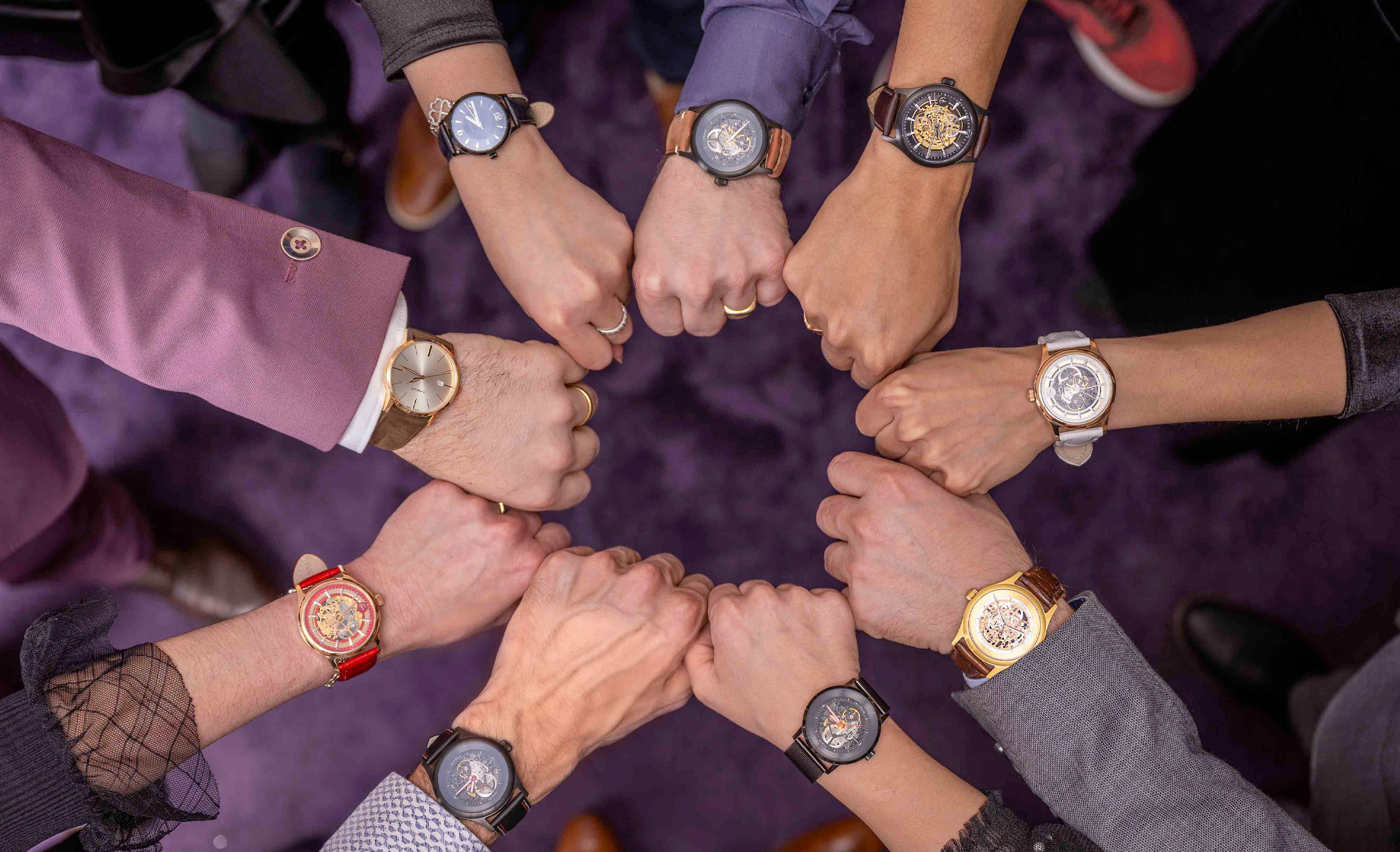
The desire for individuality drives many passions, and in the world of horology, this yearning often leads enthusiasts to explore the possibilities of a custom watch. Nowadays, with online tools called a custom watch configurator, the prospective buyer can play the role of the designer and convert a mass-produced watch into a work of art that reflects his personal style and character. These online shops encourage customers to become involved in the creation process, providing an interactive and engaging experience of making what they wear on their wrist.
Watch customization is more than an aesthetic phenomenon; it is a huge shift in the consumer experience of luxury and personal accessories. The configurator is not only an unprecedented tool, but a highly economical device both to the customer who desires any piece of personalisation and the watchmaker who wants to display a wider range of possibilities. The real strength is that it enables to turn a personal dream into a concrete thing, and the designing process is as satisfying as the final object will be.
But, not every configurator is equal. The list of possibilities may be as varied as possible, starting with basic decisions to detailed, details-oriented decisions. To navigate through this thrilling world and get the accurate timepiece one envisions, understanding the difference between basic and advanced custom watch configurator options is important in navigating this exciting landscape.
The Allure of Personalization: Why Choose a Custom Watch Configurator?
In today’s world, when it seems like everything is mass-produced, the value of something being crafted on a case-by-case basis is immeasurable. An online custom watch designer capitalizes on this human urge to individuality and customer customisation enables them to give a functional piece a personal interpretation. It is not merely about time keeping but your story.
There are a number of strong arguments in favour of using a custom watch configurator. One, it offers a friendly introduction to the realm of custom-made products without the usual barriers of prohibitive prices or intricacies of traditional custom orders. The digital interface simplifies the design process and provides visual response of the decisions made immediately.
Secondly, such tools enable an even closer bond between a wearer and his or her watch. By making a part in choosing every detail, the tactile quality of the dial, the type of strap used, and so forth, the final product will be your homage. This participation makes the watch not a product with a high cost and the focus on accessory but a valued piece of art that reflects personal taste and preference in each detail.
And lastly, a configurator is able to reveal the hidden design possibilities that would not otherwise be explored. Demonstrating different combinations visually, it promotes experimentation and allows users to explore aesthetics that they may not have thought about in the first place. The interactive discovery makes the process fun and informative as it expands the horizons of one with regard to watch design.
Decoding the Basic Custom Watch Configurator Experience
To others, the process of customization of the watches starts with an ordinary custom watch configurator. Such portals usually are centered on the essence of aesthetics, offering a simple and easy-to-navigate experience of the design. They suit every person that values individuality yet is more apt to a less intricate design, or any person that is uninformed about the idea of altering a timepiece.
Simple configurators typically offer a limited amount of simple components that are readily available and able to be customized to some extent without overburdening the user with a multitude of options. The focus in this is made to be easy to handle and achieve gratification instantly, and thus the design process is both fast and fun.
Fundamental Customization Options
What is to be expected of a simple configurator? The choices usually concern different visual traits that can change substantially the overall image of the watch. These typically include:
- Case Material and Finish: Choices often include stainless steel, PVD-coated steel (black, gold-tone), or perhaps titanium, with finishes like polished, brushed, or matte.
- Dial Color and Texture: A selection of popular colors (black, blue, white, green) and sometimes basic textures (sunburst, matte) are usually available.
- Hand Set: Options for hour, minute, and second hands, often limited to a few classic styles and colors.
- Strap Material and Color: A range of leather, rubber, or nylon straps in various colors, alongside standard metal bracelets.
- Bezel Type: Choices between a fixed, polished bezel or a rotating bezel with a simple insert, like a dive or GMT scale.
The most simple configurator is beautiful in that it is accessible. It enables any person to design a unique timepiece that would be personal without one having to observe extensive horogenic technicalities or a huge budget. The specified parameters make sure that all the final components are compatible ensuring a harmonious and workable end product.
Stepping Up: What Advanced Configurators Offer
When the need to be personalized goes beyond the superficial, a level-three custom watch configurator is the weapon to use. These advanced platforms explore the finer side of watchmaking, allowing a level of control that is granular in detail to make a watch into a horological statement of its own. High-end configurators appeal to a segment of the market that includes hobbyists who like to customize their watches, both in terms of outward appeal and inward workings.
This tend to be made complex through the advanced options that can then render the design experience much more immersive, with choices made regarding minor details that may have a strong effect on the character of the watch. These tools make use of highly advanced equipment and image processers to give very accurate previews so that the end product matches exactly with what the designer wanted.
Beyond Aesthetics: Deep Dive into Components
Cutting-edge configurators are built on the bare minimum offerings and are able to customize components that not only affect the appearance and feel, but also the performance and durability of the watch. Some of the major areas that advanced options excel are as follows:
- Movement Type and Grade: Users might choose between different automatic movements, potentially even selecting specific grades (e.g., standard, elaborated, top) or adding complications like a date window, GMT function, or power reserve indicator.
- Crystal Material: Options beyond standard mineral glass, such as sapphire crystal with various anti-reflective coatings.
- Luminescence: Selection of specific luminous compounds (e.g., C3, BGW9) for hands and indices, allowing control over glow intensity and color.
- Indices and Numerals: A wide array of applied indices (batons, dots, Roman numerals, Arabic numerals) in various finishes, or even custom printing.
- Bezel Inserts: More exotic materials like ceramic, sapphire, or forged carbon, with custom markings or color schemes.
- Engraving and Personalization: Detailed case back engravings, custom dial printing (e.g., logos, initials), or even personalized rotor designs for automatic movements.
- Material Finishes: Beyond simple brushing or polishing, options might include sandblasting, bead-blasting, or specific PVD/DLC coatings in various colors.
The technological features of such progressed configurators take precedence. Competent design and exact matching of components is needed to be sure that the virtual design will come out to be a physical watch. The degree of customization one can obtain, allows the final product of time to be a result of considerable attention and time spent on the design, creating a truly custom-made object.
The Role of Expert Craftsmanship
In the design interface the configurator delivers, advanced customization is usually dependent on the skills of skilled watchmakers. They are adept at putting together complex parts, controlling movements, and finishing their parts to perfection. It is the combination of the state-of-the-art technology and artistry that brings a fine custom watch to the next level of a brilliant custom watch.
The real art of watch customization is neither only the number of opportunities, but the way all selected elements were integrated and resulted in a time piece that captured the personal story of the owner profoundly.
It is this attention to detail of assembling and quality control that makes a real high quality custom watch stand out in a crowd of similar watches. It is the technology which allows the design and its human expertise that brings it alive with great detail and concern.
The Journey from Concept to Wrist: Process and Quality Assurance
Whether it is a simple design solution or a more sophisticated design program, once a design has been selected via a custom watch design system, the transition process of a virtual replica of a design into an actual timepiece commences. This process can be completed in a number of very crucial steps that allow enhancing the quality and fidelity of the final product. The knowledge about these steps will help us to understand the value proposition of the custom watch and the efforts put in place to make certain that the watch excels.
A work of reviewing the chosen configuration is the first stage usually. This makes the whole components compatible and a cohesive aesthetical unity; at times even a check-up before the actual production starts. This design test is crucial in the detection of possible design conflicts or missed details.
After approval, the different parts are either obtained or produced as per the specifications. It is here that quality of materials and accuracy of the manufacturing processes take centre stage. Stylish custom watches made of material that not only appears nice, but is also durable and long-lasting and indicates a desire to maintain the quality of craftsmanship.
The key point in the process of creation is assembly. The selected parts are carefully assembled, frequently through handwork, and on a case-by-case basis, the watchmakers carefully fit each element or part together with the rest. In the case of watches in which the movement is mechanical, it involves careful lubrication, adjustment and regulation to make sure that they keep time properly. The performance and the final finishing of the watch depends on the skills of the assembly staff.
Ensuring Excellence Through Quality Control
In any process of producing a custom watch, quality control is an essential step. It is a multi facet process which identifies and corrects all sorts of flaws hence making sure that the final product is of the best of best. This stringent audit discusses a number of issues:
- Visual Inspection: Scrutiny of all external components for scratches, dust, misalignments, or manufacturing defects. This includes examining the dial, hands, case, crystal, and strap for flawless presentation.
- Functional Testing: Verification that all functions of the watch operate correctly. This involves checking crown winding, date changes, chronograph functions (if applicable), and bezel rotation.
- Movement Performance: For mechanical watches, this involves timing tests in various positions to ensure accuracy and consistency. Water resistance is also tested to specified depths.
- Material Integrity: Confirmation that all materials used match the customer’s selection and adhere to quality benchmarks, especially important for advanced configurations involving precious metals or specialized coatings.
High-quality and more specific production can often be the result of the incorporation of new equipment and its use at all these steps. Technology has been of key importance in enhancing the quality of producing custom watches through CNC machining of the cases, laser engraving and advanced timing machines. This promise of perfection means that the personalized watch is not just like an exclusive one but a dependable and long-lasting friend.
Custom Watch Configurator: Basic vs. Advanced Options at a Glance
To further explain the differences, we should take a comparative view of what in-store and online basic and advanced watch configurators usually provide. The varied degrees of control, complexity, and subsequent personalization that are possible with each type of platform are brought to the fore in this table.
| Feature Category | Basic Configurator | Advanced Configurator |
| Core Focus | Aesthetic appeal, quick personalization | Detailed horological customization, performance, and intricate design |
| Component Selection | Curated, predefined choices for major parts (case, dial, strap) | Extensive options for all major and minor components, including internal parts |
| Movement Options | Limited to standard quartz or a single automatic option | Multiple automatic movement grades, specific complications (GMT, chrono, etc.) |
| Material & Finish | Standard metals, basic coatings (PVD), limited finishes | Premium materials (titanium, bronze, ceramic), advanced coatings (DLC), diverse finishing techniques (sandblasted, polished, brushed) |
| Personalization Depth | Color changes, strap swaps, simple bezel choices | Custom engravings, unique dial printing, bespoke hand sets, luminescent choices |
| Complexity & Time | Simple interface, fast design process | Detailed interface, more time required for nuanced decisions |
| Typical Price Point | More accessible, entry-level customization | Higher investment due to specialized components and craftsmanship |
This analogy demonstrates that both forms of configurator offer a great deal of personalization, but to different degrees of interest and particular needs. A simple configurator can be a most powerful first step of a person who wants to make a watch his or her own without having to analyze the watchmaking techniques in copious detail. A sophisticated configurator, on the other hand, will enable the people who want to make the truly unique object, who would think out the entire vision to its tiniest details.
Maximizing Your Design Experience: Tips for Using a Custom Watch Configurator
A custom watch configurator is a thrilling adventure, and being strategic about it can not only make your experience more enjoyable, but also guarantee end satisfaction with the product. Whether you go basic or advanced, a careful consideration will be the most productive.
To start with; start with a good vision, even in the form of a rough idea. Take into account the most valuable features of a watch to you: it can be the color of the watch, the material, the kind of movement, and a particular aesthetic feature. An initial idea will be useful to inform your decisions and avoid decision paralysis, particularly when using more advanced configurators that present you with an enormous number of permutations.
Secondly, take your time and see everything that there is. Configurator platforms should be a showcase of what is possible, do not hurry with the choices. Keep trying different combinations, including those that may not be on your mind at first. Unexpectedly matching sometimes is what is required to make what may appear to be an appealing design. Take advantage of visual feedback, and see the effects of every change on the overall personality of the watch.
The second practical advice is to keep in mind your way of life and ways of wearing the watch. A certain polish may be extremely impressive, yet in case you deal with your hands, a brushed or matte finish could be more useful and durable. In the same way, the strap to be used shall be based on your daily activities and comfort needs. The most precious watch is one that perfectly fits into your life.
Lastly, you should always closely inspect what you have typed out before making your design final. Recheck all the selected elements and colors, as well as any custom engravings. A vast majority of configurators is a detailed overview of your design and it is the best time to verify each detail. This thorough inspection means that what you received is the exact time piece which you visualized.
Crafting Your Legacy: The Enduring Value of Personalization
Designing a custom watch and going through every step of the process starting by choosing a single component on a configurator to receiving the finished watch is an extremely personal and rewarding journey. It goes beyond buying, it is about creating, expressing oneself and having something that is so personal to you. It can be the streamlined options of a simple configurator or the complex capabilities of an advanced one, but in any case it makes you a watch that not only tells you the time but also your story.
This timeless worth of customization is precisely what makes custom watch configurators such an important instrument in the horological field. They break the veil that surrounds the design process and make it available and interesting to a wider audience. The chance to directly determine both the aesthetics and even mechanics of one of the timepieces creates a bond that cannot be easily imitated by a mere off-the-shelf watch.
Finally, a custom watch is an investment in customisation. It is something to identify with- who you are, what you are passionate about and trail with individuality. With a range of options, both in the most basic design pieces, and in potent components, these configurators make sure that any fan will find their ideal fit and create a legacy that will last years into the legacy. It has now become squarely in your hands to design your very own custom watch.