We Tried Building a Clothing Brand in Kittl. Here’s Our Honest Review
We tested Kittl to see if it could help us build a clothing brand concept from scratch.
The result: Kittl is useful for turning a loose brand idea into something visual fast. It works well for mood exploration, logo directions, typography tests, graphics, and mockups. But it does not replace taste. The strongest results came when we gave the tool a clear creative direction and edited heavily.
Every clothing brand starts with a feeling.
A name that sounds right.
A vibe you cannot fully explain yet.
A note in your phone with three words and a color palette saved from Instagram.
The hard part is not having the idea.
The hard part is making the idea look like a real brand.
So we built a clothing line concept from scratch using Kittl. Here is our honest review.
Key Takeaways
Kittl is a great tool for small clothing brands. It’s also helpful for print-on demand sellers, merchandise creators, and small business founders trying to create something without a whole designated creative team without it.
It is especially useful for their typography features, their template library that you can create from in just minutes, mockups, AI image generation tools, and AI video or UGC-style ad creation in a workspace that is browser-based.
It is not a technical fashion design tool. So do not depend fully on it for creating production specs, details of garment construction, or a brand strategy. That’s still something you have to tweak on your own.
The biggest value is speed. You can explore a brand direction, test visual styles, create apparel graphics, and mock up a first collection before spending money on production.
For early-stage clothing brands, that makes Kittl a practical creative tool. It helps close the gap between “I have an idea” and “this could actually be a brand.”
Where Most Clothing Ideas Die
Here’s something nobody talks about enough: a lot of clothing line ideas fall apart before a single design gets made. Not because the concept was bad, but because the leap from “I have a vision” to “I have a file I can actually upload to a print-on-demand platform” is bigger than it looks.
You need graphics that work on fabric. Fonts that feel right at small scale on a cap and large scale across a hoodie back. Mockups that let you see whether something actually looks good on clothing, not just on a white canvas. And once you have product designs, you need marketing visuals, too.
Most people do this while switching to several different tools to create one idea. It is also where people water down their original idea just for the sake of finishing. That was the problem we wanted to solve.
Starting With One Concept, Not Ten
The first thing we noticed when we opened Kittl: it’s very easy to start doing too much.
The template library is big. The font options are genuinely impressive. We’re talking Helvetica, Futura, Bodoni, Cooper Black, Garamond, and a range of exclusive Kittl typefaces that don’t feel like the usual design-tool defaults. The AI tools are right there. It’s overwhelming (and truly tempting) to try everything at once.
So we made a rule for ourselves: One concept. One clear idea. A brand name, a mood, a slogan. Something specific enough to make decisions from. Because a clothing line isn’t a collection of random designs. It’s a visual system. Everything has to feel like it belongs together.
That constraint made everything easier. Once we had a single direction, the tool started to make sense.
How the Design Process Actually Went
We started with the typography, because for most small clothing brands, type is the design. A slogan-based T-shirt, a logo crewneck, a name on a cap. These are the products that actually sell first, especially on print-on-demand.
Kittl’s text tools are where it earns its place. We weren’t just choosing a font and centering it. We were building with type: curving it, adding outline effects, stacking it, creating a badge layout, adjusting the kerning so a brand name felt considered instead of default. What would’ve taken a lot of back-and-forth in other tools felt faster here, because the effects and controls are built for this kind of design work specifically.
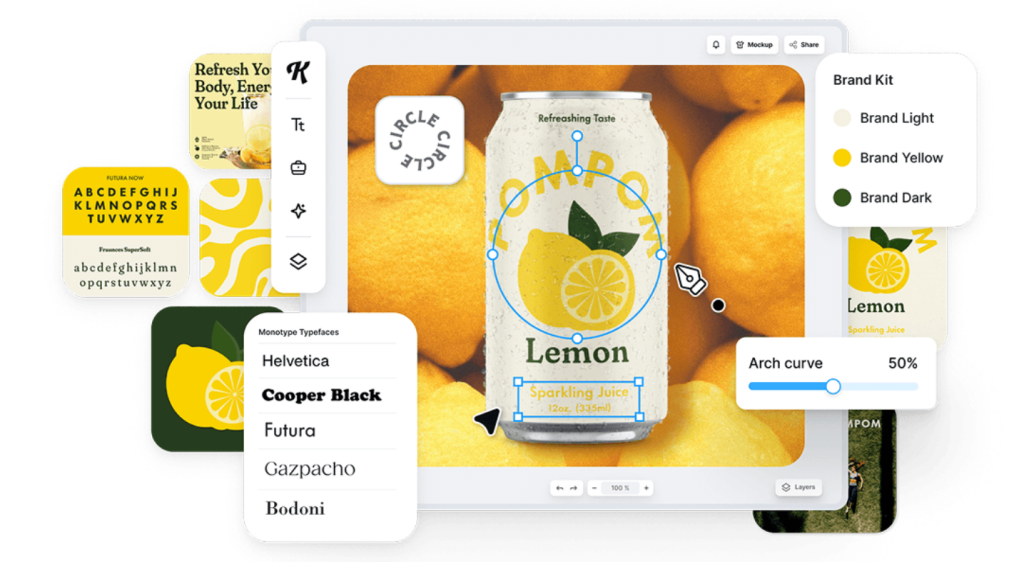
Image from kittl.com homepage
From one core graphic, we started adapting. The front chest logo became a larger back print. The back print was simplified into a cap graphic. The brand name got a cleaner, more minimal treatment for a beanie. We weren’t making four separate designs. We were making one idea work across four products.
That was the moment Kittl clicked for us. It’s not just a design tool. It’s useful for building a coherent first drop.
The Mockup Problem (and Why It Matters More Than You Think)
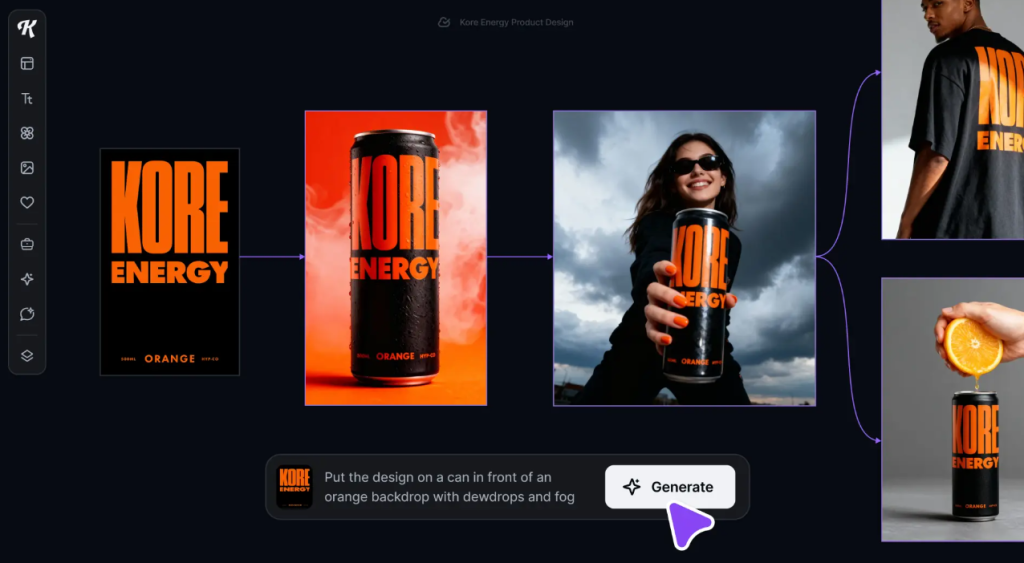
Image from kittl.com homepage
The thing is, new clothing brands tend to make one same mistake: designing an amazing design on screen and then listing it (hoping for the best). But realizing late that it’s too big or too detailed, or the design has the wrong placement.
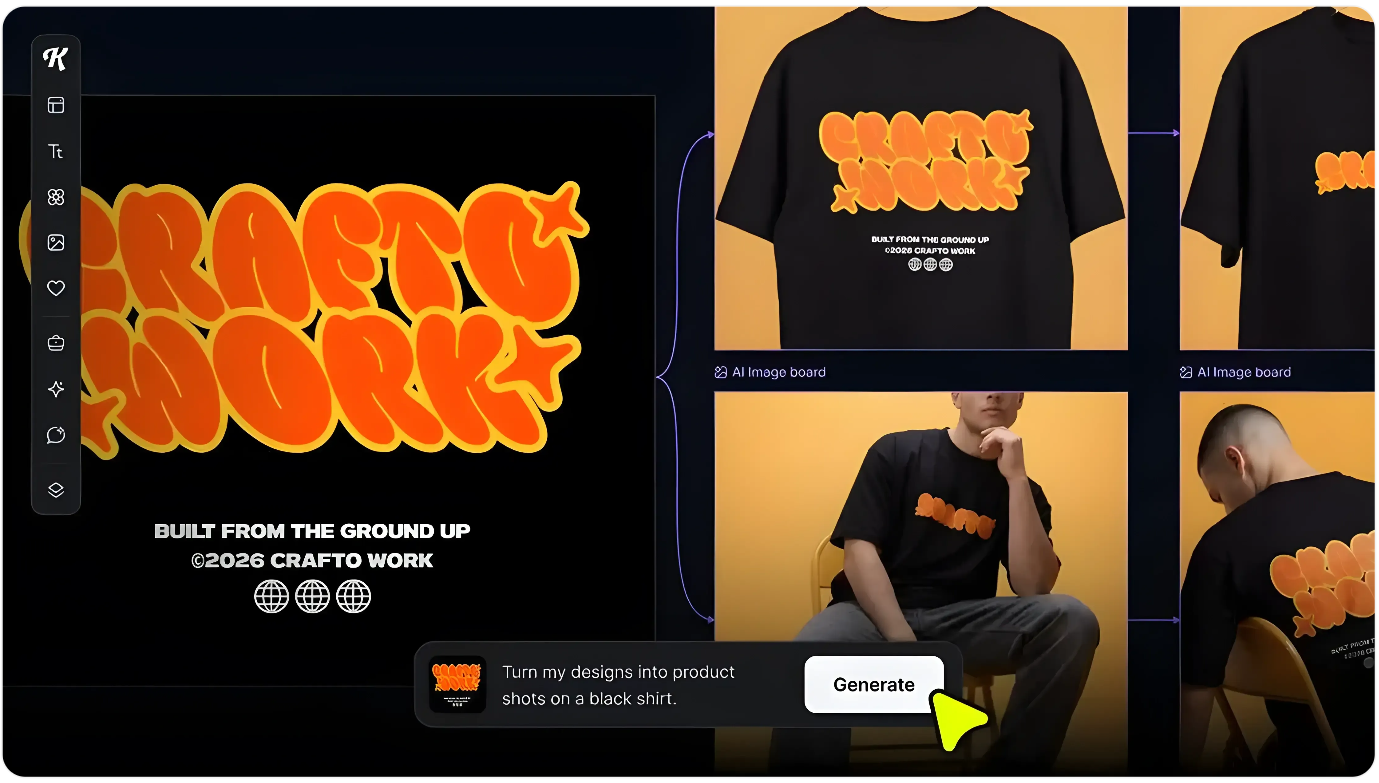
Kittl has mockup tools built into the same workspace. Our designs lived on their T-Shirt, hoodies, sweatshirt, and cap mockups. And once we saw it on the real thing, we could change some of our decisions immediately.
A graphic that felt balanced on the canvas looked crowded on a fitted cap. The hoodie back print needed to come down an inch. The chest logo needed more breathing room.
These aren’t things you can always judge from a flat file. Seeing your work on clothing, even in preview form, is part of making real design decisions. It’s also what makes a new brand’s product page look like it was done intentionally rather than thrown together.
Kittl AI Tools for POD Sellers
We’ll be honest: AI image generation is easy to overuse.
Kittl has it built in, along with video generation tools and the ability to create UGC-style ad content. For a small clothing brand with no photoshoot budget, that’s genuinely useful. We used it to generate campaign-style background scenes, test product placement concepts, and put together a short promotional clip for a hypothetical drop launch, all without leaving the platform.
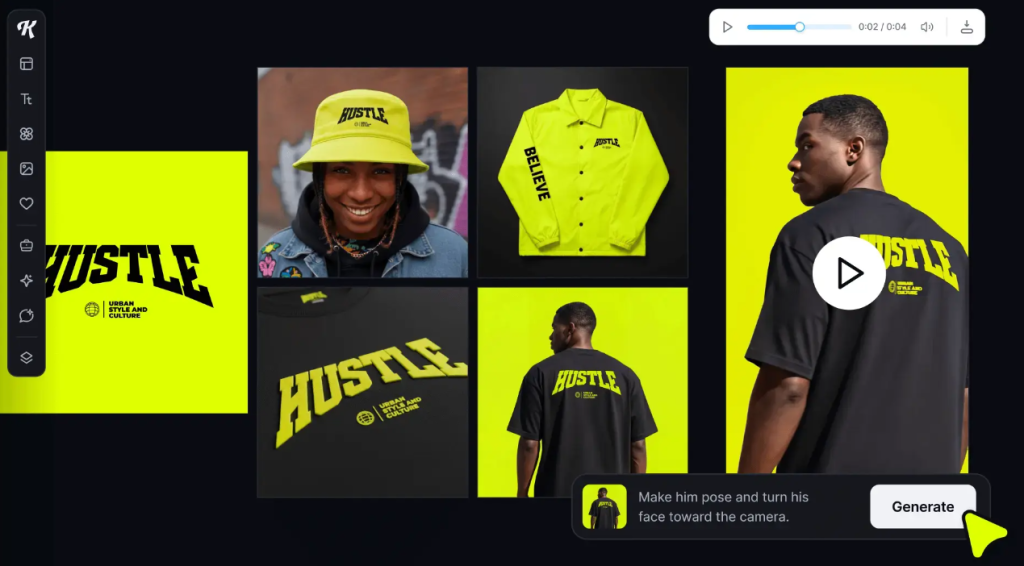
Image from kittl.com homepage
But we kept checking back against the original concept. Does this still feel like our brand? AI can generate a lot, quickly. The skill is in knowing what to keep and what to throw out. So we switched it. We stayed anchored to our original concept. And only then did we use AI to support the direction.
The video tools in particular were a surprise. A ten-second clip of a hoodie design moving against the right background does more for a launch post than a static flat mockup. For small brands on social, that matters.
What Kittl Won’t Do For You
This is the part worth being honest about.
Kittl can’t build a brand. It can build the visual expression of a brand you’ve already thought through.
It also won’t solve the deeper questions: Who is this clothing for? What does the brand believe? Why would someone choose your hoodie over another? Those answers have to come from you.
And if you need technical fashion files like sewing patterns, fabric specs, grading, or production-ready tech packs, this isn’t that tool. After all, at the end of the day, this is a design and marketing tool. Not a platform to develop garment.
So, Is It Worth It?
Genuinely? If you’re a small clothing brand trying to get a first drop off the ground, yes.
You can trigger the best momentum with this platform which combines strong typography tools, mockups, AI image and video generation, and UGC-style ad creation in one place.
The designs won’t sell themselves. The brand still has to be yours. But if you have a clear concept and you’re willing to customize past the template defaults, Kittl is a surprisingly capable place to build it.
The clothing line that started as a feeling in your notes app? This is a real path to making it look like something.