Why Surprise And Suspense Keep Digital Games So Engaging
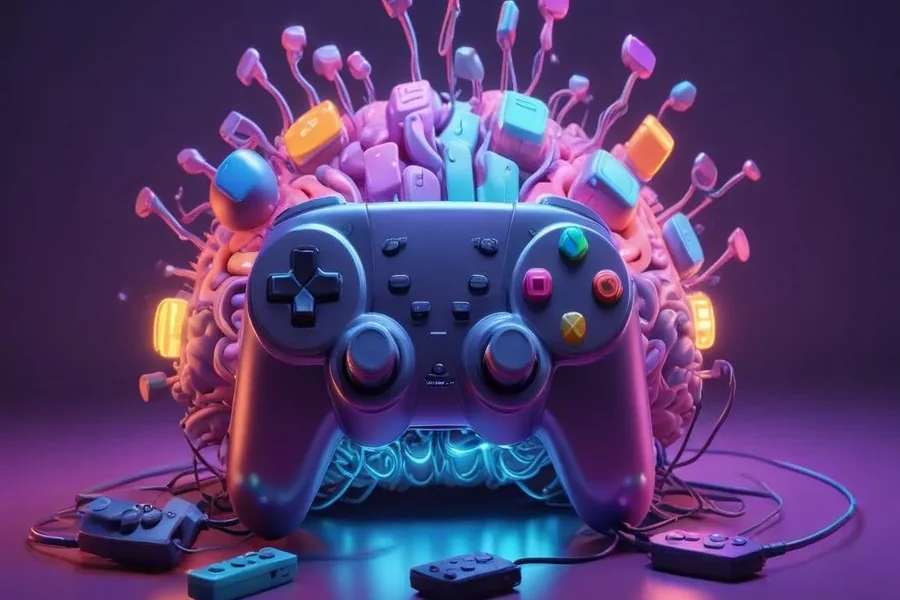
Human beings have been playing games for as long as they’ve been around on Planet Earth. But it’s only over the course of the last century or so that certain games have been refined to the point that they’re truly compulsive. Designers have developed a sophisticated understanding of the brain’s reward systems, and hijacked those systems to create games that you can’t put down.
Much of this work has to do with making the games unpredictable – but in a very specific way. Let’s take a look at what this might mean.
The Brain on Anticipation: Why We Crave the Unexpected
Why is it that the spinning of a roulette wheel, or the roll of a set of dice, can be so hypnotic?
The answer comes from a series of famous experiment, conducted in the 1940s by B.F. Skinner. In these, rats were placed in small boxes, and allowed to pull a lever in exchange for a reward (in the form of food pellets) and punishment (in the form of an electric shock, or a loud noise). When the prizes are dispensed more randomly, the rat will tend to press the button more. The same principles can be used to make games more compelling. When we don’t know the outcome, we tend to be more willing to bet.
Games That Use Suspense to Their Advantage
In some cases, it’s not the actual moment of reward that reinforces a behaviour – it’s the anticipation that precedes that moment. A few seconds of uncertainty can provide a thrill that keeps gamblers coming back for more. You can find uncertainty leveraged outside a casino, too. Just think of card packs in a sports franchise, or loot boxes in an RPG, or even the ‘reel’ features on platforms like Instagram and TikTok. Gambling games, like Megaways slots, are perhaps the ultimate example of the slot-machine principles exploited through modern software.
How Design Enhances the Experience
Of course, when making a good game truly immersive there is a lot more that comes into play than just the basics of a games mechanics. Contemporary creators are professionals in integrating technologies with psychology and creativity to form memorable experiences.
They rely on auditory effects, animations, and bold colour schemes to attract the attention and thoughtfully create suspense before increasing the rewards. Rising soundtrack can bring tension and abrupt silences can evoke some curiosity. Victories can feel exhilarating and losses less discouraging even when such a small effect is created, as a haptic vibration or screen flash. Narrative design is also crucial since game players are inclined to become involved in stories that give each action significance. All these design decisions work together to build a cycle of anticipation, payoff and renewal.
Balancing Fun with Awareness
We should not be casual about the influence of contemporary software to entrap and lock our focus on the reason why online games conspire to make people play more. They appeal to our psychology, use reward schedules and apply design techniques, which can cause gaming to feel irresistible. Whilst this can make it more fun, it also poses a danger of over indulging.
We have a limited amount of time, energy and sometimes money and unless we have enough of these resources we can see games use them up very fast. This is the reason it is so important to balance fun with awareness. In the case of parents, it is also relatively easy to keep tabs on how much their children may be gaming to avoid problems before they occur. After all, we only have a limited amount of time to spend, and setting healthy limits can be important – especially if the game in question involves parting with real money.