Simplify Filing With Income Tax Envelopes For Professionals
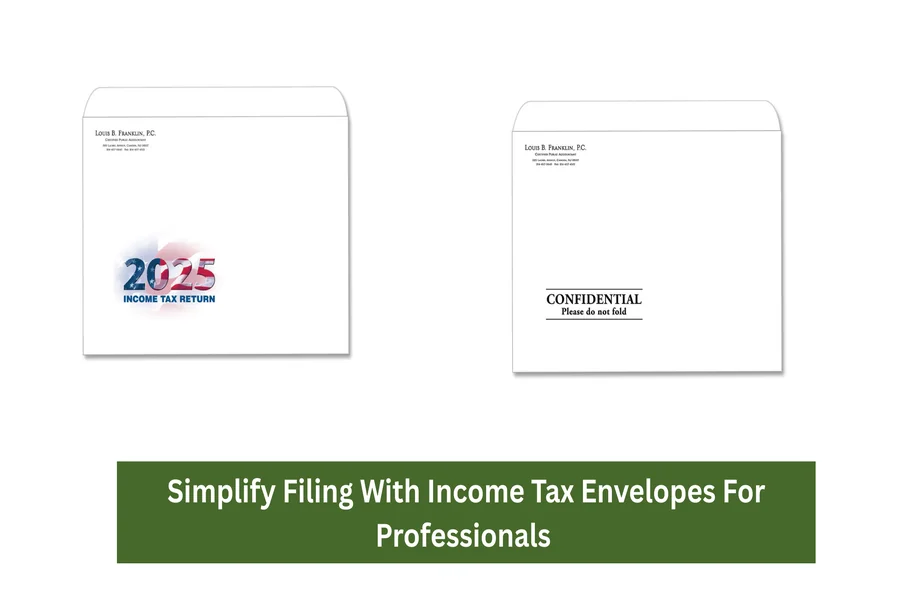
Tax filing is frustrating. Papers stack up, deadlines loom, and clients nervously await their return. For professionals, organization is not only advantageous but necessary. A small aid makes the whole process smoother, and that aid is the income tax envelope.
Income tax envelopes may appear basic on the surface, but their functionality is extensive. They protect important information, provide a professional look, are time savers, and protect personal data. Professionals can make tax season time less stressful and more productive with these envelopes.
This guide shows how income tax envelopes simplify filing, highlight key benefits, and prove they are essential tools for every tax office.

1. Making Tax Season Organized
Tax season is crazy. Paperwork comes in by the day. W-2s, 1099s, client files, and receipts overflow desks. Without an organizational system, things are lost.
That is where income tax envelopes come into play.
Every envelope creates a neat area for one client’s documents. Loose documents are the past. When it is time to mail, the envelope is clean and tidy. This prevents last-minute searching and makes it hassle-free.
Professionals who use tax document envelopes have their procedure simplified. They take one envelope and put all the information about that client. No confusion or mistake. All the information is held in a simple, dependable format.
Organization is also a question of tempo. Windows envelopes cut out unnecessary steps. Addresses can be seen through, so labels are not needed. With less to write and affix, more time remains for client business.
At the end of the season, it is easy to store records too. Envelopes will store neatly in a box or cabinet. Months later, you can refer back to them and quickly get what you need.

2. Adding Professional Appearance
First impressions matter in business. Handing a client a pile of papers does not seem professional. But handing them a printed, sealed tax envelope is a different matter. It gives the impression of respect and attention.
Professionals who invest in custom envelopes stand out. A business name, logo, and contact information can be imprinted on the front. This signals to clients that their tax professional is dedicated to quality.
Custom envelopes also build trust. They look official. They make clients feel like their private documents are in good hands. Instead of plain white paper, they see an envelope created for protection.
Even when sending mail, envelopes represent the brand. Every piece of mail has the company name and design on it. This small touch can create repeat business and word-of-mouth.
Appearance is not merely a matter of looks. It is a matter of confidence. Clients feel confident if their documents are delivered in a professional and secure envelope. That confidence returns to the professional who sent it.
3. Protecting Sensitive Information
Taxes are personal. Everything on the forms is private information. Social security numbers. Salaries. Banking information. Clients entrust professionals to keep such information confidential.
Income tax envelopes are constructed for security. Numerous ones contain special tints within. This prevents one from seeing through the paper. Even when held up to light, personal numbers remain concealed.
Seals are another added security. Self-seal or gum-seal ensures that envelopes are kept sealed in transit. No papers spill out. No curious eyes peek inside.
Confidential stamping adds extra precautions. Using words like “Confidential” or “Important Tax Document” requires caution when handling. Clients appreciate witnessing this much attention to detail.
Security is not just about mailing. Envelopes also guard papers at the office. A stack of sealed envelopes is safer than a stack of loose forms.
4. Saving Time With Ready-To-Use Designs
Don’t forget, tax time comes and goes in a hurry. Experts don’t have time to take shortcuts. Pre-addressed income tax envelopes are meant to simplify things.
Window envelopes are only one example. They display both sender and recipient addresses, without printing labels. No pen. Just stick the forms in and close.
Also, software-compatible envelopes save even more time. They fit exactly with the majority of tax software printouts. Professionals never need to trim or make adjustments. All forms fit on the first try.
There are envelopes in different sizes as well. 9×12 or 10×13 envelopes fit into the large returns. Standard sizes fit into smaller returns. No folding where it is not necessary. All documents look neat and professional.
Customization also speeds things up. A pre-printed return address avoids the necessity of fewer stamps and stickers. Just pack, seal, and send.
5. Creating Long-Term Filing Systems
Tax work does not end after mailing. Records must be maintained. Clients return months or even years later with questions. A good filing system makes this simple.
Tax envelopes are perfect for storage. They keep returns intact. Each client has their own envelope. Each year can be piled up in order. It takes minutes, not hours, to locate the proper return.
Personalized envelopes are even more useful. Files remain in order with the year, client name, or account number printed on them. When shelves get full, professionals can locate what they need in a snap.
Durable paper makes envelopes last. They do not tear easily. They protect papers for long periods of time. This is necessary when tax records must be kept on hand for seven years or more.
Even virtual offices occasionally need to store paper. Digital files and scans may exist, but originals are required. Having them safe in envelopes keeps everything secure and accessible.
Filing is all about preparing for the future. Envelopes help prepare for the future to be ready and organized.
Final Thought
Income tax envelopes may not seem like much, but they bring order to one of the most chaotic times of the year. They organize papers, create a professional look, protect sensitive data, save time, and create permanent filing systems.
For tax professionals, these envelopes are more than office stationery. They are tools of trust and efficiency. Choosing the right ones can make tax season more efficient and professional.