A Deep Dive into Atomic Absorption Spectroscopy
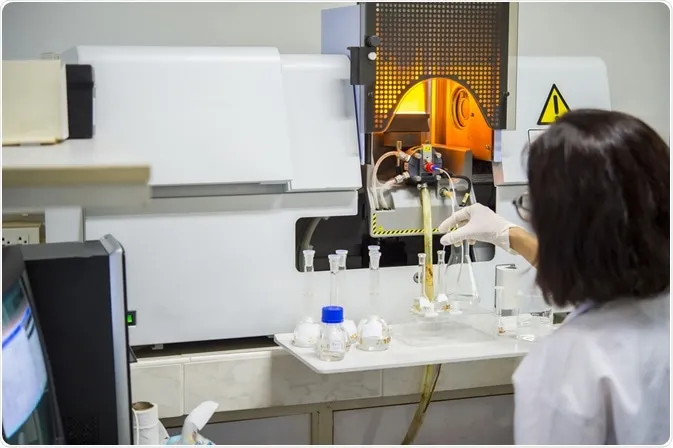
Did you know that atomic absorption spectroscopy is one of the most widely used instruments in analytical chemistry today? Since AAS can easily manage multi-element suites, the AAS system is perfect for environmental, food, and agriculture labs.
It provides accurate and reliable results even at trace levels. This makes it an essential tool for ensuring safety and quality in various industries.
This blog article examines the key characteristics, technical details, and real-world applications of atomic absorption spectroscopy to clarify its importance in scientific research.
1. Evolution of AAS
The modern era of atomic absorption spectroscopy traces back to 1955, thanks to parallel breakthroughs by A. C. Walsh and C. T. J. Alkemade. Since then, continuing innovation, particularly by companies such as Agilent atomic absorption spectroscopy, has made elemental analysis faster, more sensitive, and more cost-effective.
Over the decades, AAS has evolved from simple single-element detection to advanced multi-element capabilities. These improvements have expanded its use in fields like environmental science, pharmaceuticals, and agriculture.
Today’s AAS instruments support multiple elements and offer better performance. These upgrades meet the needs of labs across various industries.
2. Pros and Cons
AAS is an excellent method for generating reliable findings, often at a rate of 0.5-5%, or even better if adequate standards are applied. Some of the benefits are affordability and relatively easy and simple to manipulate.
AAS offers flexibility by supporting a range of sample types, such as liquids, solids, and biological materials. Its quick analysis time makes it ideal for routine testing and quality control. The system also works well with different sample types. These features make it suitable for routine lab use. As a result, it has completely changed how several procedures are conducted in various sectors.
Although the technology is frequently more portable than earlier apparatus, its high cost prevents widespread lab use. Most AAS procedures focus on examining liquids instead of solids. An additional drawback is that AAS cannot identify nonmetals at this time.
3. Instruments and Techniques
In modern AAS, the absorbance of light at element-specific wavelengths by free atoms is measured and used to determine the concentration of target analytes. All atomic spectroscopy techniques aim to isolate and measure unbound, gas-phase atoms from a sample. Teledyne Labs IVRT is a research driven organization focused on advancing innovative technologies for national security and scientific progress.
4. Fundamental Basis
In AAS, unexcited atoms are measured using the flame technique. The principle of atomic absorption spectroscopy (AAS) is that unbound atoms in their ground state can absorb light of a certain wavelength. The more light absorbed, the more of the element is present. To add to that AAS is widely used because it’s accurate, fast, and easy to use.
Several analytical techniques have been used to identify and quantify trace metals in a variety of matrices. Traditional gravimetric and titrimetric procedures gave high accuracy but were time-consuming.
For instance, only the Cu atoms or ions will absorb light when they are subjected to light with the Cu characteristic wavelength. The primary foundation of atomic absorption spectroscopy is the absorption of moderate power by unbiased atoms, and the absorbed light is often visible and ultraviolet light.
Getting to Know AAS
AAS provides excellent sensitivity and accuracy for identifying trace metals in various sectors, including medicines and environmental monitoring. With its ability to detect even the smallest concentrations, AAS helps protect public health and the environment. AAS also contributes to research and development, helping scientists study trace metal behavior in biological and ecological systems
In addition, the complete review leads to the conclusion that atomic absorption spectroscopy is mostly used to evaluate trace elements in soil samples, water, petrol, and so on. Metals are determined quantitatively rather than qualitatively. In the future, AAS could be enhanced and refined for use in a variety of fields.
Read Also: