Finding Rhythm in New Jersey – Where Daily Life Feels More Grounded
Daily life here runs on access, not distance. All these sit within short reach of each other – Coastal towns, farmland, commuter hubs, and forest systems .
Even leisure patterns reflect that structure, with neighborhoods near established golf corridors in the north and central regions feeding directly into routine use rather than planned outings. That detail matters, but it is only one layer.
The broader point is simpler. New Jersey is not organized around a single environment. It operates as a set of parallel systems that you move between without friction.
Regional Layers That Do Not Blend Together
New Jersey divides into regions that maintain their own logic. They are connected by infrastructure, not merged into one identity. Movement between them is quick, but the shift is noticeable.
This is what defines daily rhythm. Not repetition, but switching between environments that serve different purposes.
North Jersey: Compression With Immediate Exit Routes
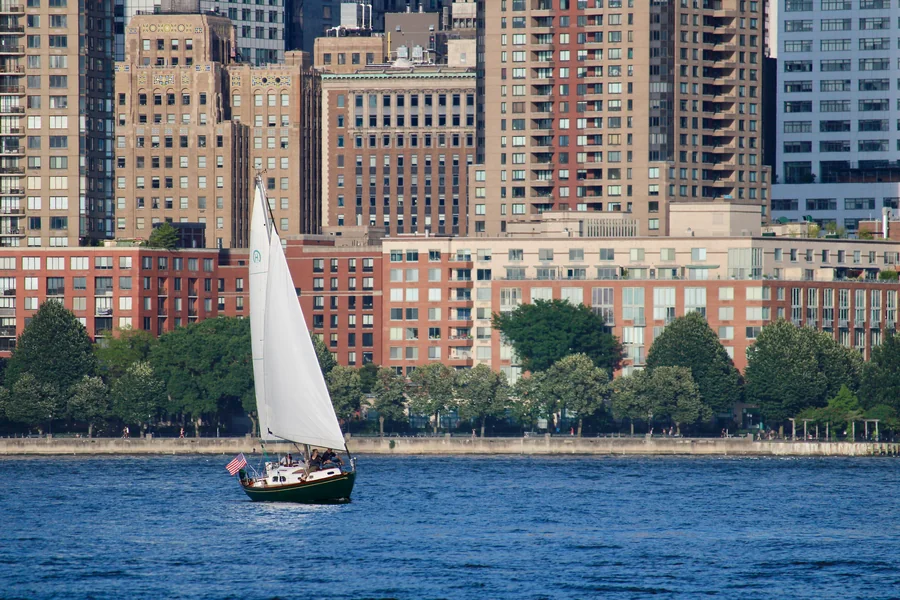
Jersey City and Hoboken operate under pressure, high density, limited space, constant movement. Streets carry both local traffic and commuter overflow. Rail lines connect directly into Manhattan. Time is measured in minutes and delays.
Yet the system includes an exit. Within 40 minutes, you reach Watchung Reservation or South Mountain Reservation. Terrain changes immediately. Elevation appears. Roads narrow. Sound drops.
That transition is not planned as a trip. It is available as an option at any point in the day.
Central Jersey: Distributed Use Without Density Pressure
Princeton and New Brunswick with their surroundings operate with spacing. There are residential zones, commercial strips, and agricultural land which sit side by side here, without competing.
Drive ten minutes in one direction and you reach a university campus. Ten minutes in another and you are on a rural road with farm stands selling tomatoes, corn, or blueberries depending on season.
The system here is not compressed. It is spread, but still connected.
South Jersey: Space That Stays Open
Below Cherry Hill, the map opens. Development thins out. The Pine Barrens begin to dominate land use.
Galloway and surrounding areas show larger residential plots, wider roads, and longer distances between commercial zones.
The shift is not gradual. It is immediate. One region ends, another begins.
The Shoreline: Structured and Predictable
The New Jersey coastline runs along barrier islands, each town built with a specific function. These towns do not compete with each other. They repeat their structure year after year.
Movement along the shore is not about exploration. It is about selection.
Asbury Park: Grid Meets Boardwalk
Asbury Park operates on a clear layout. A boardwalk runs parallel to the ocean. Streets connect directly inland.
Venues like The Stone Pony anchor activity, but the structure matters more than individual locations. The grid allows movement between beach, dining, and residential areas without disruption.
Seasonal changes affect volume, not structure. The system remains intact.
Ocean City: Controlled Family System
Ocean City enforces a different model. No alcohol sales, strong zoning, and a boardwalk designed around rides, arcades, and food vendors.
The layout channels activity into defined areas. Families return to the same locations each year because nothing shifts significantly. Consistency replaces novelty.
Cape May: Preservation as Operating Model
Cape May maintains Victorian architecture across the town. Development restrictions keep scale low.
Shops, inns, and restaurants operate within that framework. Streets remain walkable. Traffic slows naturally due to layout, not enforcement.
The town does not adapt to trends. It holds its structure and lets usage fit inside it.
The Pine Barrens: A System That Ignores the State Around It
The New Jersey Pine Barrens cover more than 1 000 000 acres. This scale matters less than how much matters how it all operates – As an ecosystem that sits between developed regions without being absorbed by them at any time.
And at the same time, we are not talking about a park with defined boundaries and controlled entry points here.
Land That Does Not Support Standard Use
Large-scale agriculture does not work here because the soil is sandy and acidic. Instead, the region supports pine forests, wetlands, and certain species adapted to those conditions.
Fire plays a role. Controlled burns maintain ecological balance. Without them, the system destabilizes. This is not curated nature. It functions independently.
Water Systems That Stay Intact
The Kirkwood-Cohansey aquifer, which sits right beneath the Pine Barrens, contains some of the cleanest groundwater in the US.
Rivers like the Mullica and Batsto flow through the region making minimal industrial impact. Canoeing routes exist, but the infrastructure still remains limited. You enter, move through, and then you leave without altering the system significantly.
Small Towns That Continue to Work
New Jersey’s smaller towns are not preserved as static environments. They function daily, serving local populations first. Tourism exists, but it does not dominate.
Red Bank: Compact and Active
Red Bank combines retail, dining, and performance venues within a walkable layout.
Broad Street acts as the central axis. The Count Basie Center anchors cultural activity. Restaurants and shops fill the gaps. The town operates year-round. Volume changes, structure does not.
Lambertville: Edge Condition With Purpose
Lambertville sits along the Delaware River, connected to New Hope, Pennsylvania by bridge.
Antique shops, galleries, and small restaurants define the town. Streets remain narrow. Buildings maintain original scale. Movement is slow by design. The layout prevents speed.
Food Systems That Reflect Density
Food in New Jersey does not align with a single identity. It reflects how the state is built. Food scene here is dense and varied yet not entirely disconnected.
Diners as Continuous Access Points
New Jersey has one of the highest concentrations of diners in the United States. Places like Tick Tock Diner or Summit Diner operate long hours, some 24/7.
Menus are broad. Breakfast, lunch, dinner, all available at any time. These are not novelty locations. They are functional. They provide consistency across regions.
Agriculture That Still Supplies Locally
Despite density, agriculture remains active. Hammonton produces blueberries. Vineland and surrounding areas supply tomatoes and peppers. Farm stands along Route 206 or near Columbus sell produce directly.
Season defines availability. Corn in summer, apples in fall. The system still follows natural cycles.
Coastal Seafood as a Parallel System
Along the shore, seafood operates independently from inland agriculture.
Places like Dock’s Oyster House serve shellfish sourced from regional waters. Clam harvesting and fishing continue along the Atlantic coast.
You can move from a farm stand to a seafood restaurant within the same day. The systems do not overlap, but they coexist.
Infrastructure That Keeps It All Connected
New Jersey’s infrastructure is dense but direct. It does not require complex navigation once understood. Movement depends on a few key routes.
Garden State Parkway: Coastal Spine
Garden State Parkway runs north to south, connecting shore towns and inland areas.
Traffic increases in summer, especially near exits for beach towns. Outside peak periods, flow remains steady. It provides direct access without detours.
New Jersey Turnpike: Industrial and Commuter Axis
New Jersey Turnpike handles heavy transport and commuter traffic.
It connects major distribution hubs, ports, and cities. Movement here is fast, but controlled by toll systems and lane structure. This is not a scenic route. It is functional.
Secondary Roads: Direct Local Access
County routes and local roads connect towns directly to main highways.
You leave a major road and within minutes reach a town center, a farm, or a residential area. No long transition zones. This keeps distances short in practical terms.
The System That Holds It Together
New Jersey does not rely on a single defining feature. It operates through layering.
Urban density, coastal systems, farmland, forest, small towns, all positioned within short reach of each other. Movement between them is routine, not exceptional.
You do not plan to experience variety. You encounter it by default. That is where the rhythm comes from.