How to Choose Kitchen Cabinets That Will Last a Lifetime?
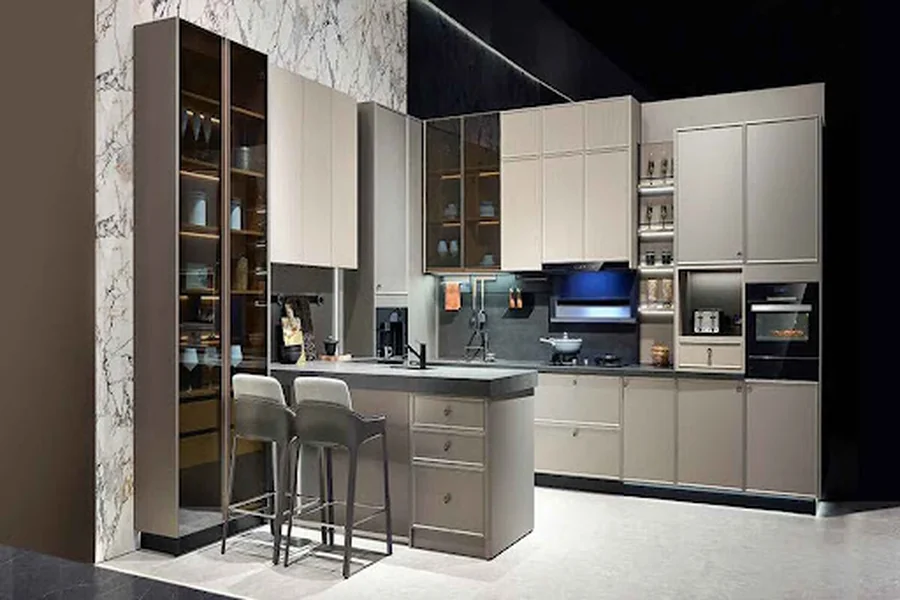
Choosing kitchen cabinets isn’t just about what looks good today – it’s about what’ll still be standing strong decades from now. I’ve spent 15 years helping clients navigate this decision, and let me tell you, there’s a world of difference between cabinets that last five years versus fifty.
The Foundation: Materials Matter More Than You Think
Let’s start with the basics – what your cabinets are actually made of. This might seem obvious, but I can’t tell you how many gorgeous kitchens I’ve seen ruined by cutting corners here.
Solid wood remains the gold standard for durability, but not all woods are created equal. Oak and maple stand up remarkably well to daily abuse, while cherry offers that rich, timeless appearance that ages like fine wine. Pine, though beautiful, dents easily – something to consider if you have kids who treat cabinet doors like bumper cars (don’t we all know a few of those).
But here’s what often surprises people: the cabinet box matters more than the doors! You can always refinish or replace doors, but once that particle board cabinet box starts to swell from moisture, you’re shopping for new cabinets entirely.
Look for boxes made from furniture-grade plywood – minimum ½ inch thickness for sides and ¾ inch for shelves and floors. Those flimsy ¼ inch backs? They’re the first thing to buckle under pressure. Trust me on this one.
Construction Techniques: The Invisible Quality Markers
I had a client last year who couldn’t understand why her “expensive” cabinets were falling apart after just eight years. When I showed her the stapled butt joints in the drawers, her jaw literally dropped. Construction methods matter enormously, yet they’re completely invisible once cabinets are installed.
What separates heirloom quality from disposable? Look for:
- Dovetail drawer joinery (those interlocking “teeth” at drawer corners)
- Mortise-and-tenon door frames (not just glued and stapled)
- Full-extension drawer glides rated for at least 75 pounds
- Corner blocks reinforcing cabinet boxes
- Face frames attached with pocket screws, not just glue
Interestingly, you can’t tell most of these features from a photo or display. You’ve gotta open that drawer, get down on your knees, and look underneath. Awkward? Maybe. Necessary? Absolutely.
Hardware: The Workhorses of Daily Use
Cabinet hardware is like the knees in your body – they’ll be the first to go if they’re not built to last. And yet, this is where many manufacturers sneakily cut corners.
Quality hinges should be fully adjustable in three directions and made from solid metal – not plastic with a metallic coating (yes, that’s a thing). I typically recommend European-style hinges from Blum or Grass, though there are other good options.
As for drawer slides, I’ve become something of an evangelist for soft-close, full-extension slides. They’re not just a luxury feature; they dramatically extend cabinet life by preventing the micro-damage that occurs when drawers slam shut thousands of times.
And those handles you’re obsessing over? While style matters, pay more attention to how they’re attached. Single-screw knobs will eventually loosen and spin, while pulls secured at two points stay put for decades.
Finish Quality: The Protective Barrier
I remember visiting my grandmother’s kitchen as a child – those cabinets were already 30 years old then, and they’re still going strong today. Why? Partly because finishes were applied differently back then.
Modern factory finishes are typically superior to site-finished cabinets, assuming it’s a quality factory. What you’re looking for is a catalyzed conversion varnish or UV-cured finish – these create a practically bulletproof surface against water, heat, and staining agents.
But beware of thermofoil or laminate finishes if longevity is your primary goal. While they’re economical and look great initially, they can’t be repaired if damaged – a single chip means replacing the entire door.
The Middle Ground: Semi-Custom Hits the Sweet Spot
Look, fully custom cabinets made by master craftspeople are gorgeous and will outlive us all. They also cost approximately one kidney and half your retirement fund. On the other hand, the cheapest big-box options might not survive your next lease term.
For most of my clients, semi-custom cabinets offer that ideal balance of quality and cost. Companies like OPPEIN have revolutionized this space, delivering remarkably durable cabinets with customization options that weren’t available even five years ago.
What sets semi-custom apart is the ability to specify the construction features that matter most while skipping unnecessary bells and whistles. You’re essentially building longevity where it counts.
The Installation Factor: Even Great Cabinets Fail with Poor Installation
Can I vent about something for a second? I’ve seen absolutely spectacular cabinets ruined by shoddy installation. Even the finest cabinet will fail prematurely if it’s not properly leveled, secured to wall studs, and carefully aligned.
This is where working with a reputable cabinet dealer becomes invaluable. Their installers understand the product intimately and know how to address the quirks of your specific space. Yeah, you might save a few bucks handling installation yourself or hiring the cheapest contractor, but that’s extraordinarily short-sighted if longevity is your goal.
The reality? Proper installation might add 15-20% to your cabinet project cost, but it easily doubles the functional lifespan of those cabinets.
Beyond Durability: Timeless Design Considerations
Here’s the thing about “lifetime” cabinets – they need to remain functionally relevant as your needs evolve. The most durable cabinet in the world becomes a liability if its design becomes obsolete.
Some design elements that promote longevity:
- Simple, clean door styles that won’t date themselves
- Neutral finishes that can adapt to changing color schemes
- Adjustable shelving to accommodate different storage needs
- Standard sizes that allow for future modifications
I always tell clients: if you want cabinets that last decades, avoid anything that screams “I was installed in 2023!” You want quiet elegance, not trendy statements.
The True Cost Calculation
Let’s talk money for a second. Quality cabinets that last 30+ years might cost twice as much as budget options up front. But those budget cabinets? You’ll replace them at least twice in the same timeframe.
And that’s just the financial math. It doesn’t account for the disruption of multiple renovations, the environmental impact of cabinets in landfills, or the simple daily pleasure of using well-crafted storage.
In the long view, investing in quality cabinets isn’t an extravagance – it’s profoundly practical. But you need to be equipped to recognize that quality when you see it.
After all, the cheapest cabinets are the ones you only have to buy once.