The Hidden Emotional Impact of Hair Loss
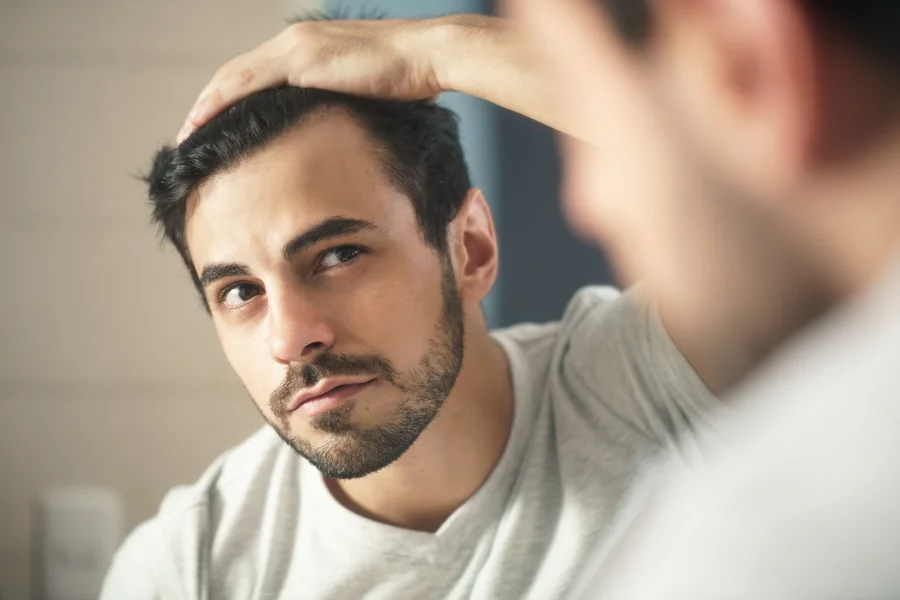
Many men and women (roughly 80% of men and 50% of women) will notice some pattern baldness at some point in their lives, and usually by the age of 50. Research has indicated that individuals who are suffering from hair loss tend to experience decreases in their self-esteem, in their quality of life and in their body image compared to those who are not suffering from hair loss. There are a wealth of ways to regrow some hair or restore the thickness of hair, but the emotional toll from hair loss is either overlooked or glossed over. Therefore, dealing with hair loss on psychological and emotional level is crucial as well as physical.
Hair Is Closely Tied to Identity
While hair might appear to serve no real purpose other than to give a little support to the cranium and keep it out of the sun, it is also a potent symbol of identity, behaviour and sociality. Hair can be a language, socially-mediated, marking identity formation, resistance and, sometimes, obedience, as shown through an anthropological and historical perspective. Hair has been a symbol of morality, belonging, dignity, spirituality and power throughout many civilizations. It is not just a garment that humans put on; it is an interpretation, a regulation and a deep felt experience!
The Psychology of Hair Loss
Hair can be the primary part of self identity or body image. A full head of hair represents youthfulness, vigor, and status, in many cultures. Early balding from pattern hair loss or non-scarring androgenic alopecia (a genetic condition, in which the hair follicles become highly sensitive to male hormones) can make an individual feel less physically and socially attractive and can lead to low self-esteem. The feelings associated with hair loss can be overwhelming for some, restricting their activities and going to great lengths to grooming the hair.
Modern Solutions for Hair Loss
There are many successful methods that can be used to combat hair loss and one of these most effective methods is the practice of hair transplantation. The popular methods are those employed by the follicular unit extraction technique that involves individually taking hair follicles from the back or side of the scalp and transplanting them to the area requiring restoration. This approach can be used not only to restore hair to the scalp but also to transplant hair to areas such as the beard, eyebrows, and areas where hair can help cover scarring. There are numerous non-surgical approaches for hair loss in men and women too. These include medications, topical solutions, supplements, and mesotherapy. One novel approach that is sometimes recommended for men and women is PRP, in which a small amount of a patient’s blood is taken, processed, and reinjected to promote hair growth.
The Psychological Impact of Modern Hair Treatments
Patients may ask whether a choice of any other treatment or transplantation can help to reduce psychological along with physical symptoms. In one study published in 2019, more than 1100 patients were found to be satisfied with the outcome of the hair transplant, which also had a positive effect on their self-esteem. The study, however, revealed that patients with a lower level of self-esteem tended to be less satisfied than those with a higher level of self-esteem. Other research has also reported positive outcomes for hair restoration, such as an increased sense of self-confidence, improved quality of life and decreased stress and anxiety. Forums and Subreddits on the Internet abound with stories of how hair restoration has helped in many areas of life, such as when it comes to relationships.
Read More: The Beauty Routines Women Are Simplifying This Summer
Why Counseling May Help
Even if they have made efforts to treat their hair loss, those who are suffering from hair loss related self-esteem problems can benefit from psychological counseling. They need to have appropriate expectations, and understand that there is a time lag – sometimes months – before they see the benefits of treatments. Counselling may also be offered from those suffering with hair loss who need to deal with other conditions that can occur at the same time or separately from hair loss such as depression, anxiety and body dysmorphic disorder which is a mental health issue where people become preoccupied with one or more aspect of their appearance. They can learn to deal with this reframing, make realistic expectations, and develop good self-esteem and self-acceptance through counseling.
Hair loss is much more than an appearance problem. It can impact self-esteem, relationships, and well-being. A wide range of remedies can be used to restore hair, such as topical remedies and medicine as well as hair transplantations. Even with the selection of these, treatment could be successful and, in addition, psychological support may be provided to help patients develop more resilience and self-esteem.