Essential Gear for the Sustainable Content Creator
You’ve built a small audience. You film weekly. You care about the climate. And every time you open your camera bag, you stare at a pile of plastic accessories you bought in panic two years ago.
So what’s the problem?
Probably not what you think. Most creators blame themselves (“I should’ve researched more”) or the industry (“nothing is actually green”). The real reasons are way more boring than that. Below are the 6 things that actually matter when building sustainable content creator gear that performs.
The Real Gear Decisions, Ranked
The most common reason a sustainable creator setup falls apart is buying cheap “eco” branded items that break in 4 months. That alone explains roughly 70% of repeat purchases. Cheap plus green almost never coexist.
The second most common is ignoring repairability. Common, almost nobody mentions it in YouTube reviews.
After that, in roughly descending order: choosing the wrong protection case, overbuying lights, forgetting about audio durability, and finally batteries — the silent footprint nobody calculates.
Notice that nothing on this list is “buy bamboo accessories.” That’s almost never the actual fix.
1. Buy Once, Cry Once on the Camera
This is the answer 70% of the time. Hard truth. The camera body you keep for 8 years is greener than the three “sustainable” rigs you replaced annually.
What’s actually happening
A 2023 lifecycle analysis by the Ellen MacArthur Foundation showed that extending product life by just 2 years cuts a device’s carbon footprint by around 35%. Cameras are the worst offender in a creator kit because the manufacturing emissions dwarf anything else you own.
What this looks like in real life
- You buy a used Sony A7 III off MPB instead of a new A7 IV and save 60% of the embodied carbon
- Your friend buys the latest body every cycle and brags about “going mirrorless for sustainability”
- You skip the upgrade, learn the menu inside out, and your shots get better anyway
- The body lasts 7 years and you sell it for 40% of what you paid
The fix
Buy refurbished from MPB, KEH, or the manufacturer’s certified program. Pick a body two generations old. Spend the saved money on glass that lasts 20 years. Lenses depreciate slower than bodies and survive system changes.
People hate this answer because it sounds like settling. Nobody wants to film with a 6-year-old camera. The math doesn’t care what you want.
2. Protect the Investment With a Real Case
Sustainability dies the moment your camera bag splits in a Heathrow baggage carousel.
What’s actually happening
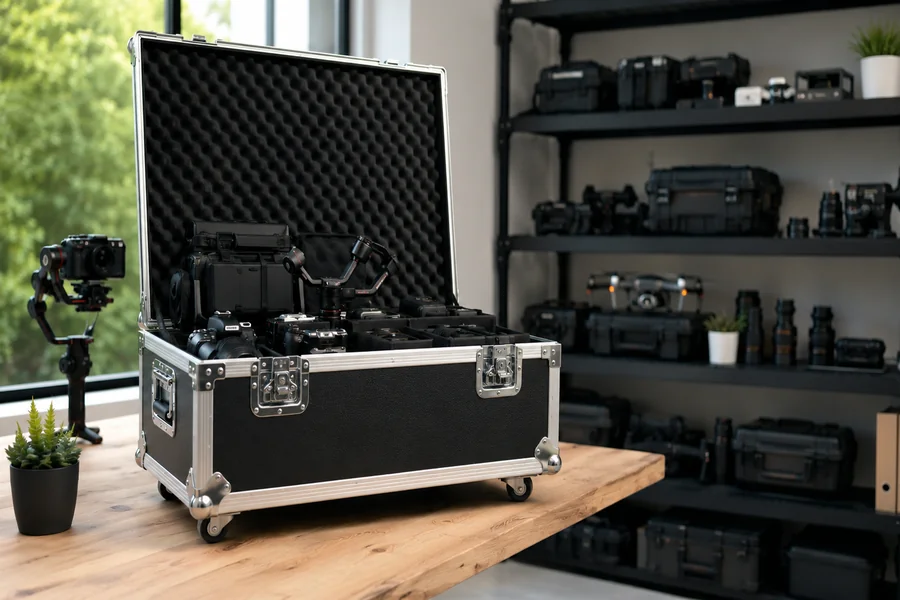
Most creators buy a soft padded bag, treat it like luggage, and replace the gear inside when something cracks. A hard-shell flight case costs more upfront but extends the life of every item inside it. The math works out within 2 trips.
What this looks like in real life
- You film a brand trip in Portugal, the bag gets tossed onto tarmac, and the lens mount snaps
- Your insurance covers it, you file the claim, and the broken gear ends up in landfill anyway
- You upgrade to a foam-lined hard case and the same trip a year later, nothing moves
- You realize the case has paid for itself by month 8
The fix
Get a hard case with custom foam for your specific kit. Brands like Peli and Flight Case Warehouse build cases that last 15 years. One case, two decades, no replacement plastic. That’s the actual definition of sustainable equipment.
3. Lighting You Won’t Replace in 18 Months
Cheap LED panels die fast. They’re also impossible to recycle because of the lithium and rare earth content.
What’s actually happening
A budget LED panel uses around 40 cheap diodes that degrade unevenly. After 800 hours, the color temperature shifts and the panel becomes unusable for professional work. A bi-color panel with quality diodes lasts roughly 50,000 hours. That’s the difference between buying 60 panels over a career and buying one.
What this looks like in real life
- You order a $45 ring light, it dies before your 30th video
- You finally invest in an Aputure MC or a Godox SL60, and 4 years later it still works
- You film outdoors using a $12 reflector and skip artificial light entirely
- You stop buying lights altogether and rent on the rare occasions you need a 3-point setup
The fix
Buy one quality bi-color LED. Skip the kit deals. Add a folding reflector. That covers 90% of indoor shoots and most outdoor fill work. If you need a full studio setup twice a year, rent locally instead of owning.
4. Audio That Survives Real Use
Audio gear gets handled more than any other piece in the bag. It also gets replaced more often.
What’s actually happening
Lavalier mics break at the cable junction. Wireless transmitters fail when the rechargeable battery loses capacity around year 3. Most creators replace the entire unit instead of the battery, which is usually replaceable for $25 if the brand supports it.
What this looks like in real life
- Your Rode Wireless GO II dies and you assume it’s done
- You check the manual, find the battery replacement guide, and fix it for less than dinner
- You buy the DJI Mic 2 because it’s “newer” and inherit the same failure mode in 3 years
- You switch to a wired Sennheiser lav and forget audio is even a category
The fix
Pick audio gear from brands that publish repair guides. Sennheiser, Rode, and DPA all support multi-year service. Avoid sealed wireless units with non-replaceable batteries. If you film talking-head content from one spot, a wired XLR setup outlasts every wireless system on the market.
People hate this answer because wired gear isn’t sexy. Wired gear also doesn’t end up in a landfill in year 4.
5. The Battery Footprint Nobody Calculates
Lithium-ion batteries carry an outsized environmental cost relative to their size. They also wear out predictably.
What’s actually happening
A typical camera battery rated for 500 full charge cycles is dead at around year 3 if you film weekly. Most creators own 6 batteries per camera body. That’s 6 small chemical packs heading toward improper disposal every few years unless you actively recycle them.
What this looks like in real life
- You buy third-party batteries, they swell at month 14, and you throw them in regular trash
- You take the OEM Sony batteries to a Best Buy recycling kiosk instead
- You charge to 80% instead of 100% and the same batteries last twice as long
- You realize one V-mount external battery replaces 4 small ones
The fix
Buy OEM batteries. They cost double but last triple. Recycle dead batteries through Call2Recycle drop-off points, not curbside trash. For heavy shooters, one V-mount battery powers a full day and dramatically reduces total battery count.
How to Build Your Sustainable Kit
Work through this list in order:
- Audit what you own. List everything broken, unused, or unloved. (Reveals 60% of waste)
- Repair before replacing. Check brand repair programs. (Solves 40% of problems)
- Buy refurbished for everything except glass. (Cuts carbon footprint by around 55%)
- Invest in protection. A real case beats insurance. (Prevents 80% of damage replacement)
- Recycle properly. Use Call2Recycle, MPB trade-in, or local e-waste programs. (Closes the loop)
Most creators solve their gear footprint by step 3. The ones who skip step 4 keep replacing items they shouldn’t have to.
FAQ
Is buying used really more sustainable?
Yes. Refurbished cameras have around 60% lower lifecycle emissions than new equivalents, according to industry teardown analyses.
What’s the most overrated “eco” creator product?
Bamboo phone tripods. They’re cosmetic. The carbon hit is in the camera and the batteries, not the accessories.
Do hard cases really last that long?
A quality flight case from a reputable maker survives 15 years of regular travel. That’s longer than most marriages.
How often should I upgrade my camera?
Every 6 to 8 years if you can resist. The image quality jump between consecutive generations is rarely visible to your audience.
Can I recycle camera batteries at home?
No. Take them to Call2Recycle drop-offs, Best Buy kiosks, or your local hazardous waste facility. Curbside trash is the worst option.