Stop Wondering How To Sell On Amazon: Beginner’s Guide To Profit 2025
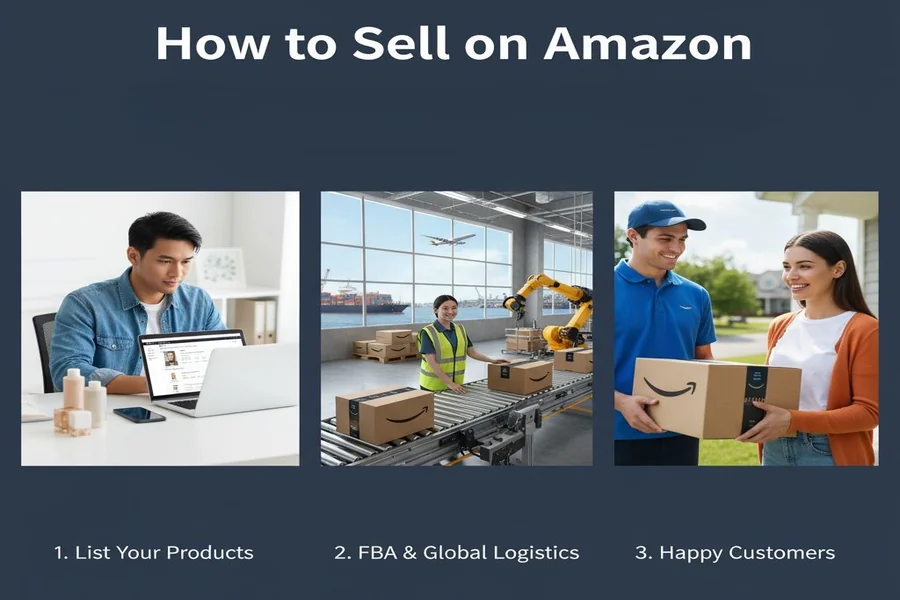
If you’ve been scrolling through online business ideas or dreaming of building your own brand, you know Amazon is impossible to ignore. As the world’s largest online marketplace, featuring over 310 million active users and home to more than 200 million Prime members, Amazon is a true retail juggernaut. It hit nearly $575 billion in net sales revenue worldwide in 2023, showing the incredible opportunity available to new sellers.
For small business owners, entrepreneurs, or if you’re an employee starting a brand new business world for the first time, getting to the basic understanding of how to sell to millions of shoppers already in buying mode on Amazon is your direct line to your prospective customers. For example, in 2020, there were over 65,000 US-based sellers that sold $100,000 on Amazon. Starting on the platform might seem daunting, but it’s easier than you think!
Starting an Amazon business online may seem like a daunting task, but honestly, it’s easier than opening a physical store. This comprehensive sell on Amazon guide is designed for you the beginner with the simple question, “how do beginners sell on Amazon” and will break down what it will take to set up and scale a profitable business.
Why Amazon Is Still the Best Place to Start Selling
Amazon has built an incredibly loyal customer base and has become a goldmine for sellers looking to take advantage of that audience. Here are some strong reasons why this is a smart business move:
- Scale and Trust: Amazon sells in 20 places globally, the US and Canada included. Products sold through Fulfillment by Amazon (FBA) may receive the highly coveted Prime shipping badge; a badge that significantly increases sales. Buyers know that purchasing Prime means their products will arrive on time with a standard of customer service.
- Low Barrier to Entry: You do not need a lot of money to start. Start small, even with one product, and then grow your inventory as you pay based on sales. The median starting budget is about $3,836. However, you can start with less than $500. Amazon also charges low listing fees: Amazon does not charge a listing fee for products listed, allowing sellers to list as many as they want, unlike other marketplaces.
- Advanced Tools and Logistics: Once you create your Seller Central account, you get access to Amazon’s full suite of tools for listing products, managing orders, running ads, and tracking performance. You can also leverage Amazon’s powerful distribution network if you use FBA.
How to Sell on Amazon Successfully: The Essential 6 Steps
To successfully sell on Amazon, you can approach it in simply the following steps:
- Decide on Your Product and Plan: Research the market for a product in-demand with some competition and select the appropriate business model such as Private Label or Arbitrage.
- Create Your Account with Amazon: Select a selling plan (Individual or Professional) and create your new account on Seller Central.
- Source and Determine Profits: Find a source with a steady supply of your product, negotiate costs, and ensure your accounting will allow you to make a profit.
- Create Optimized Listings: Develop product descriptions that entice customers and place highly in Amazon’s search results.
- Choose Your Fulfillment (FBA or FBM): Make the choice for Amazon to ship your product, or ship the product yourself.
- Market and Scale: Use advertising and analytics to gauge performance to bolster long term growth.
Diving Deeper: Mastering the Core Business Decisions
1. Establishing Your Sales Model
Before making your first listing, you need to have a plan that meets your budget and goals.
- Private Label: This is where you partner with an established manufacturer to produce a product and sell it under your own brand; this can enable you to build a unique brand, possibly improve profit margins and benefit from more control over quality and specifications.
- Wholesale: You purchase others’ products in bulk from manufacturers or distributors below retail at a discount and then resell the products at a higher price on Amazon; this takes a lot of upfront cash, but could lead to ongoing profitability.
- Retail Arbitrage: This is a low risk model, where you purchase products locally in physical retail stores (for example, clearance sections in discount retailers) for a discount and resell the products at a higher price on Amazon.
- Online Arbitrage: This is similar to retail arbitrage; you are buying products from other online retailers (eBay, or other ecommerce sites) and reselling them on Amazon.
- Dropshipping: You find a product, list it for sale, you don’t own or warehouse the product. When someone buys the product, you simply pass the order to your supplier, who ships the product directly to the customer. Dropshipping is very low risk because you only pay for the product after it has been sold.
- Product Research: In order to carve out your own unique space, you will want to look at the Amazon Best Sellers lists and check out the reviews of the products in the categories you are interested in to find a gap in the market. Look for products that would be profitable and interesting to you, and shoot for something that sells for a test price between $10 and $100 to account for the fees.
You will also want to find good demand and low competition. Enough demand to sell but try to avoid products with more than 200 reviews so that you will be able to rank.
2. Setting Up Shop in Seller Central
To get your business rolling, you need to sign up for Amazon Seller Central. You’ll need key details like a bank account number and routing number, an internationally chargeable credit card, government issued national ID, tax information, and a phone number.
You have two selling plans to pick from:
- Individual Plan: Best if you expect to sell fewer than 40 units per month. This is a pay as you go plan: no monthly fee, but you pay $0.99 per item sold, plus referral fees.
- Professional Plan: This costs $39.99 per month plus referral fees. This plan is recommended if you plan to sell more than 40 units per month and want access to advanced tools and reports, such as bulk listing tools, APIs, and eligibility for the Featured Offer position. If you cross 40 orders a month, the Professional plan quickly becomes more cost-effective.
3. Creating a Listing That Actually Sells
When it comes to selling, the listing is your most important sales tool because your customer cannot touch the product. Therefore, you need to make sure the listing is fully optimized for Amazon’s search algorithm (A9) for visibility and conversions.
- Product Title – Your product title should be clear, to the point and be packed with keywords. The character limit for the title is 200 but many suggest to keep title under 80 characters to make it easier for mobile users. The title needs to contain identifying information about the product, and the first letter of each word must be capitalized (except for conjunctions, prepositions, or articles).
- Images Are Also Very Important – The main image must be a professional image of the product on a pure white background (RGB 255, 255, 255). The images must be high-resolution, and at least 1000 x 1000 pixels in order to use the zoom function. You can upload 9 images to show the product from various angles, the different features, and uses for the product.
- Bullet Points and Descriptions – Utilize a maximum of five bullet points to outline key features and benefits, and seamlessly include your related keywords here. The product description section allows you to elaborate, use story telling, and reinforce your product advantages over competition. If you’re brand registered you can utilize A+ Content to enhance this section with rich text and images.
- Backend Search Terms – Include variations of your primary keywords, synonyms, and common misspellings in the backend search terms section so your search visibility is improved, all while keeping your public listing clean.
4. Fulfillment: FBA or FBM?
You will have to choose how to provide your orders to your customers.
- Fulfillment by Amazon (FBA): You send your inventory to Amazon’s fulfillment centers. Amazon manages the storage, picking, packing, shipping, customer service, and returns for you. The main advantages of FBA, include the Prime badge, increased chances of winning the Buy Box and a hands-off logistics approach. The downside is that using FBA entails monthly storage fees and fulfillment fees, and those fees may add up quickly if you have bulky items or items that move slowly.
- Fulfilled by Merchant (FBM): You are responsible for storing, packing and shipping each order you get. You are also in charge of all customer service issues and returns. FBM sellers do not pay storage and fulfillment fees to Amazon and have more control over their packaging and logistics. FBM is often better for heavy or oversized products that do not sell quickly.
For most beginners, FBA is the preferred method because the advantage of Prime eligibility is essential for maximizing sales.
5. Winning the Buy Box and Scaling Success
The Buy Box is the prominent section on a product page where customers click “Add to Cart” or “Buy Now.” Since roughly 82% of Amazon sales originate from this box, winning it is critical.
Amazon allocates the Buy Box to the seller that provides the best value for the customer. Factors include:
- Fulfilling Order Method: Typically, sellers who utilize FBA (Fulfillment by Amazon) or Seller Fulfilled Prime sellers will have a better chance of getting the Buy Box, simply due to Amazon’s priority of a “reliable, fast shipping” experience.
- Landed Price: This is the total cost to the customer that includes the cost of the product, shipping cost, taxes, and any handling fees.
- Sellers Performance Measures: Having high performance measures (low Order Defect Rate, on-time shipments, etc.) will work to your benefit.
- Advertising and Visibility: If you want your business to begin to scale, Amazon PPC (Pay Per Click) campaigns are a must. You could even start with a little ($5 – $10 day) and then scale up while returns come. Sponsored Products Ads are a way to promote individual listings, in search results or product pages and work on a CPC model.
Reviews and Feedback: Customer reviews are an effective social proof. You can use Amazon’s tools to ask customers for a review, but you need to follow the rules of Amazon 100%: you are never allowed to give compensation, incentives, or refunds for reviews. For new products, if you are a brand owner in the Amazon Brand Registry, the Amazon Vine program is a real and acceptable way to get genuine reviews quickly.
Inventory Maintenance: You need to be consistently managing the level of your inventory. Going out of stock (stock out) is detrimental to your search ranking and sales trends. If/when you know you will run out of stock, you can slow down your sales by increasing the price or shipping time. You should always responsibly project your sales and keep track of your inventory to foresee the demand supply cycle.
Final thoughts:
Entering the Amazon selling space is an exhilarating journey and a wonderful way to earn money! It is definitely reasonable to expect to make anywhere from $500 to $2,000 per month per product, and with a commitment of time and effort, it is more than possible!
Success at selling on Amazon is predicated on consistent actions, thorough research, continually monitoring your listing quality, and dedication to excellent customer service. If you master all of the fundamentals, you’ll be well on your way to a scalable and profitable business venture!
Frequently Asked Questions:
1. How much does it cost to start selling on Amazon?
The start-up cost will depend on which plan you start with. The Individual Plan has no subscription fee, but charges $0.99 for each item sold, plus referral fees. The Professional Plan costs $39.99 each month, plus referral fees. You’ll have to also include all costs for any products, shipping, FBA fees, and advertisement costs, which average out to approximately $3,836 to start!
2. What is the distinction between FBA and FBM, and which is more suitable for beginners?
FBA (Fulfillment by Amazon) means that Amazon manages storage, shipping, customer service, and returns. This instantaneously allows your products access to the Prime badge. FBM (Fulfilled by Merchant) means that you are in control of everything. In general, FBA is prevalent with beginners due to the ease of use and the advantage of having the Prime badge.
3. How do beginners locate profitable products to sell on Amazon?
Finding profitable products is the most crucial decision. You must be searching for products that are in high demand but with low competition, while also ensuring that they have good profit margins after all costs and fees. You may leverage tools like Amazon’s Best Sellers Rank or use the Product Opportunity Explorer to research consumer interest and analyze competition reviews to identify gaps for consumers in the market.
4. Do I need a business license to sell on Amazon in the US or Canada?
In general, you do not need a business license to sell on Amazon – but your state / local jurisdiction may add some special rules to this guideline. Amazon will report to the IRS if you have sold more than $20,000 in gross payment volume and more than 200 transactions in a year. You will need to submit tax information, a bank account, a credit card, and a government issued ID in the registration of your seller account.
Author Bio
Arishekar N. is the director of marketing and business development at AMZ Prep. Bringing decades of experience in driving growth for e-commerce businesses, he has established himself as a thought leader in the digital marketing space.
His expertise spans strategic marketing, e-commerce operations, SEO, advertising, and branding. Arishekar has successfully led numerous campaigns that have yielded specific achievements, such as a 200% increase in online sales for client businesses.
As a regular contributor to respected industry publications, Arishekar shares valuable insights on optimizing online business performance and navigating the ever-changing e-commerce landscape. His data-driven approach and commitment to ethical marketing practices have earned him recognition as a trusted voice in the industry.
Arishekar dedicates his efforts to equipping entrepreneurs and marketers with practical strategies that can significantly enhance their financial performance. For the latest trends, tips, and expert analysis in e-commerce and digital marketing, follow Arishekar N on https://in.linkedin.com/in/arishekar