The Beginner’s Mindset: Why Starting Fresh Matters
Adventuregamers
The curious cat never dies. It just gets wiser.
Think you know everything? That’s an expert’s mind locking itself out of learning.
When it takes over, it closes the doors to new ideas and fresh chances. You get stuck and outdated.
The beginner’s mind is different. It’s fresh, open, and curious. Like seeing things for the first time.
Such a mindset helps you grow, stay creative, broaden skills, and enjoy learning. That’s why starting fresh matters.
It:
- Keeps your mind flexible
- Helps you find new answers and
- Makes life more interesting
This is how the cat asked questions and got nine new lives.
- Looking for a fresh start? Try out vape starter kits now!
What’s Beginner Mindset?
A beginner’s mindset means thinking like a newbie, even if you’re not. It focuses on being open to learning and changes without:
- Assumptions
- Overthinking and
- Pretending to know it all
The term comes from Shoshin, a Zen Buddhist concept. It means “beginner’s mind.” Such a concept was taught by Zen master Dōgen Zenji during the 13th century.
This is the kind of thinking where you stay teachable. Because when you think you know everything, you stop learning.
In a Zen mindset, you’re more curious than confident. You ask more than you assume. And you’re not afraid to mess up a little.
Experts sometimes get stuck. They stop seeing new angles. Beginners? They ask questions others miss. They’re not trapped in a “dead end.”
That makes space for:
- Better ideas
- More effective solutions and
- More honest growth
Why Should You Start Fresh?
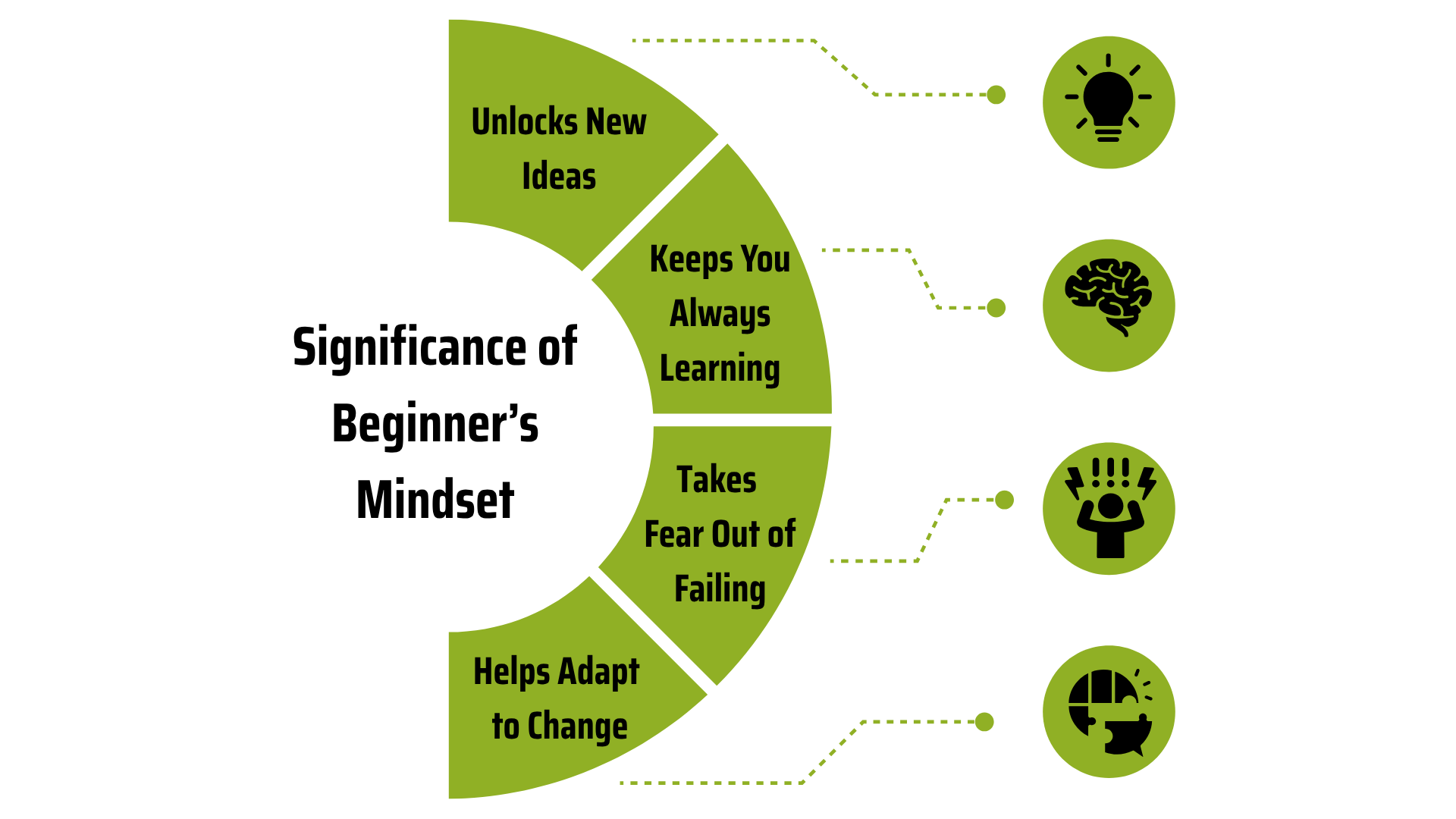
Boosts Creativity
Old habits block new ideas.
When we do the same thing for years, it may prompt us to follow autopilot. That leaves little room for creativity.
The Shoshin beginner’s mind breaks that pattern.
You don’t get stuck thinking- this is how it should be. Rather, you ask- what if we tried an alternative?
That one question can spark fresh solutions.
Experts say the same thing. PJ Silvia says,
“People high in openness to experience are both more intelligent and more creative.”
“They can also reach the highest divergent thinking scores,” as per a PubMed study.
Since beginners aren’t stuck in the old ways, it opens up space for fresh, even weird ideas, aka innovation.
Companies like Salesforce and Apple are the perfect examples. They actively build teams with beginner mindsets just to fuel creativity.
Ensures Lifelong Learning
Teachable people grow faster.
Those who stay curious keep growing. They don’t pretend to know everything.
Instead, they:
- Ask questions
- Listen
- Adapt
This keeps them learning long after school ends.
Learning agility can lead to faster success. Research shows people with high “learning agility” are 2x more likely to get promoted. That means they stay open, adapt fast, and ask questions, even after promotions.
Being a beginner helps you stay teachable.
The Zen mind helps you stay open to learning from others, from failure, from feedback. And that’s how you keep getting better.
Reduces Fear of Failure
Less pressure, more progress.
Beginners expect to stumble. That’s a good thing. Because it works to lessen the fear of “failure.”
When you start fresh, you don’t feel pressure to be perfect. Rather, your mind focuses on staying:
- Curious
- Ready to learn
That makes failure feel normal, not scary.
Even research says that people with a growth mindset go beyond obstacles. They handle failure better and bounce back faster.
Because they see mistakes as part of learning.
That’s why big brands like Google encourage teams to have a beginner’s mindset.
It works to:
- Boost innovative thinking and
- Reduce the fear of taking risks
Perfection is not the goal here. Progress is. And that mindset makes you realize that. It frees you to try more, risk more, and eventually, win more.
Improves Mental Flexibility
Adapt or stay stuck.
Life’s always changing. Tech evolves. Industries shift. Relationships grow. With a beginner’s mindset, you don’t panic when change comes. You adapt.
The combination of curiosity and openness makes your mind more flexible. Instead of clinging to old ideas, you start asking, “What else can I learn?”
That boosts learning agility. Research says, “Agile learners can adapt quickly to changing environments. They have a strong ability to navigate complex challenges.”
Moreover, this kind of mental flexibility also benefits you with-
- Less stress
- Better problem-solving
- Faster learning
Beginner’s Mind Examples | Real Life Applications
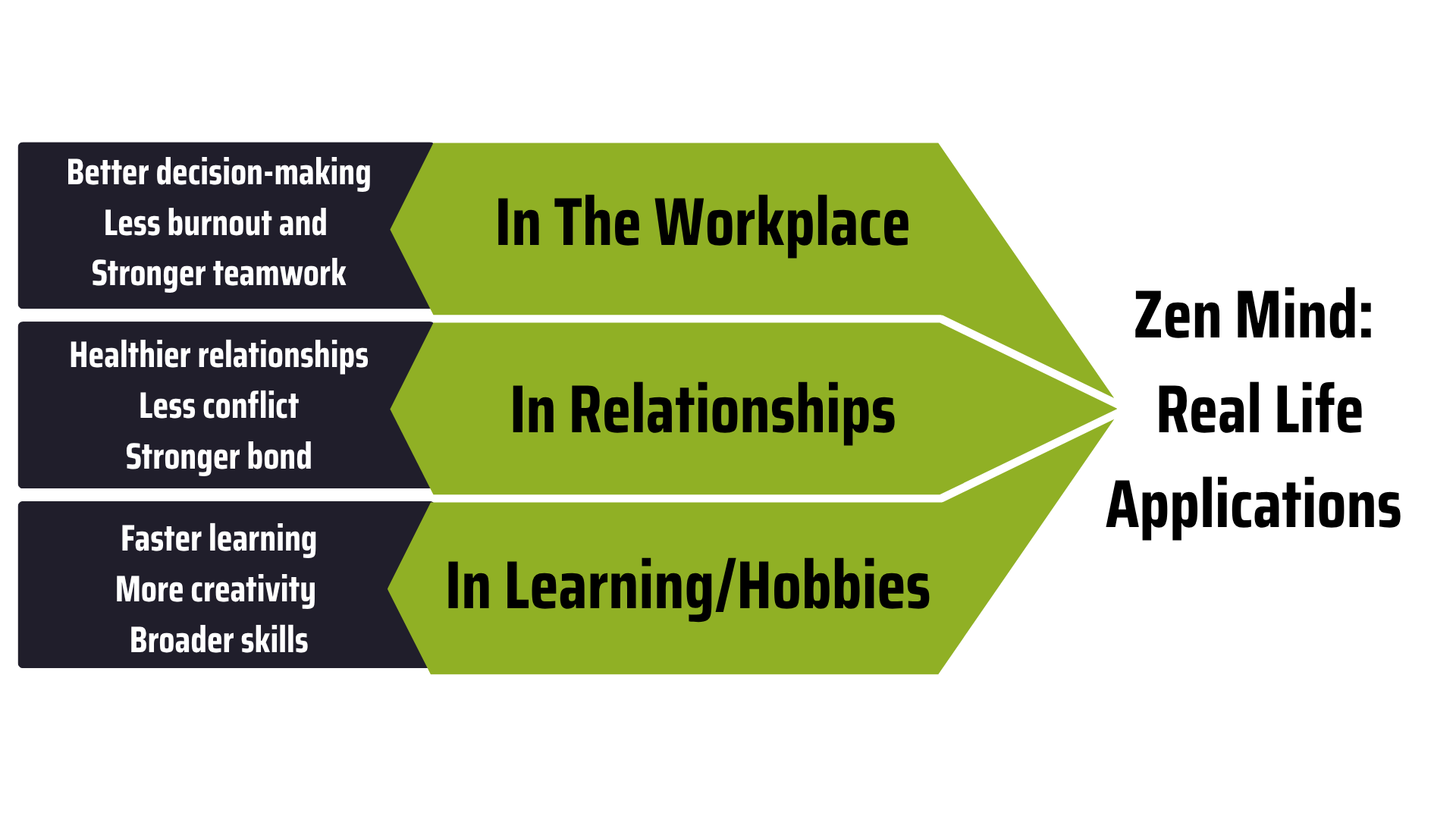
Zen Mind In The Workplace
Drop the know-it-all act. Grow faster.
A Zen mindset at work means staying calm and focused. It helps you handle the stress of tasks better. Instead of rushing, you take one task at a time.
This improves efficiency.
Moreover, you listen carefully and avoid unnecessary reactions. It helps create a peaceful work environment.
Benefits-
- Better decision-making
- Less burnout and
- Stronger teamwork
Zen Mind In Relationships
People with flexible minds connect better.
In relationships, a beginner’s mindset psychology helps you to be fully present. You listen without judging and respond with empathy instead of reacting. This reduces arguments.
The Zen mind helps you accept people as they are. This further works to build trust and deeper connections. Be it with your partner, family, friends, or acquaintances.
Benefits-
- Healthier relationships
- Less conflict
- Stronger bond
In Learning or Hobbies
Try. Mess up. Laugh. Try again.
A beginner’s mindset helps you enjoy the process. Not just the result! When learning, you focus on little steps. It helps lessen frustration.
If you have hobbies, the zen mind makes you do them for fun, not perfection. This can help you a lot in broadening your talent.
Benefits-
- Faster learning
- More creativity
- Broader skills
How To Cultivate A Beginner’s Mindset?
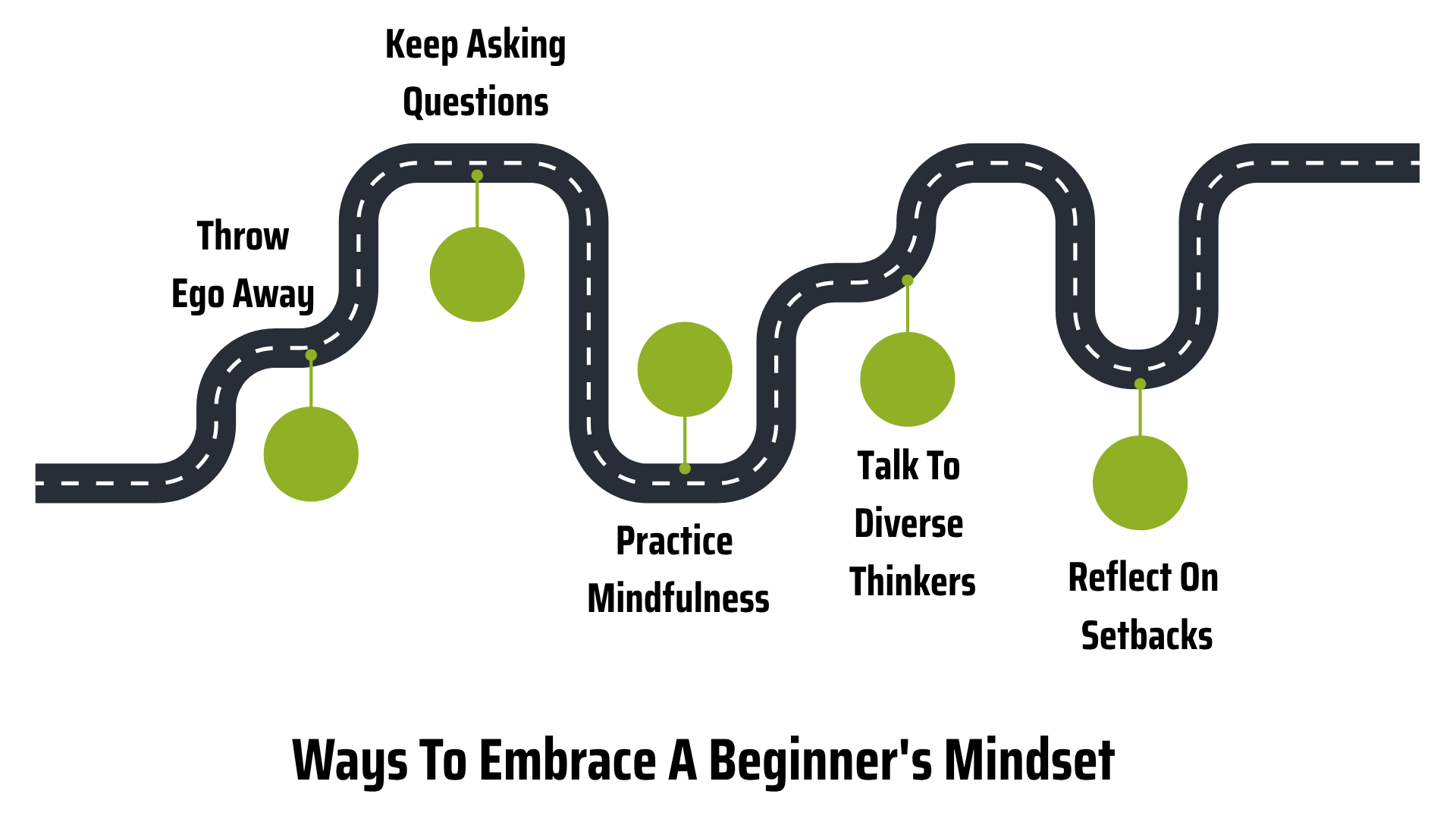
Let Go of Ego
First, admit that you don’t know everything.
Our ego likes to protect us and prove we’re always right. It says, “You already know this. Don’t look dumb.”
But the truth is, this kind of thinking blocks growth.
Instead, say, “I’m here to learn.”
Let yourself be curious. Take feedback without taking it personally.
Catch yourself when you’re trying to look smart. Pause. And say, “That’s new to me, can you explain more?”. This helps fuel learning agility and progress.
Ask Questions. Even Basic Ones
Kids learn fast because they ask everything. Be like that.
Ask even the silly questions. Not sure what a term means even if the whole world knows? Ask. Don’t assume and stay quiet.
Asking questions helps you understand better. That builds confidence over time.
So, next time you’re in a meeting ot learning something new, ask:
- “Can you walk me through that?”
- “Why is that done this way?”
This helps form deeper memory connections and results in broader knowledge.
Surround Yourself With Diverse Thinkers
Talk to humans who think differently from you.
This helps stretch your brain and challenge assumptions.
It can be co-workers from other fields, friends from different backgrounds, online groups, or people with diverse-
- Backgrounds
- Beliefs
- Ethnicity
- Culture
- Regions
- Ages
Join communities or forums where new ideas flow. Say yes to conversations outside your comfort zone.
Also, talk with someone outside your zone once a week. Just listen and learn.
That way, you adapt to new perspectives and learn faster. Plus, exposure to different views can force you to think differently. Like a beginner again.
Practice Mindfulness
Mindfulness helps you stay in the moment.
It clears mental clutter. That way, you can learn and listen better. Then again, it doesn’t mean you have to meditate for hours.
Just breathe. Pay attention. Notice your thoughts without judging them.
Try this-
- Sit still and focus on your breath for 2 minutes a day.
- Take a mindful walk for 30 minutes. No phones.
Studies say, mindfulness helps reduce stress, improve focus, and ensure you process new info with clarity.
Reflect on Failures as Learning Moments
Mistakes happen. That’s life.
But beginners see failure as feedback. Not defeat. After a setback, ask, “What went wrong?”, “What did I learn?” and “What can I try next time?”
Write down your failure. Then list 1 to 2 lessons from each. Do this weekly.
Reflecting on setbacks can help build resilience and sharp thinking.
FAQ
Why is a beginner’s mind important?
A beginner’s mind helps you stay open, curious, and ready to learn. It removes ego and boosts growth, creativity, and problem-solving in personal and professional life. That’s why the Zen mind is important.
How is the beginner’s mindset useful?
The beginner’s mindset helps you adapt, learn fast, and stay flexible. It improves focus, reduces fear of failure, and boosts better thinking in changing situations.
What is the beginner’s mind theory?
The beginner’s mind theory comes from Zen Buddhism. It means approaching life with curiosity, no judgments, and no assumptions. The theory focuses on openness to learning like a true beginner.
What is an example of using the beginner’s mind?
When learning a new skill, like coding or painting, you ask questions without fear. You focus on learning, not proving yourself, just like a beginner.
Read Also: