The Ultimate Buying Guide for Bar Tables and Stools
Creating a stylish and functional bar area at home or in a commercial space starts with choosing the right bar table and stools. Whether you are furnishing a small apartment, a large kitchen island, or a busy cafe, the decisions you make will affect comfort, durability, and overall look for years. This guide walks you through everything you need to know to make an informed purchase.
Understand the purpose of your bar area
First decide how the bar area will be used. Will it serve mainly for casual drinks and light snacks, for full meals, or as a multiuse workspace for laptops and paperwork? Consider the frequency of use and the number of people who will gather there at once. A durable setup is essential for heavy use in a commercial environment. For home use you might prioritize style and comfort more heavily. Knowing the function will narrow down choices for height, material, and stool type.
Know the standard heights and how to measure
Bar table and stool height must match to ensure comfortable seating and proper legroom. Here are standard categories to guide you.
- Counter height
Counter height tables are typically about 34 to 36 inches tall. They pair with stools that are usually 24 to 26 inches high. This height works well adjacent to kitchen counters and for casual dining. - Bar height
Bar height tables are usually about 40 to 42 inches tall. Stools for bar height are generally 28 to 30 inches high. This category is classic for bar areas and pub style seating. - Adjustable stools
Adjustable stools offer flexibility if you need to seat people at different surfaces. These are ideal for multipurpose spaces. Make sure the adjustment range covers your table height.
To measure for legroom allow 9 to 12 inches between the seat of the stool and the underside of the table. This range gives enough space for knees and movement. Measure the tabletop thickness and any apron or decorative elements, then calculate the usable clearance before selecting stool height.
Choose the right stool style for comfort and use
Stool choice influences comfort as much as table height does. Consider the following stool styles.
- Backless stools
Backless stools save space and slide fully under the table when not in use. They are best for short term seating rather than long conversations or long meals. - Stools with backs
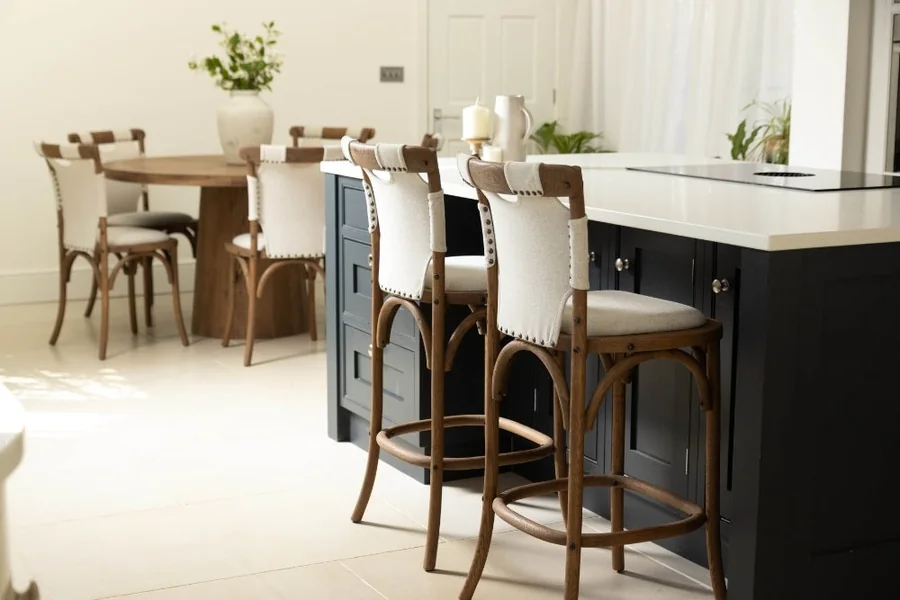
Stools with backs provide more support and comfort for extended sitting. They come in many styles from low profile backs to full back support similar to dining chairs. - Swivel stools
Swivel stools allow easy rotation for social interaction and for sliding in and out without moving the stool base. Check that the swivel mechanism is sturdy and rated for frequent use. - Arms or armrests
Stools with armrests add comfort but require more space. They also raise the required seat height clearance so check measurements carefully. - Upholstered versus hard seat
Upholstered seats are comfortable and can soften a room visually. Hard seats like wood or metal are easier to clean and can perform better in high traffic settings.
Select durable and appropriate materials
Material affects durability, maintenance, and style. Think about how the furniture will be used and select materials accordingly.
- Solid wood
Solid wood offers warmth and longevity. Hardwoods resist dents and scratches better than softwoods. Choose treated finishes for wet environments. - Metal
Metal frames provide industrial style and strong support. Look for powder coated finishes that resist scratches and corrosion. - Engineered wood and laminates
These are budget friendly and provide consistent appearance. They can resist warping but inspect edge banding and joint quality. - Glass and stone tabletops
Glass tops feel modern but show fingerprints and require frequent cleaning. Stone tops like marble or quartz are luxurious and durable but heavy and may require reinforcement. - Upholstery fabrics
For stools choose fabrics rated for the type of use. Vinyl and faux leather are easy to wipe clean. Performance fabrics resist stains and fading in sunlit rooms.
Consider shape and size of the table
Table shape influences seating arrangement, circulation, and visual balance.
- Round tables
Round bar tables encourage conversation and are great in small spaces. They eliminate sharp corners and often allow more flexible seating. - Square and rectangular tables
These maximize seating and work well along walls or islands. Rectangular tables can seat many people in a row but require more floor space. - Pedestal bases versus four leg bases
Pedestal bases free up legroom and enable more flexible seating around the table. Four leg tables feel traditional and can be more stable on uneven floors. - Diameter and width recommendations
For two people a round table 24 to 30 inches in diameter can be adequate. For four people consider 36 to 48 inches. Allow at least 24 inches of table width per person for comfortable dining.
Focus on ergonomics and foot support
Comfort at a bar table is not only about seat height and back support. Foot placement and seat depth matter.
- Footrests
A good stool should have a footrest positioned about 9 to 12 inches below the seat. Check that the footrest is sturdy and at a natural height. - Seat depth and tilt
Seats that are too deep can be uncomfortable for shorter users. A slight tilt can improve posture. Test seat cushioning for both immediate comfort and longer term support. - Clearance for legs
Revisit the calculation for clearance between stool seat and table underside. Too little space leads to cramped legs. Too much space may cause slouching.
Think about maintenance and ease of cleaning
Different finishes and materials require different care routines.
- Wipeable surfaces
For food and drink areas choose surfaces that are easy to wipe. Non porous materials resist stains. - Replaceable parts
Consider stools with removable cushions or replaceable covers. This extends useful life and allows style updates without replacing the entire item. - Water resistance and outdoor use
If you plan to use the furniture outdoors choose materials and finishes designed for exposure to sun and moisture. Check manufacturer recommendations for cleaning and storage.
Budget and value considerations
Set a budget range and prioritize. High quality bar tables and stools can be an investment but can last many years. Look for warranty and return policies. Factor in assembly time and shipping costs when comparing price points. Buying well constructed pieces often pays off in reduced replacement and repair costs.
Style match and visual harmony
Bar tables and stools should complement the room rather than fight with it.
- Coordinate finishes
Match metals and woods to other fixtures like lighting and cabinet hardware for a coherent look. - Mix and match thoughtfully
Combining different stool styles can add visual interest. Keep a unifying element such as color or material to maintain cohesion. - Scale and proportion
Make sure stools do not overpower the table visually or physically. Large stools for a delicate table can look awkward.
Safety and durability checks
Before purchasing inspect joinery, welds, and the method of attaching legs to tops. For swivel mechanisms check for smooth rotation and safety stops. For adjustable stools test the locking system. If children will use the seating ensure there are no dangerous pinch points and that stability is sufficient.
Where to buy and what to look for online
When shopping online evaluate product photos, zoomable images, and detailed dimensions. Read customer reviews about comfort and durability. Look for clear warranty information and transparent return policies. If possible test items in a showroom to validate fit and comfort.
Final thoughts and recommendation
Selecting bar tables and stools requires balancing comfort, function, and style. Prioritize correct height matching and sufficient legroom. Select materials that fit the level of use and provide easy maintenance. Pay attention to ergonomics such as footrests and back support. Take measurements carefully and consider the overall scale of the room.
For those ready to shop, consider established retailers that offer a wide range of materials, styles, and price points. You can find quality options and helpful product descriptions that make it easier to choose. If you are looking to buy bar tables and stools, consider buying from Furniture in Fashion where you can explore curated selections that combine style and durability. Furniture in Fashion offers a variety of designs suited to home and commercial needs and can help you find the right combination for your space.